

My name is MAKO
Based in Sapporo, Hokkaido | Born and raised in Obihiro, Hokkaido | Lover of Sapporo Classic beer and fresh sashimi | Passionate about road trips and camping | Always chasing beautiful scenery
Why Is Asahiyama Zoo So Special?
Asahiyama Zoo is special because it lets visitors see animals behaving naturally.
Instead of simply displaying animals, the zoo was designed to help people understand how they live, move, and interact in the wild.

Why You Should Care
Many zoos focus on showing as many animals as possible.
Asahiyama Zoo takes a different approach.
Here, every exhibit is designed to answer a simple question:
“How does this animal live in nature?”
Once you understand that idea, every visit becomes much more exciting. You’re not just looking at animals—you’re discovering their world.
A Small Zoo That Almost Disappeared
Today, Asahiyama Zoo is one of Hokkaido’s most famous attractions.
But it wasn’t always successful.
During the 1990s, visitor numbers fell dramatically.
Many people believed the zoo might eventually close.
Instead of giving up, the staff asked an important question:
“What do visitors really want to see?”
Their answer changed everything.
A New Way of Thinking
The staff realized that animals sleeping quietly behind fences weren’t very inspiring.
People wanted to see animals doing what they naturally do.
So, rather than collecting more species, the zoo focused on creating better experiences.
That decision became the beginning of one of the greatest success stories in Japanese zoos.
The Birth of “Behavioral Exhibits”
Asahiyama Zoo became famous for its behavioral exhibits, known in Japan as kōdō tenji.
Instead of placing animals in simple cages, the zoo designed spaces that encourage natural behaviors.
Visitors don’t just see the animals.
They see them swimming, climbing, hunting, flying, and playing—just as they would in the wild.
Seeing the World Through an Animal’s Eyes
Every exhibit is carefully designed around the animal, not the visitor.
For example:
- Polar bears leap into deep pools.
- Orangutans climb high above visitors using ropes and towers.
- Seals swim through vertical transparent tubes.
- Wolves roam spacious enclosures that resemble natural habitats.
These experiences help visitors understand how each animal has adapted to survive.
Why the Penguin Walk Is So Famous
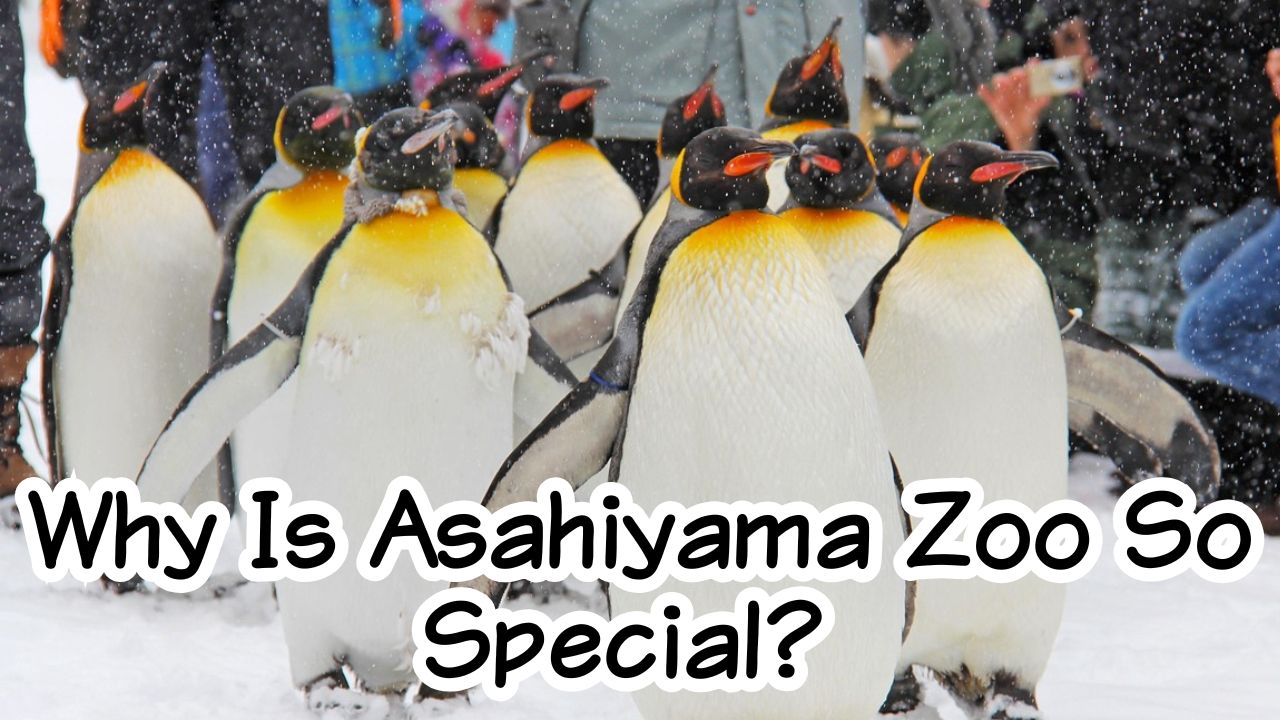
One of the zoo’s best-known attractions is the Penguin Walk, held during winter when conditions are suitable.
Instead of performing tricks, the penguins simply take a daily walk for exercise.
Visitors stand along the path while the penguins waddle naturally through the snow.
This isn’t a show.
It’s part of the penguins’ normal winter routine and helps keep them healthy.
It’s About the Penguins, Not the Performance
The Penguin Walk isn’t scheduled for entertainment alone.
It takes place because walking is important for the birds’ health during the snowy season.
If weather or animal conditions aren’t suitable, the walk may be canceled.
That philosophy reflects the zoo’s priorities:
The animals always come first.
Designed Around Animal Welfare
Every new exhibit at Asahiyama Zoo begins with one question:
“What kind of environment does this animal need?”
The goal isn’t to create the most impressive exhibit for people.
It’s to create the best possible environment for the animals while helping visitors learn from their natural behavior.
Learning Without Realizing It
One reason visitors enjoy Asahiyama Zoo is that education happens naturally.
Instead of reading long signs, you understand the animals simply by watching them.
Seeing a seal swim vertically or a polar bear dive powerfully into the water teaches more than words ever could.
That’s what makes the experience unforgettable.
More Than a Zoo—A Place to Understand Nature
A visit to Asahiyama Zoo isn’t just about seeing animals.
It’s about understanding the relationship between animals, people, and nature.
As you move through the zoo, you’ll notice that each exhibit tells a story. Every design choice encourages visitors to think about how animals survive in the wild and why protecting their habitats matters.
This approach has inspired zoos both in Japan and around the world.
Every Animal Has a Story to Tell
At Asahiyama Zoo, every species is presented as an important part of nature.
Whether it’s a tiny penguin or a powerful polar bear, each animal has unique behaviors that help it survive.
By watching those behaviors, visitors gain a deeper appreciation for wildlife—and often leave with a greater desire to protect it.
The Best Animals to See at Asahiyama Zoo
Although every exhibit is thoughtfully designed, a few have become especially popular with visitors.
Some of the zoo’s highlights include:
- 🐧 Penguins – Famous for the winter Penguin Walk.
- 🐻❄️ Polar Bears – Watch them dive and swim through underwater viewing areas.
- 🦭 Seals – Swim through transparent vertical tubes that showcase their agility.
- 🦧 Orangutans – Climb high above visitors on ropes stretched across the zoo.
- 🐺 Wolves – Live in spacious habitats that encourage natural pack behavior.
Each exhibit offers a different perspective on how animals move and interact with their environment.
The Best Animals to See at Asahiyama Zoo
Asahiyama Zoo is enjoyable throughout the year.
- 🌸 Spring: Active animals and fresh greenery.
- ☀️ Summer: Pleasant weather makes it comfortable to explore the zoo.
- 🍁 Autumn: Beautiful fall colors surround many outdoor exhibits.
- ❄️ Winter: Snow creates a magical atmosphere, and the famous Penguin Walk usually takes place during this season.
No matter when you visit, the animals’ behavior changes with the seasons, making every trip unique.
My Recommended Route Around Asahiyama Zoo
Asahiyama Zoo is built on a hillside, so the route you choose can make a big difference.
I recommend entering through the East Gate, which is close to the upper part of the zoo. From there, you can gradually walk downhill while visiting the animal exhibits, making your visit more comfortable and helping you avoid climbing steep hills at the end of the day.
If it’s your first visit, start with the most popular exhibits, such as the Penguin House, Polar Bear House, and Seal House, before exploring the rest of the zoo at a relaxed pace.
My Favorite Souvenirs from Asahiyama Zoo
A visit to Asahiyama Zoo isn’t complete without taking home a memorable souvenir.
From adorable collectibles to delicious local treats and practical outdoor apparel, these are my three personal favorites that perfectly capture the spirit of Hokkaido’s most famous zoo.
ASAHIYAMA Tiny ZOO
If you’re looking for a unique keepsake, ASAHIYAMA Tiny ZOO is one of the best choices.
This charming miniature collection features some of the zoo’s most popular animals in beautifully designed figures. It’s a fun souvenir for both children and adults and a wonderful reminder of your visit.
Why I Recommend It
- Exclusive Asahiyama Zoo collectible
- Features the zoo’s popular animals
- Perfect for animal lovers
- Small and easy to pack in your luggage
Asahiyama Baum
If you’re looking for a unique souvenir that reflects Hokkaido’s nature, Asahiyama Balm is an excellent choice.
Developed with the cooperation of a local company in Asahikawa, this skin balm is made with carefully selected ingredients, including Ezo deer oil, a natural moisturizer known for its excellent skin-conditioning properties.
The balm melts gently with your body heat, absorbs smoothly into the skin, and can be used on your hands, face, and body.
Even better, a portion of every purchase is donated to organizations working to protect Hokkaido’s natural environment, making it a meaningful souvenir that supports local conservation efforts.
Why I Recommend It
- Made with natural Ezo deer oil
- Moisturizes hands, face, and body
- Developed in cooperation with a local Asahikawa company
- A portion of sales supports environmental conservation in Hokkaido
Montbell Asahiyama Zoo Official T-Shirt
A collaboration between Montbell and Asahiyama Zoo, this official T-shirt is both stylish and practical.
Made with Montbell’s high-quality outdoor materials and featuring exclusive zoo-inspired designs, it’s a favorite souvenir for outdoor enthusiasts and travelers alike.
Why I Recommend It
- Official collaboration with Montbell
- Comfortable, high-quality fabric
- Exclusive Asahiyama Zoo design
- A practical souvenir you’ll actually use
Did You Know?
- 🐧 The Penguin Walk is held for the penguins’ health and exercise—not as a performance.
- 🦭 The famous seal exhibit lets visitors watch seals swim naturally through vertical tubes inspired by the narrow openings they navigate in the wild.
- 🐻❄️ Asahiyama Zoo helped popularize “behavioral exhibits,” influencing zoo design across Japan.
- ❄️ Asahiyama Zoo is Japan’s northernmost zoo, making it an ideal home for animals adapted to cold climates.
- 🌍 Millions of visitors from around the world have come to experience its innovative approach to animal care.
FAQ
Why is Asahiyama Zoo so famous?
It is famous for its behavioral exhibits, which allow visitors to observe animals acting naturally rather than simply viewing them in traditional enclosures.
Is the Penguin Walk available every day?
No. It is usually held during the winter season, but schedules depend on weather conditions and the penguins’ well-being.
How long should I spend at Asahiyama Zoo?
Most visitors spend 3–4 hours, although animal lovers often stay longer to enjoy the exhibits and feeding times.
Is Asahiyama Zoo suitable for children?
Yes. The zoo is popular with families, but its educational exhibits also make it enjoyable for adults.
What is the best season to visit?
Winter is the most famous season because of the Penguin Walk, but spring, summer, and autumn each offer different opportunities to observe animal behavior.
Visit It Yourself
Location
Asahikawa City, central Hokkaido, Japan(https://maps.app.goo.gl/yvnwQXDFgk8sJFFT7)
Best Season
Year-round. Winter is especially popular for the Penguin Walk and snowy scenery.
How to Get There
From JR Asahikawa Station, take a local bus to Asahiyama Zoo (about 40 minutes). Rental cars are also a convenient option.
Estimated Visit Time
3–4 hours
Admission Fee
Admission fees apply.
Official Website
Please check the official website for the latest information on opening hours, admission fees, seasonal events, and animal programs(https://www.city.asahikawa.hokkaido.jp/asahiyamazoo/).
Final Thoughts
Asahiyama Zoo isn’t famous because it has the most animals.
It’s famous because it changed the way people see them.
By putting animal welfare first and designing exhibits around natural behavior, the zoo created an experience that is both exciting and meaningful.
When you watch a polar bear dive, a seal glide effortlessly through water, or penguins march across fresh snow, you’re seeing more than an attraction.
You’re seeing animals as they were meant to live.
Because the most memorable zoo isn’t the one that puts animals on display. It’s the one that helps you understand their world.









コメント