

My name is MAKO
Based in Sapporo, Hokkaido | Born and raised in Obihiro, Hokkaido | Lover of Sapporo Classic beer and fresh sashimi | Passionate about road trips and camping | Always chasing beautiful scenery
The Short Answer — How Was Mount Tarumae’s Lava Dome Formed?
Mount Tarumae’s giant lava dome formed during an eruption in 1909, when thick, sticky magma rose to the surface and piled up instead of flowing far down the mountain.
As the lava cooled and hardened, it created the huge rocky dome we see today. More than a century later, volcanic gases and steam still escape from parts of the summit area.
Why You Should Care — Discover Hokkaido’s Otherworldly Volcano
Imagine standing on a rocky mountain trail with almost no trees around you.
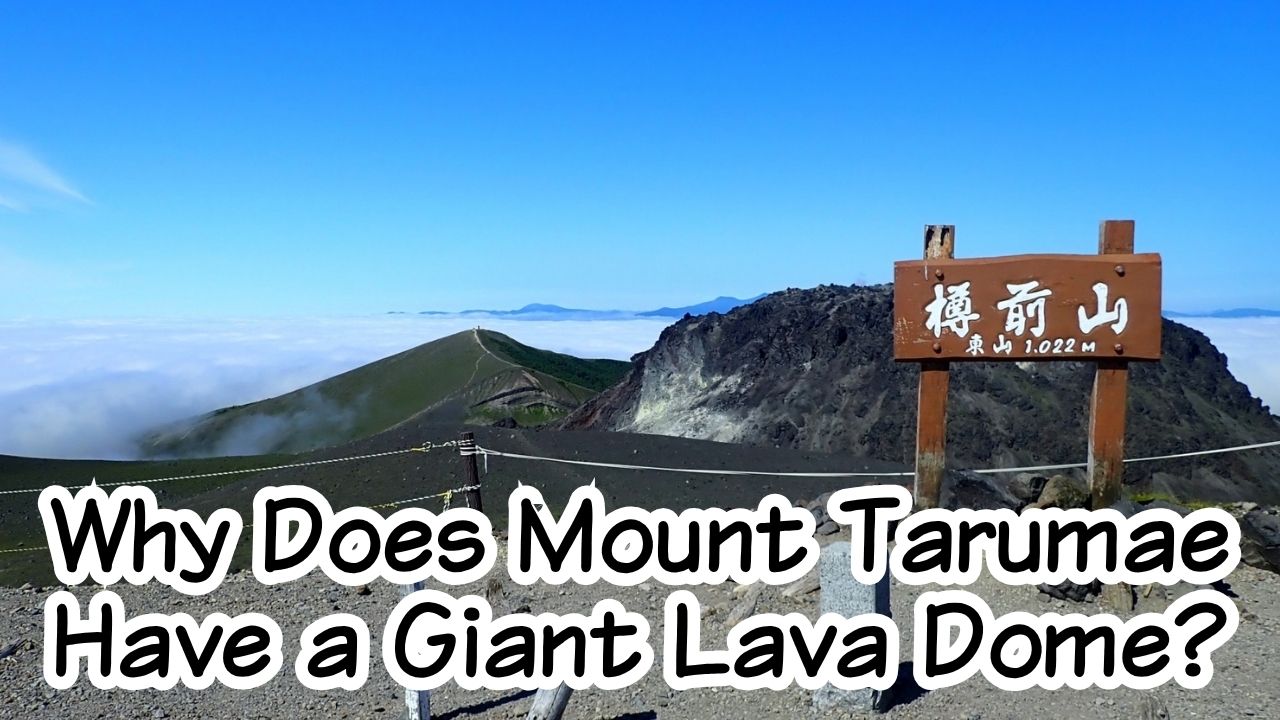
Dark volcanic rocks cover the ground. In the distance, a giant lava dome rises from the crater, while white steam drifts into the sky.
Turn around, and you may see the beautiful blue waters of Lake Shikotsu.
It’s a landscape that looks almost like another planet.
But here’s what makes it even more amazing.
The giant dome was created in 1909. In geological terms, that’s surprisingly recent.
Once you know this story, Mount Tarumae becomes more than a beautiful mountain. It becomes a place where you can see the incredible power of the Earth.
The Story Behind It— The Fascinating History of Mount Tarumae
How Was Mount Tarumae Born?
Mount Tarumae is an active volcano near Lake Shikotsu in southwestern Hokkaido. It stands 1,041 meters (3,415 feet) above sea level and is part of Shikotsu-Toya National Park.
Its story began about 9,000 years ago.
Long before Mount Tarumae appeared, a massive volcanic eruption had created the deep basin that later became Lake Shikotsu.
Over thousands of years, volcanic activity continued in the surrounding area, eventually building Mount Tarumae.
That means the mountain and the lake share a fascinating history.
The next time you look across Lake Shikotsu, remember that its peaceful blue waters are surrounded by a landscape shaped by powerful volcanic eruptions.
What Happened During Mount Tarumae’s 1909 Eruption?
Now comes the most surprising part of the story.
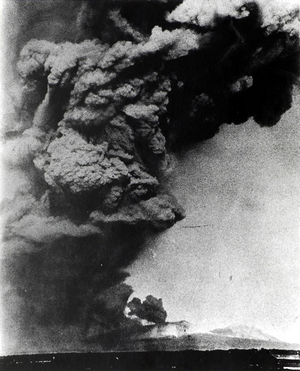
In 1909, Mount Tarumae experienced a series of eruptions.
During the volcanic activity, magma rose toward the surface. But instead of flowing down the mountain like a river, the thick lava collected near the opening.
As more magma pushed upward, a huge mound began to grow.
The lava gradually cooled and hardened, forming the giant dome that still stands inside the crater today.
Think about that for a moment.
This enormous rocky structure didn’t form millions of years ago. It appeared in the early 20th century, when people already had cameras and newspapers.
That’s incredibly young in the history of the Earth!
Why Did the Lava Form a Giant Dome?
When you think of a volcano, you probably imagine red-hot lava flowing down its slopes.
But not all lava behaves the same way.
Some lava is relatively runny, while other lava is thick and sticky.
Mount Tarumae’s magma was thick enough to pile up near the volcanic opening instead of spreading far away.
Imagine pouring two things onto a plate.
- Runny syrup spreads out quickly.
- Very thick dough stays piled up in one place.
Mount Tarumae’s lava behaved more like the thick dough.
As the lava continued to rise, it built a massive rocky structure called a lava dome.
The dome is about 134 meters (440 feet) tall. That’s roughly the height of a 40-story building!
And it’s one of the most remarkable volcanic features in Hokkaido.
Why Is Mount Tarumae Still Smoking Today?
Although the famous lava dome formed in 1909, Mount Tarumae is still an active volcano.
You may sometimes see white clouds rising from parts of the summit area.
These are not clouds of smoke from burning rock. They are mainly steam, although volcanic gases may also be present.
The steam and gases escape through openings in the ground called fumaroles.
They remind us that volcanic heat still exists beneath the mountain.
But this also means Mount Tarumae must be treated with care.
The inner crater area, including the lava dome, is dangerous and off-limits to visitors.
When hiking routes are officially open, you can admire the incredible volcanic landscape from permitted areas along the outer crater rim.
What Makes Mount Tarumae Worth Visiting?
Mount Tarumae offers something you won’t find on most mountains.
As you climb, the green landscape gradually changes into a world of dark rocks and volcanic gravel.
During summer, small alpine flowers add surprising touches of color to the rocky slopes.
On clear days, hikers can enjoy spectacular views of Lake Shikotsu and the surrounding mountains.
The mountain also has a cultural story. Its name is linked to the Ainu language, and it has long been part of the landscape known to Hokkaido’s Indigenous Ainu people.
Today, Mount Tarumae is a popular destination for hikers and nature lovers.
And perhaps the most exciting part is knowing what lies beneath the scenery.
You’re not simply looking at a beautiful mountain. You’re looking at the results of thousands of years of volcanic activity, including an eruption that created the giant dome in 1909.
That’s a view you’ll remember long after your Hokkaido trip.
Did You Know? — Five Amazing Facts About Mount Tarumae
- The famous lava dome was formed in 1909. That makes its present form surprisingly young in geological terms.
- The dome is about 134 meters tall. That’s roughly the height of a 40-story building, depending on the building’s design.
- Mount Tarumae began its volcanic activity about 9,000 years ago. Its history is connected to the much older volcanic landscape around Lake Shikotsu.
- The lava dome is a Hokkaido-designated Natural Monument. It is recognized for its geological importance.
- Mount Tarumae has erupted many times. The Japan Meteorological Agency records more than 70 eruptions since the 19th century, showing why the mountain is still carefully monitored.
FAQ — What Travelers Want to Know About Mount Tarumae
Is Mount Tarumae Still an Active Volcano?
Yes. Mount Tarumae is an active volcano monitored by the Japan Meteorological Agency.
Steam and volcanic gases can still escape from the summit area. Visitors should always check the latest volcanic warnings before planning a hike.
Can You Climb Mount Tarumae?
Hiking is possible only when the relevant trails and access roads are open and volcanic restrictions allow it.
The outer crater rim has established hiking routes, but the inner crater area, including the lava dome, is a hazardous area that visitors must not enter.
Can You Walk on Mount Tarumae’s Lava Dome?
No. Visitors should never climb onto or approach the lava dome.
The area is hazardous because of geothermal heat, volcanic gases, and the possibility of sudden volcanic activity. Enjoy the view from permitted locations instead.
How Long Does It Take to Hike Mount Tarumae?
Under normal access conditions, the traditional seventh-station-to-East-Peak route takes approximately 50–60 minutes uphill and around 30 minutes downhill.
Allow about 2–3 hours for a short hike with rest and photography, although the actual time depends on weather, route conditions, and your experience.
The seventh-station access road is subject to closures, so this estimate applies only when the regular trailhead is reachable and the route is open.
Is Mount Tarumae Good for Beginner Hikers?
Mount Tarumae has relatively short hiking routes, but it is still an active volcano with loose volcanic gravel, steep sections, strong winds, and changing weather.
Beginners with suitable hiking shoes and preparation may enjoy permitted routes in good conditions. However, it should not be treated as a casual walk.
Visit It Yourself
Mount Tarumae is a wonderful destination for travelers who enjoy mountains, geology, photography, and unusual landscapes.
It also pairs beautifully with a visit to Lake Shikotsu.
| Travel Information | Details |
|---|---|
| Location | Tomakomai / Chitose area, southwestern Hokkaido |
| National Park | Shikotsu-Toya National Park |
| Best Season | Generally June–October, depending on snow, weather, trail conditions, and access restrictions |
| How to Get There | By car or taxi toward the Mount Tarumae seventh-station trailhead when the access road is open |
| From Lake Shikotsu | About 20 minutes by car from the Lake Shikotsu Onsen area to the seventh-station trailhead under normal conditions |
| Estimated Visit Time | About 2–3 hours for a short hike from the seventh station when open |
| Admission Fee | No standard admission fee for hiking; transport, parking arrangements, or guided services may have separate costs |
| Important Restriction | The inner crater area, including the lava dome, is off-limits to visitors |
Important Mount Tarumae Hiking Safety Information
Before planning a visit, remember that Mount Tarumae is not an ordinary sightseeing mountain.
- Check volcanic warnings and trail restrictions.
- Confirm whether the road to the trailhead is open.
- Wear proper hiking shoes and carry suitable outdoor clothing.
- Stay on permitted trails and outside the inner crater.
- Turn back if weather or volcanic gas conditions become dangerous.
As of October 25, 2026, the access road between the fifth and seventh stations is closed due to road conditions. This can change, so always consult the local government’s current road announcements.
Official Websites
- Tomakomai City – Latest Mount Tarumae Road Information
- Japan Meteorological Agency – Mount Tarumae
- Tomakomai City – Volcanic Safety Restrictions
- Ministry of the Environment – Shikotsu-Toya National Park
Please check the official website for the latest information.
Final Thoughts — Mount Tarumae Is More Than Just a Beautiful Mountain
At first glance, Mount Tarumae may look like an unusual mountain with a giant rocky mound at its summit.
But once you know its story, everything changes.
That enormous lava dome is the result of an eruption in 1909.
The steam rising from the ground tells us that volcanic heat remains beneath the surface.
And the beautiful Lake Shikotsu nearby is part of an even older story of volcanic activity.
Mount Tarumae reminds us that Hokkaido’s landscapes are not simply beautiful.
They are the result of thousands of years of powerful natural changes.
If you have the chance to explore the Mount Tarumae area, take a moment to look beyond the scenery.
Look at the dark rocks, the gentle alpine flowers, and the strange shape of the volcano.
And think about the extraordinary forces that created them.
You may never look at a mountain the same way again.










コメント