My name is MAKO
Based in Sapporo, Hokkaido | Born and raised in Obihiro, Hokkaido | Lover of Sapporo Classic beer and fresh sashimi | Passionate about road trips and camping | Always chasing beautiful scenery
Why Is Horokanai Famous for Soba?The Short Answer
Horokanai became Japan’s leading soba-producing town thanks to its cool climate, temperature differences between day and night, and farming changes that began in the 1970s.
Today, it’s famous not only for its locally grown buckwheat but also for the endless white flowers that cover its fields in summer.
In fact, Horokanai ranked first among Japanese municipalities in both buckwheat planting area and harvest volume in 2025.

Why You Should Care— Experience Hokkaido’s Beautiful Summer Snow
Imagine driving through the peaceful countryside of Hokkaido in August.
On both sides of the road, white flowers stretch across the fields as far as you can see.
The green mountains, blue sky, and endless white landscape make it look as though summer snow has fallen.
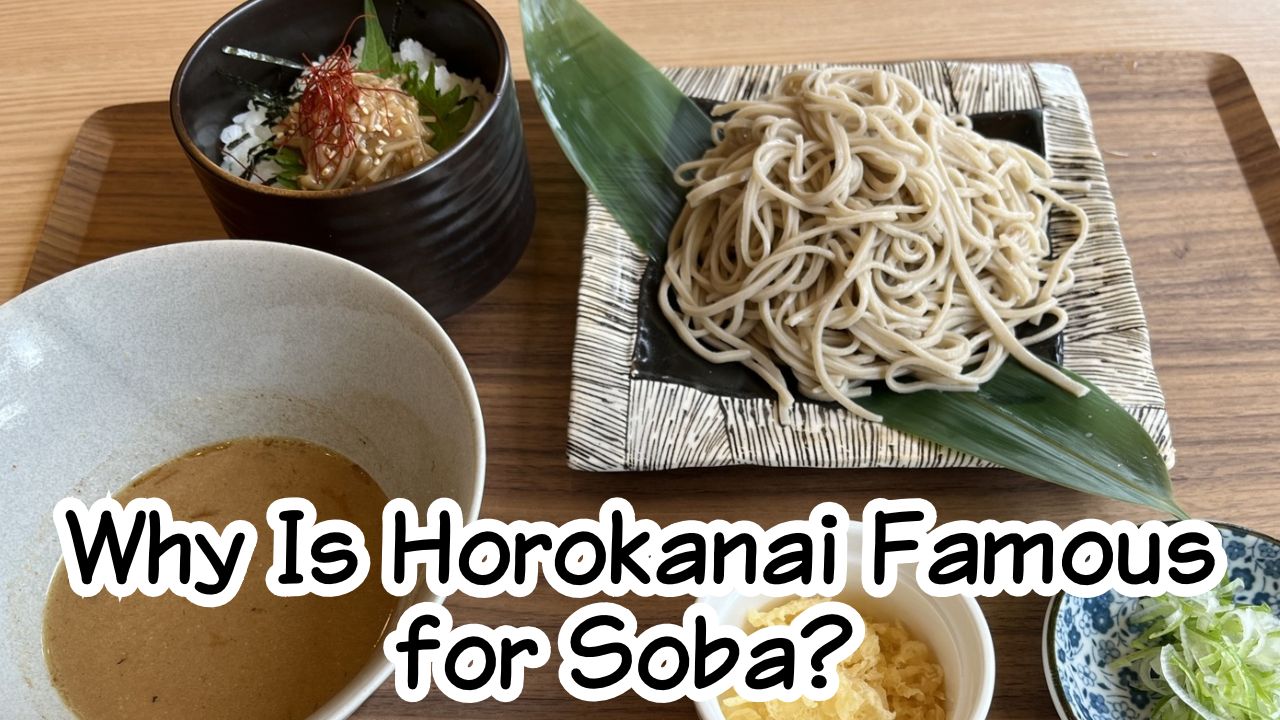
Now imagine stopping at a local soba restaurant and enjoying freshly prepared noodles made from buckwheat grown in the surrounding area.
That’s what makes Horokanai special.
You can admire the fields where the story begins and then taste the food that made this town famous.
It’s a wonderful way to experience Hokkaido through both its scenery and its flavors.
The Story Behind It — How Horokanai Became Japan’s Soba Capital
Why Did Horokanai Become Japan’s Top Soba-Producing Town?
Horokanai wasn’t always famous for soba.
For many years, rice farming was an important part of the local agricultural economy.
But things began to change in the 1970s.
Japan introduced policies to reduce rice production, encouraging farmers to grow other crops.
In Horokanai, many farmers turned to buckwheat.
The town’s natural environment proved suitable for growing it, and more fields were planted over time.
In 1980, Horokanai became Japan’s largest buckwheat-producing municipality by planting area. 幌加内町
The change transformed the town’s identity.
What began as an alternative crop eventually became Horokanai’s most famous local specialty.
According to Japan’s Ministry of Agriculture, Forestry and Fisheries, Horokanai grew buckwheat on 3,410 hectares of farmland in 2025 and harvested 1,790 metric tons.
Both figures ranked first among Japanese municipalities.
That’s an impressive achievement for such a small town.
Why Is Horokanai’s Cold Climate Good for Growing Buckwheat?
Horokanai is known for its cold winters and relatively cool climate.
But its weather also helps explain why the area became such a successful buckwheat-growing region.
The town experiences noticeable temperature differences between day and night.
Morning fog is also common and can help moderate rising daytime temperatures.
These conditions suit buckwheat cultivation and were among the reasons farmers expanded production here.
Buckwheat also has a relatively short growing season, making it useful in places where the warm season is limited.
Of course, good weather alone doesn’t produce great soba.
The skill and experience of local farmers play an important role, too.
Together, the natural environment and careful farming have helped build Horokanai’s reputation as a leading soba-producing town.
Why Do Horokanai’s Buckwheat Fields Turn White in Summer?
Here’s where the story becomes especially beautiful.
Every summer, the green buckwheat plants produce countless small white flowers.
When thousands of plants bloom together, entire fields appear to turn white.
In Horokanai, the flowering season generally runs from mid-July through mid-August, although the best timing changes each year.
The sight is so impressive that local people sometimes describe Horokanai as a town where snow falls twice a year.
Once in winter, when real snow covers the landscape.
And once in summer, when the buckwheat fields are covered with tiny white flowers.
But there’s another wonderful detail.
Those delicate flowers are part of the process that eventually produces buckwheat seeds.
After flowering and seed development, farmers harvest the crop. The seeds are then processed into buckwheat flour, which can be used to make soba noodles.
So the beautiful white fields aren’t just a scenic attraction.
They’re the beginning of the soba you’ll eventually find in a bowl.
How Did Horokanai Soba Become Part of the Town’s Culture?
In Horokanai, soba is more than an agricultural product.
It has become part of the community’s identity.
One of the most surprising examples can be found at Horokanai High School.
Since 2002, the school has offered soba as a required subject.
Yes, students actually study soba at school!
They learn about buckwheat, farming, cooking, and the traditional art of making noodles by hand.
The school even developed its own teaching materials for the subject. 北海道幌加内高等学校
For decades, the town also celebrated its local specialty through the Horokanai New Soba Festival.
The festival began in 1994 and grew into a major event that attracted soba lovers from across Japan.
Its 30th and final edition was held in 2025. Although the event has ended, Horokanai’s soba culture continues through local restaurants, farmers, and community activities.
It’s a lovely example of how a simple crop can become something that brings an entire community together.
When Can You See Horokanai’s White Fields and Taste Fresh Soba?
If you’re planning a summer trip to Hokkaido, Horokanai is a wonderful place to visit.
The buckwheat flowers usually look their best from late July to mid-August, depending on the weather and planting schedule.
One popular viewing area is Junpaku no Oka, or Pure White Hill, where visitors can enjoy wide views of the flowering fields.
The town also has other designated viewpoints where you can admire and photograph the landscape. 幌加内町観光協会+1
But the story doesn’t end when the flowers disappear.
Buckwheat harvesting generally takes place from September into early October, bringing the season of shin-soba, or new-harvest soba.
Shin-soba is made using buckwheat from the latest harvest and is especially appreciated for its fresh aroma.
In 2026, local restaurants began offering new-harvest soba from early September, with availability varying by restaurant.
If you visit in summer, come for the white flowers.
If you visit in autumn, come for the new-harvest noodles.
Either way, you’ll discover why soba is such an important part of Horokanai.
Did You Know? — Five Surprising Facts About Horokanai Soba
- Horokanai is Japan’s leading buckwheat-producing town. In 2025, it ranked first among municipalities for both planting area and harvest volume.
- Its white fields are sometimes called “summer snow.” The tiny buckwheat flowers create a landscape that looks almost covered in snow.
- Soba is a required subject at Horokanai High School. Students learn noodle-making skills and the history of their town’s famous crop.
- Buckwheat isn’t actually wheat. Despite its English name, it’s a different kind of plant, and its seeds are used to make buckwheat flour.
- Horokanai’s new soba festival ended in 2025. Its 30th edition marked the end of an event that had celebrated the town’s soba culture since 1994.
FAQ — Everything Travelers Want to Know About Horokanai Soba
Is Horokanai the Largest Soba-Producing Town in Japan?
Yes. According to Japan’s official agricultural statistics for 2025, Horokanai ranked first among municipalities for both buckwheat planting area and harvest volume.
The town’s large fields have made it one of Japan’s best-known soba-producing regions.
When Is the Best Time to See Horokanai’s Buckwheat Flowers?
The traditional flowering season is from mid-July to mid-August, with many fields looking especially beautiful in early August.
However, the exact timing depends on the weather and when farmers plant their crops. Check local flowering reports before your visit.
Can You Walk Through Horokanai’s Buckwheat Fields?
No. The buckwheat fields are working farmland, and visitors should not enter them without permission.
Instead, enjoy the scenery from designated viewpoints and public roads where stopping is permitted.
What Is Shin-Soba, and When Can You Eat It?
Shin-soba means soba made from buckwheat harvested in the current season.
It’s appreciated for its fresh aroma and is generally available in Horokanai from early autumn. Exact serving dates depend on each restaurant.
Can People With Gluten Allergies Eat Horokanai Soba?
Pure buckwheat is naturally gluten-free, but many Japanese soba noodles contain wheat flour.
Cross-contact with wheat can also occur during preparation. Always confirm the ingredients and cooking conditions with the restaurant. People with buckwheat allergies must avoid buckwheat itself.
Visit It Yourself
Horokanai is a peaceful countryside destination in central-northern Hokkaido, known for its beautiful farmland, mountains, and delicious soba.
| Travel Information | Details |
|---|---|
| Location | Horokanai Town, Hokkaido, Japan |
| Best Season for Flowers | Late July to mid-August, depending on annual conditions |
| Best Season for New Soba | Generally September–October |
| From Asahikawa | Approximately 45–90 minutes by car, depending on the destination within Horokanai |
| Public Transportation | JR train to Fukagawa or Nayoro, followed by a JR Hokkaido bus to Horokanai |
| Estimated Visit Time | 2–4 hours for a scenic drive, photography, and a soba meal |
| Admission Fee | Free at designated outdoor buckwheat-field viewpoints; meals and other activities cost extra |
| Official Website | Horokanai Tourism Association |
Where Can You See Horokanai’s Buckwheat Flowers?
One of the best-known viewing areas is Junpaku no Oka (Pure White Hill), near National Route 275.
This viewpoint offers sweeping views of the white fields, especially during the summer flowering season.
Another option is to explore the town’s scenic roads and use the official viewing areas along the way.
For the best experience, visit on a clear morning or in the soft light of late afternoon.
Travel Tip: Horokanai’s fields are private farmland. Please don’t walk into the fields or stop your car where parking is prohibited. Also check the latest flowering reports and local wildlife advisories before traveling.
Please check the official website for the latest information.
Final Thoughts — A Bowl of Soba With a Beautiful Story
At first glance, Horokanai might seem like a quiet farming town in northern Hokkaido.
But its story is surprisingly special.
A change in farming policy helped farmers discover a new future for their land. The cool climate made buckwheat an important crop, and the fields eventually became one of Hokkaido’s most beautiful summer landscapes.
Today, soba connects the town’s farmers, restaurants, students, and visitors.
The next time you enjoy a bowl of Horokanai soba, think about the white flowers that once covered the fields.
Those small blossoms are where the story begins.
And if you ever visit Horokanai in summer, you’ll discover that sometimes the most beautiful scenery in Hokkaido isn’t created for tourists.
It’s simply part of everyday life.





コメント