

My name is MAKO
Based in Sapporo, Hokkaido | Born and raised in Obihiro, Hokkaido | Lover of Sapporo Classic beer and fresh sashimi | Passionate about road trips and camping | Always chasing beautiful scenery
Why Is Haboro Famous for Sweet Shrimp? The Short Answer
Haboro is one of Japan’s leading landing areas for sweet shrimp because it sits close to Musashi Bank, a rich offshore fishing ground in the northern Sea of Japan. Haboro Town describes the area as an excellent shrimp habitat and says the town has a top-class sweet-shrimp catch in Japan.
The shrimp are caught mainly with shrimp pots and carefully kept fresh on the boat. That combination of fishing ground, fishing method, and freshness has helped make amaebi one of Haboro’s signature foods.

Why You Should Care
Hokkaido is famous for seafood.
So it is easy to think:
“Fresh seafood is fresh seafood. What makes Haboro special?”
But local food becomes much more interesting when you understand why it exists in one particular place.
Haboro’s sweet shrimp story connects:
the shape of the seafloor,
deep-sea fishing,
careful work on fishing boats,
the biology of a strange shrimp that changes sex during its life,
and a town whose fishing culture has changed over generations.
That means your shrimp bowl is not just lunch.
It is a small introduction to the northern Sea of Japan.
Why Is Haboro Famous for Sweet Shrimp?
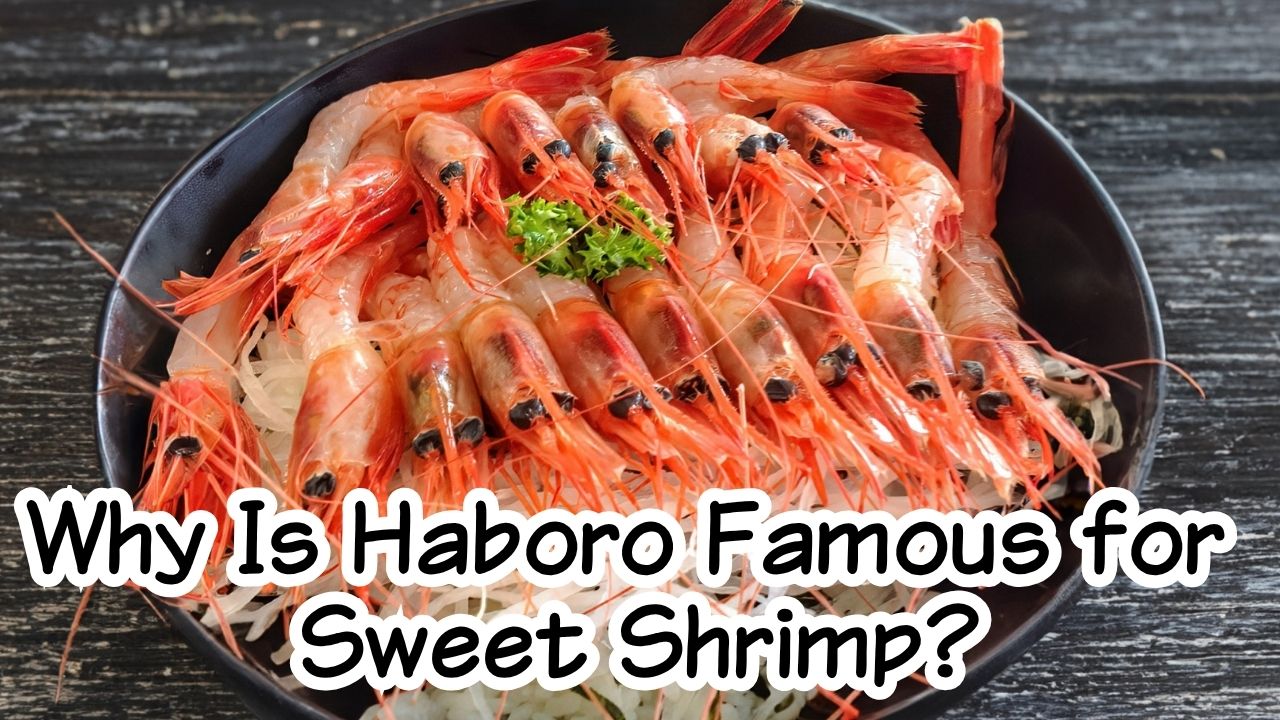
The shrimp eaten as amaebi in Haboro is mainly Hokkoku Akaebi, scientifically known as Pandalus eous. “Amaebi” is its familiar Japanese name and literally means “sweet shrimp.”
It lives in deep, cold water around Hokkaido and other northern seas.
What Makes Musashi Bank Such an Important Fishing Ground?
The key name to remember is:
Musashi Bank — Musashi-tai.
It is an offshore rise in the northern Sea of Japan and one of the major fishing grounds used by Haboro’s shrimp fleet.
Haboro Town explains that the uneven undersea landscape around Musashi Bank supports rich marine life and plankton, creating favorable conditions for sweet shrimp. The town also has the geographic advantage of being close to this fishing ground.
In other words, the story begins before a fishing boat even leaves port.
Haboro is in the right place.
How Deep Do Sweet Shrimp Live?
Much deeper than many travelers might imagine.
Hokkaido fisheries researchers report that Hokkoku Akaebi targeted by the Haboro shrimp-pot fishery mainly live at depths of roughly 200 to 600 meters. Broader research on the Japan Sea population records them even deeper in some areas.
That means the amaebi on your plate lived hundreds of meters below the surface.
Far below sunlight.
In cold, dark water.
It is quite a journey from the deep sea to a bowl of rice in Haboro.
How Are Haboro Sweet Shrimp Caught and Kept Fresh?
Haboro’s sweet shrimp are strongly associated with ebi-kago fishing — shrimp-pot fishing.
Instead of simply sweeping the seafloor with a large net, fishermen place baited pots in the deep water.
How Does Shrimp-Pot Fishing Work?
Official Hokkaido fisheries research describes the Haboro method in detail.
Bait such as herring is placed inside the pots.
The pots are lowered to the seafloor.
Shrimp enter in search of the bait and are later hauled back to the surface.
A single boat can work with large numbers of pots, connected along long lines on the seabed.
The catch is then sorted aboard the vessel.
Why Does the Fishing Season Have Closures?
Sweet shrimp grow slowly.
And protecting females carrying eggs is important for the next generation.
Hokkaido’s fishery rules therefore control fishing seasons, the number of pots, fishing areas, and even the mesh size of the pots. Small shrimp can escape through the regulated mesh.
For Haboro-area fisheries, the exact season differs by vessel class.
Smaller vessels generally operate from March through November, while larger vessels have different operating and closed periods. February is among the protected periods because many females are carrying eggs then.
That is an important reminder:
a famous seafood town still depends on a living wild resource.
How Are the Shrimp Kept Fresh on the Boat?
Catching the shrimp is only half the job.
Keeping them fresh is crucial.
Hokkaido fisheries research documents a system in which the shrimp are sorted and then held alive in seawater cooled to around 2–3°C until the vessel returns. Haboro Town also describes local boats using chilled and treated seawater in onboard live tanks.
That helps explain why eating amaebi close to the port feels special.
The distance from fishing boat to table can be remarkably short.
Why Are They Called “Sweet Shrimp”?
The name sounds like advertising.
But the sweetness is real.
Why Does Raw Amaebi Taste So Sweet?
Hokkaido fisheries researchers note that Hokkoku Akaebi has a particularly strong sweetness when eaten raw, along with a soft and slightly sticky texture. Their research connects that distinctive texture and sweetness with water-soluble proteins in the flesh.
Cooking changes those proteins and the texture.
That is one reason raw amaebi is such a classic sushi and sashimi ingredient.
Take a bite slowly.
At first, it may taste mild.
Then the sweetness becomes stronger as you chew.
That delayed sweetness is part of the appeal.
Do Sweet Shrimp Really Change from Male to Female?
Yes.
And this may be the best trivia in the entire article.
Hokkoku Akaebi begin life functioning as males and later change into females. Hokkaido research on the Japan Sea population found that many change sex at around five to six years of age.
The females then carry their eggs beneath their bodies for many months before the larvae hatch.
Their life cycle is slow.
Hokkaido research estimates a lifespan of around 11 years for the Japan Sea population.
So that large amaebi on your plate may have spent years in the deep sea before reaching Haboro.
How Did Sweet Shrimp Become Part of Haboro’s Identity?
Haboro has not always been known mainly for sweet shrimp.
Its fishing history has changed with the sea.
Was Haboro Always an Amaebi Town?
No.
Haboro Tourism Association notes that the town once prospered through herring fishing.
As marine conditions and catches changed, the species important to local life changed too. Today, sweet shrimp and octopus are among the seafood strongly associated with Haboro.
That gives the amaebi story another layer.
It is not a food tradition frozen in the distant past.
It represents how a fishing town adapts.
Haboro’s relationship with the sea continues, even when the catch changes.
How Important Is Sweet Shrimp to Haboro Today?
Very important.
Haboro Town calls sweet shrimp one of its representative specialties and says the local fishery has a top-class landing volume in Japan. The North Rumoi Fisheries Cooperative is also officially recognized by Hokkaido as a major producer of Hokkoku Akaebi from waters including Musashi Bank.
“羽幌の甘えび — Haboro Sweet Shrimp” is also used as a regional seafood brand.
So amaebi is not simply something restaurants happen to serve.
It has become part of the town’s public identity.
Does Haboro Catch the Same Amount Every Year?
No.
Wild fisheries change.
Weather, ocean conditions, stock levels, and fishing activity all affect how much reaches port.
A good example came in 2024, when the Haboro Sweet Shrimp Festival was canceled because recent landings had declined and organizers could not expect enough shrimp for the event.
By March 2026, local tourism updates confirmed that the shrimp-pot season had started again and fresh amaebi was reaching local shops.
For travelers, the lesson is simple:
“In season” does not mean “guaranteed today.”
If fresh Haboro amaebi is important to your trip, check current arrivals before you go.
How Should Travelers Eat Haboro Sweet Shrimp?
The simplest answer is also the best:
raw.
You want to taste the texture and natural sweetness that gave amaebi its name.
Why Is an Amaebi Rice Bowl a Great First Choice?
A shrimp bowl lets you focus on the shrimp without too many other flavors.
Fresh amaebi are peeled and spread over warm or slightly cooled rice.
The bright pink shrimp almost cover the bowl.
A little soy sauce.
Maybe wasabi.
And that is enough.
Several Haboro restaurants and seafood shops serve shrimp bowls when local supply is available.
Where Can You Eat Sweet Shrimp Close to the Fishermen?
One particularly interesting choice is Amaebi Factory – Ebina Fisheries.
The Haboro Tourism Association describes it as a direct-operated shop of the Haboro shrimp-pot boat No. 51 Takasago Maru. It offers fresh shrimp, shrimp bowls, seafood products, and other local dishes.
That connection is hard to beat:
fishing boat → local shop → your plate.
Another popular choice is Kita no Nishin-ya, where the tourism association highlights a rice bowl topped generously with locally caught sweet shrimp.
Can You Combine Amaebi with Haboro’s Islands?
Absolutely.
And that makes Haboro more interesting than a simple lunch stop.
Haboro is the gateway to Teuri Island and Yagishiri Island. Ferries leave from Haboro Port, with current tourism information listing trips of about 60–95 minutes by ferry depending on the island, or 35–60 minutes by high-speed vessel.
A great summer trip could be:
fresh amaebi in Haboro,
a ferry across the Sea of Japan,
seabirds on Teuri,
or green landscapes on Yagishiri.
Food becomes the beginning of the journey rather than the end.
No Time to Visit Haboro? Try Sweet Shrimp in Sapporo!
Haboro is famous for its delicious sweet shrimp, but what if you don’t have enough time to travel there?
Don’t worry! You may still be able to enjoy sweet shrimp from Haboro right in Sapporo!
Two places worth checking are Nijo Market and Sapporo Central Wholesale Market’s Outer Market (Jogai Market).
These popular seafood markets offer a variety of fresh Hokkaido seafood, and some vendors may have sweet shrimp caught in the waters around Haboro.
Did You Know?
Haboro’s sweet shrimp are mainly Hokkoku Akaebi (Pandalus eous).
- The main Haboro shrimp-pot fishing ground is around Musashi Bank in the northern Sea of Japan.
- The shrimp generally live hundreds of meters underwater, with the Haboro fishery targeting depths around 200–600 meters.
- Hokkoku Akaebi begin life as males and later become females.
- Haboro fishing boats can keep the catch alive in chilled seawater until returning toward port.
FAQ
Is Amaebi a Special Haboro Species?
No.
Amaebi is the common Japanese name for Hokkoku Akaebi, which lives in several cold-water areas around Hokkaido and northern Japan.
What makes Haboro special is its proximity to Musashi Bank, the scale of its fishery, and its handling of the catch.
Is Sweet Shrimp Really Sweet?
Yes.
The sweetness is mild but clearly noticeable when the shrimp is eaten raw.
Hokkaido fisheries researchers specifically describe Hokkoku Akaebi as having a strong characteristic sweetness and sticky-soft texture when raw.
When Is Fresh Haboro Amaebi Available?
The Haboro-area shrimp-pot fishery generally resumes in March, although fishing periods differ by vessel type. Hokkaido information also notes fresh shrimp from the North Rumoi cooperative during much of the period from March into winter.
Daily availability depends on weather and landings.
Can I Buy Sweet Shrimp Directly in Haboro?
Yes.
Local seafood shops sell fresh shrimp when available, and some also sell frozen or processed products.
Amaebi Factory and other Haboro seafood outlets are useful options for travelers. 羽幌町観光協会
Is Amaebi Best Raw or Cooked?
If you want to understand why it is called sweet shrimp, try it raw first.
It is also eaten cooked, steamed, fried, or used in soups and processed foods. Hokkaido’s seafood guide lists sashimi, sushi, tempura, and hot-pot dishes among common uses.
Visit It Yourself
Location
Haboro Town, Tomamae District, Hokkaido
Haboro is on the Sea of Japan coast in northern Hokkaido, about 180 kilometers north of Sapporo.
For an amaebi-focused stop, one option is:
Amaebi Factory – Ebina Fisheries
Current Haboro Tourism Association information lists its restaurant at:
57 Saiwai-cho, Haboro, Hokkaido.
Best Season
March–November is a practical period for travelers hoping to find fresh local amaebi, although the exact catch depends on weather and fishing conditions. Smaller shrimp-pot vessels in the area operate mainly during this period.
For a broader Haboro trip, June–September is especially attractive because it is easier to combine seafood with Teuri and Yagishiri island travel.
Fresh shrimp is never guaranteed on a particular day.
How to Get There
From Sapporo by car: approximately 3 hours.
From Asahikawa: roughly 2–3 hours, depending on the route.
From Wakkanai: approximately 2–2.5 hours.
Haboro has no railway station. Public transportation is by bus, including highway bus services from Sapporo and Asahikawa.
Estimated Visit Time
Amaebi meal or shopping only: 1–2 hours
Haboro town + seafood: half day
Haboro + Teuri or Yagishiri: at least one full day, preferably longer
Admission Fee
There is no admission fee to enjoy Haboro’s sweet shrimp.
You simply pay for your meal or seafood purchases.
Amaebi Factory
Current Haboro Tourism Association information lists:
- Hours: 9:00 a.m.–4:00 p.m.
- Operating period: around mid-March through December
- Closing days: Irregular
- Winter closure: January to around mid-March.
Because fishing and fresh seafood availability can change:
Please check the official website for the latest information.
Official Website
- Haboro Town – Local Specialties
- Haboro Tourism Association – Food & Restaurants
- Hokkaido Government – Hokkoku Akaebi
Final Thoughts
Why is Haboro famous for sweet shrimp?
The story begins far away from the dining table.
Hundreds of meters beneath the northern Sea of Japan,
shrimp live around the deep waters near Musashi Bank.
Fishermen leave Haboro.
They lower baited pots toward the seafloor.
The pots come back up.
The shrimp are sorted.
They are carefully kept cold and fresh on the way home.
Then they reach Haboro.
A seafood shop.
A restaurant.
A bowl of rice.
And eventually,
your chopsticks.
But the story is even stranger than that.
These shrimp begin life as males.
Later, they become females.
They grow slowly in deep, cold water.
And generations of Haboro fishermen have learned how to catch and handle them while depending on a sea that never produces exactly the same catch every year.
That is why Haboro’s amaebi is more than something sweet to eat.
Haboro’s sweet shrimp begins far offshore, where the deep waters of Musashi Bank, the biology of the shrimp, and the skill of local fishermen all come together.




コメント