

My name is MAKO
Based in Sapporo, Hokkaido | Born and raised in Obihiro, Hokkaido | Lover of Sapporo Classic beer and fresh sashimi | Passionate about road trips and camping | Always chasing beautiful scenery
The Short Answer — What Makes Mukawa Shishamo Different?
Mukawa shishamo is a rare Japanese fish found naturally only along Hokkaido’s Pacific coast. Unlike the capelin commonly sold as shishamo, it is a different species known for its delicate texture and rich, savory flavor.
Its special reputation also comes from centuries of local food culture, Ainu traditions, and the careful drying methods passed down in Mukawa.

Why You Should Care — A Small Fish With a Big Hokkaido Story
Imagine walking through a quiet Hokkaido town on a cool autumn day.
Outside a seafood shop, hundreds of small silver fish hang neatly from bamboo sticks, moving gently in the breeze.
Nearby, the smell of freshly grilled fish fills the air.
This is one of Mukawa’s most famous autumn scenes.
But there’s more to it than delicious seafood.
Behind these little fish is a story connecting Hokkaido’s rivers, the Indigenous Ainu people, traditional cooking, and a community working to protect its most famous food.
Once you know that story, shishamo becomes much more than a simple grilled fish.
The Story Behind It — The Fascinating History of Mukawa Shishamo
What Makes Mukawa Shishamo Different From Regular Shishamo?
Here’s something that surprises many visitors to Japan.
The inexpensive grilled “shishamo” commonly found in supermarkets and restaurants is often not true Japanese shishamo.
Instead, it is usually capelin, a related but different fish caught in northern waters outside Japan.
Real shishamo, known scientifically as Spirinchus lanceolatus, is native to Japan and found only along certain parts of Hokkaido’s Pacific coast.
Mukawa shishamo is especially famous for its delicate flesh and rich umami, the pleasant savory taste found in many Japanese foods.
Both male and female fish are enjoyed. Females are valued for their roe, while males are appreciated for the flavor of their flesh.
This is one reason true Mukawa shishamo is considered a special seasonal delicacy rather than an everyday fish.
Why Does Shishamo Return to Mukawa’s Rivers Every Autumn?
The story of Mukawa shishamo begins with an unusual journey.
These fish are born in rivers but spend much of their lives growing in the sea.
Every autumn, mature shishamo return to rivers along Hokkaido’s Pacific coast to lay their eggs.
The Mukawa River is one of these important rivers.
Around October and November, the fish gather near river mouths before swimming upstream to reproduce.
This seasonal journey once brought large numbers of shishamo close to Mukawa’s coast, creating the town’s traditional autumn fishing season.
For local people, shishamo was more than just seafood.
Its return marked the changing seasons and the approach of Hokkaido’s long winter.
What Is the Ainu Legend Behind the Name Shishamo?
One of the most beautiful stories about shishamo comes from the Indigenous Ainu people of Hokkaido.
The name “shishamo” is linked to the Ainu words susu and ham, meaning “willow” and “leaf.”
In Japanese, shishamo is written as 柳葉魚, which means “willow-leaf fish.”
But why a willow leaf?
According to an Ainu legend preserved in the Mukawa area, people were once suffering from hunger.
The gods took pity on them and gave life to willow leaves, turning them into small fish that swam into the river.
Those fish became shishamo and helped save the people from starvation.
It is a traditional story, not a scientific explanation. But it shows how deeply this fish was connected to people’s lives.
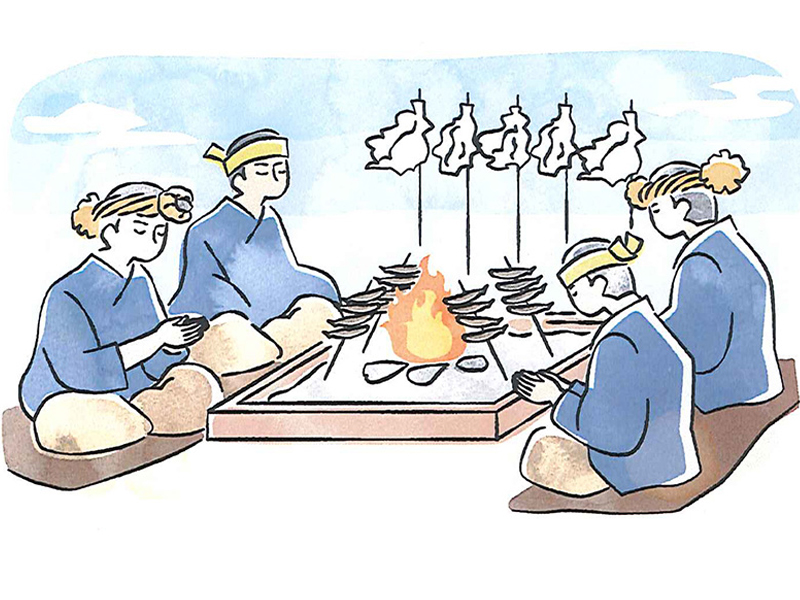
The connection remains alive today through Shishamo Kamuynomi, an Ainu ceremony offering prayers for the fish and the natural world.
The local Ainu cultural preservation group revived this ceremony in 1992.
Why Does Mukawa Hang Shishamo to Dry in Autumn?
If you visit Mukawa in autumn, you may notice something unusual outside local seafood shops.
Rows of small fish hang from bamboo sticks like silver curtains.
This traditional method is called sudare-boshi, or curtain-style drying.
After being prepared and lightly salted, the fish are arranged on sticks and dried in the cool autumn air.
The process reduces moisture and helps concentrate their flavor.
Mukawa’s cool seasonal weather has long been an important part of this local food tradition.
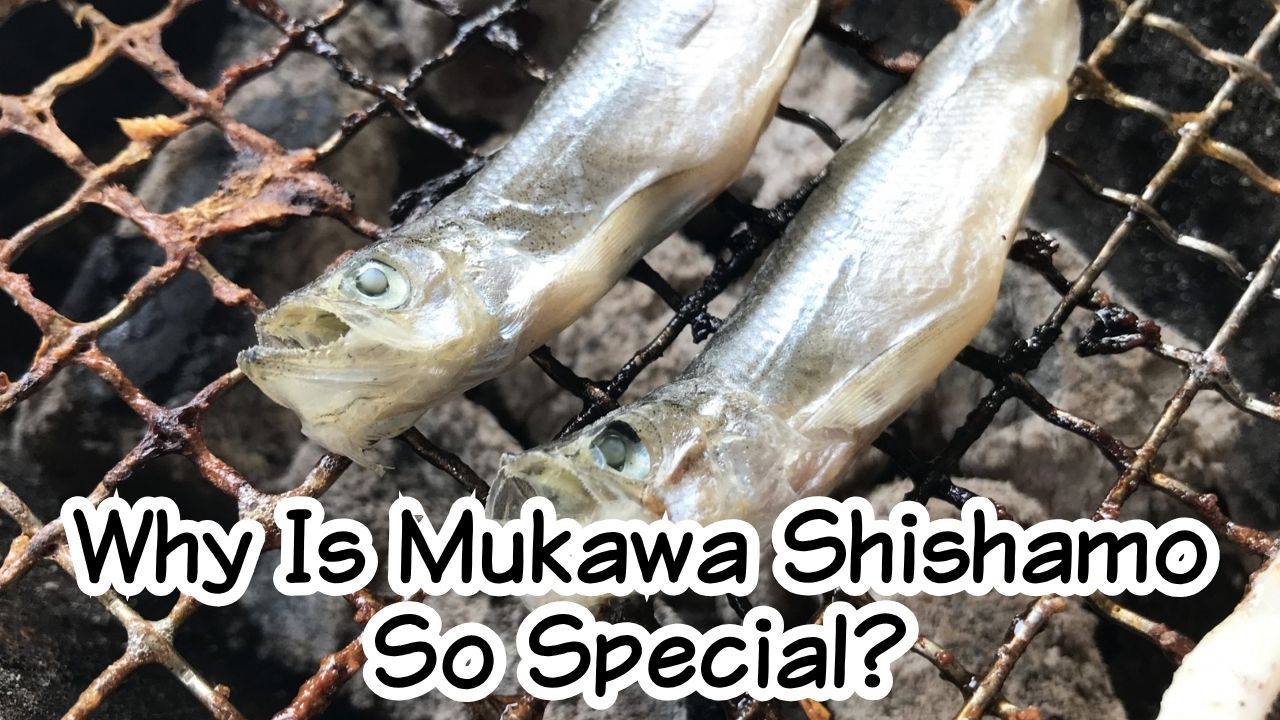
Once dried, shishamo can be grilled until the skin becomes fragrant and the flesh is tender.
Fresh shishamo has also traditionally been enjoyed as sushi during the short autumn season.
Even when the catch is limited, the sight of drying fish remains a powerful symbol of Mukawa’s food culture.
Why Is Mukawa Shishamo So Rare Today?
Unfortunately, Mukawa’s famous fish faces a serious challenge.
Shishamo numbers have fallen sharply in recent years.
The decline became so severe that local fishermen suspended commercial fishing for three consecutive seasons, from 2023 through 2025.
Rather than continue fishing a shrinking population, the community chose to give the fish time to recover.
In October 2026, limited test fishing resumed to help researchers understand the condition of the shishamo population.
Some locally caught fish even returned to stores in Mukawa for the first time in four years.
However, full commercial fishing has not yet resumed.
Today, Mukawa is working with researchers and fishermen to study shishamo, support fish reproduction, and protect the species for future generations.
The town has also launched a project to keep its shishamo traditions alive.
This gives the story a new meaning.
Mukawa shishamo isn’t simply a rare food worth trying. It is also a piece of Hokkaido’s natural and cultural heritage that local people are working hard to preserve.
Did You Know? — Five Surprising Facts About Mukawa Shishamo
- Real shishamo is found only in Japan. Its natural habitat is limited to rivers and coastal waters along Hokkaido’s Pacific coast.
- Most everyday “shishamo” is a different fish. The capelin commonly sold in stores is not the same species as true Hokkaido shishamo.
- Its Japanese name means “willow-leaf fish.” This comes from the Ainu name and a traditional legend about willow leaves becoming fish.
- Mukawa shishamo became a registered regional brand in 2006. Its name represents an important part of the town’s identity.
- November 1 is Mukawa Shishamo Day. The town established this special day in 2025 to celebrate its famous fish and help pass the tradition to future generations.
FAQ — Everything Travelers Want to Know About Mukawa Shishamo
Is Mukawa Shishamo the Same as Capelin?
No. True Japanese shishamo and capelin are two different species.
Although both are small fish often served grilled, Mukawa shishamo is a rare species native to Hokkaido. Always check the product label if you want to try authentic Japanese shishamo.
Why Is Mukawa Shishamo Expensive?
True shishamo has a limited natural habitat and a short traditional fishing season.
Its decreasing population and limited supply have made it especially valuable. The care needed to prepare and dry the fish also adds to its reputation as a premium local food.
When Is the Best Season to Eat Mukawa Shishamo?
Autumn, especially October and November, is the traditional shishamo season.
However, fishing has been restricted in recent years. Even during autumn, fresh locally caught shishamo may not be available.
Can You Eat Shishamo Whole?
Yes. Small grilled shishamo is commonly eaten whole, including the head, bones, and tail.
The bones are usually small enough to eat after cooking. However, eat carefully if you are uncomfortable with small fish bones.
Can You Still Buy Mukawa Shishamo in 2026?
Limited local sales resumed in October 2026 following test fishing, but regular commercial fishing remains suspended.
Some shops may also carry true shishamo caught elsewhere in Hokkaido or processed products. Check the origin and availability before purchasing.
Visit It Yourself — Discover Mukawa’s Shishamo Culture
If you love Japanese food, Mukawa is worth adding to your Hokkaido trip.
This small town offers an opportunity to discover a food culture deeply connected to the surrounding sea, rivers, and local traditions.
| Travel Information | Details |
|---|---|
| Location | Mukawa Town, Iburi region, southern Hokkaido |
| Best Season | October–November for the traditional autumn shishamo atmosphere |
| How to Get There | Approximately 40–45 minutes by car from New Chitose Airport |
| By Train | JR Hidaka Main Line from Tomakomai Station to Mukawa Station, about 30 minutes |
| Estimated Visit Time | 1–2 hours for a short food and town visit |
| Admission Fee | No general admission fee to visit the town; food and activities cost extra |
| Official Website | Mukawa Town Official Website |
Travel times are approximate. Train schedules, shop hours, and product availability may change.
Travel Tips for Enjoying Mukawa Shishamo
When visiting Mukawa, look for shops selling traditional dried shishamo and other local seafood products.
If genuine shishamo is available, grilled fish is a wonderful way to enjoy its delicate flavor.
You may also find processed shishamo products that make unique Hokkaido souvenirs.
Remember that fish sold in Mukawa is not necessarily caught in Mukawa. Ask about the origin if that matters to you.
And if you’re visiting during autumn, don’t miss the chance to see the traditional drying racks when they are on display.
Important travel update (October 2026): Limited test fishing and sales have resumed, but full commercial fishing has not. Availability of locally caught Mukawa shishamo is not guaranteed.
Please check the official website for the latest information.
Final Thoughts — A Little Fish That Carries Hokkaido’s History
At first glance, shishamo may look like a simple little fish.
But in Mukawa, it tells a much bigger story.
It connects the sea and rivers, an ancient Ainu legend, generations of fishing families, and the beautiful autumn tradition of drying fish in the cool air.
Today, it also represents something important: the effort to protect a precious part of Hokkaido’s natural heritage.
When you visit Mukawa, take a moment to appreciate the story behind this special fish.
Even if fresh local shishamo is unavailable, the town’s traditions and commitment to protecting it are worth discovering.
Sometimes, the smallest things carry the most meaningful stories.
And Mukawa shishamo is a wonderful example.









コメント