

My name is MAKO
Based in Sapporo, Hokkaido | Born and raised in Obihiro, Hokkaido | Lover of Sapporo Classic beer and fresh sashimi | Passionate about road trips and camping | Always chasing beautiful scenery
What Makes Rishiri Kombu Special?The Short Answer
Rishiri kombu is highly prized because it produces a clear, fragrant dashi with a refined umami flavor. Its gentle taste makes it especially popular in Kyoto cuisine, where chefs want to bring out the natural flavors of their ingredients.

Why You Should Care — Discover the Hidden Flavor of Hokkaido
Imagine sitting down to enjoy a beautiful Japanese meal.
A small bowl of clear soup arrives at your table. It looks simple, but the broth has a wonderful depth of flavor.
What if the secret ingredient came from a remote island off the northern coast of Hokkaido?
That ingredient might be Rishiri kombu.
For travelers, learning about Rishiri kombu offers a new way to understand Japanese food. It connects the spectacular scenery of Hokkaido with the quiet elegance of traditional Japanese cooking.
And if you visit Rishiri Island, you can discover the place where this remarkable ingredient begins its journey.
The Story Behind It
What Is Rishiri Kombu, and Where Does It Grow?
First, what exactly is Rishiri kombu?
Kombu is a type of edible kelp, a large brown seaweed commonly used in Japanese cooking.
Rishiri kombu is one of Japan’s best-known varieties. It grows naturally along the northern coast of Hokkaido, especially around Rishiri Island, Rebun Island, and Wakkanai.
Despite its name, Rishiri kombu does not come only from Rishiri Island.
The kelp usually grows on rocky seabeds in relatively shallow water. It has a two-year life cycle and can grow more than two meters long.
The northern seas provide the environment in which this remarkable seaweed develops.
Why Does Rishiri Kombu Produce Such Clear and Elegant Dashi?
Here is what makes Rishiri kombu truly special.
When dried kombu is soaked in water and gently heated, it releases umami, the rich, savory taste that plays an important role in Japanese cooking.
But not all kombu tastes the same.
Different varieties produce broths with different colors, aromas, and flavors.
Rishiri kombu is especially famous for its clear appearance, pleasant aroma, and delicate taste.
Its dashi has enough flavor to support a dish without hiding the taste of other ingredients.
This makes it an excellent choice for clear soups, tofu dishes, and carefully prepared Japanese meals.
Think of it this way.
A powerful broth can become the main flavor of a dish. Rishiri kombu does something different. It helps the ingredients themselves shine.
That balance is one of the reasons chefs value it so highly.
Why Do Kyoto Chefs Love Rishiri Kombu?
One of the most interesting things about Rishiri kombu is its connection to Kyoto.
Kyoto is famous for its traditional Japanese cuisine, especially kaiseki, an elegant style of dining that often uses seasonal ingredients.
In this style of cooking, the natural flavor, color, and appearance of each ingredient are important.
Rishiri kombu fits beautifully into this tradition.
Its clear dashi gives food a gentle umami taste without overpowering delicate ingredients.
That is why Rishiri kombu has long been highly valued in Kyoto and other parts of the Kansai region.
It is also used in Kyoto specialties such as yudofu, a simple hot tofu dish, and senmaizuke, a traditional pickled turnip dish.
A piece of seaweed growing in the cold waters of northern Hokkaido can help create one of Kyoto’s most elegant dishes.
Two very different regions of Japan are connected by a single ingredient.
How Did Hokkaido’s Kombu Become Part of Japanese Food Culture?
The relationship between Hokkaido and traditional Japanese cuisine has a long history.
For centuries, kombu from northern Japan was carried to other parts of the country by trading ships.
By the medieval period, sea routes helped bring kombu from the region now known as Hokkaido to places such as Kyoto and Osaka.
Later, during the Edo period (1603–1868), trading vessels known as Kitamaebune played an important role in carrying goods along Japan’s coast.
Kombu was among the products traded through these routes.
As kombu became more widely available, it helped shape regional food traditions across Japan.
This history explains how northern seaweed became an important part of Japanese cooking far from Hokkaido.
The reputation of Rishiri kombu today is part of that larger story.

How Is Rishiri Kombu Harvested and Dried?
Rishiri kombu is more than a gift from the sea.
It is also the result of careful, demanding work.
On Rishiri Island, the main kombu harvesting season generally runs from late July to early September, although the exact timing depends on local conditions.
On calm mornings during the season, fishermen head out to collect mature kombu.
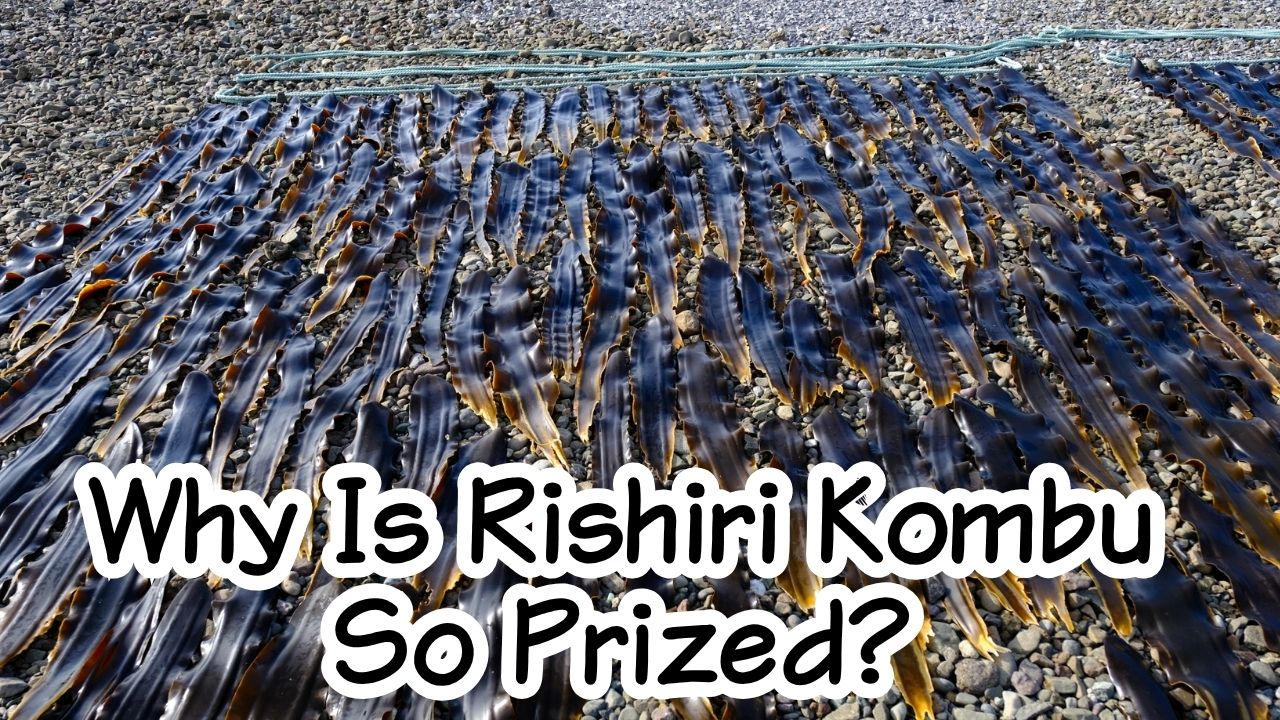
After harvesting, the long pieces of kelp are brought ashore and spread out to dry.
The work requires careful handling. The kombu must be laid out properly, and the drying process depends on suitable weather.
Once dry, it is collected, sorted, and prepared for sale.
Imagine rows of golden-brown seaweed stretching across the ground, with the beautiful shape of Mount Rishiri rising in the distance.
It is a scene that tells you something important about the island.
The value of Rishiri kombu comes not only from the sea, but also from the people who harvest and prepare it.
What Is the Surprising Connection Between Rishiri Kombu and Sea Urchins?
Here is another reason food lovers should remember Rishiri Island.
Rishiri kombu is connected to one of the island’s other famous foods: sea urchin.
Sea urchins eat kelp and other marine algae. Around Rishiri Island, kombu is an important part of their natural food supply.
The island is especially famous for its Ezo bafun uni, a prized type of sea urchin known for its rich flavor.
Local fishing organizations highlight the relationship between the island’s kombu and its high-quality sea urchins.
So when you enjoy fresh uni on Rishiri Island, you are tasting another part of the same marine environment.
The kombu that helps create delicate Japanese broth also supports the food chain behind one of Hokkaido’s most luxurious seafood specialties.
How Can You Enjoy Rishiri Kombu When Visiting Hokkaido?
You don’t need to visit a luxury Japanese restaurant to discover Rishiri kombu.
There are several ways to enjoy it during your Hokkaido trip.
Rishirifuji Town lists kombu ramen, dried kombu, and tororo kombu among its local specialty products.
If you visit during the summer harvesting season, you may also be able to see kombu drying near the coast.
However, remember that these areas are working spaces for local fishermen. Always respect signs, private property, and local instructions.
Did You Know?
- Rishiri kombu isn’t found only on Rishiri Island. It also grows around Rebun Island and Wakkanai in northern Hokkaido.
- It can grow more than two meters long. Mature Rishiri kombu sometimes reaches lengths of over three meters.
- Its dashi is famous for its clarity. This makes it especially useful for dishes where the appearance of the broth matters.
- Kyoto’s traditional cuisine has a special connection to it. Rishiri kombu is valued in refined cooking, including clear soups and tofu dishes.
- Rishiri kombu and sea urchins are connected. Kelp is part of the natural diet of the island’s famous sea urchins.
FAQ
Is Rishiri Kombu Different From Regular Kombu?
Yes. Rishiri kombu is a particular type of kelp known for producing clear, fragrant dashi.
Other varieties, such as Rausu kombu, are known for richer, more strongly flavored broth. Different types of kombu are suited to different dishes.
Why Is Rishiri Kombu Expensive?
Rishiri kombu is valued for its refined flavor and the care required to harvest, dry, and sort it.
Its reputation among professional chefs also contributes to its status as a premium Japanese ingredient.
Prices vary depending on factors such as origin, grade, and whether the kombu is wild or cultivated.
Can You Eat Rishiri Kombu Directly?
Yes, although dried Rishiri kombu is especially popular for making dashi.
It can also be processed into products such as tororo kombu and oboro kombu, both of which can be eaten directly or added to dishes.
How Do You Make Dashi With Rishiri Kombu?
Making basic kombu dashi is surprisingly simple.
- Prepare approximately 10–20 grams of dried kombu and one liter of water.
- Gently wipe away any dirt with a damp cloth.
- Soak the kombu in water for about 30 minutes.
- Slowly heat the water and remove the kombu just before it boils.
You now have a gentle Japanese broth that can be used for soups and other dishes.
This method follows guidance from the Japan Kombu Association.
Can You Buy Rishiri Kombu Outside Hokkaido?
Yes. Rishiri kombu is sold in specialty food stores and online, both in Japan and internationally.
When shopping, check the place of origin and product label. Rishiri kombu may come from Rishiri Island, Rebun Island, or other northern Hokkaido coastal areas.
Visit It Yourself
If you want to discover the world behind Rishiri kombu, consider adding Rishiri Island to your Hokkaido itinerary.
The island is famous for its mountain scenery, beautiful coastline, fresh seafood, and local fishing culture.
| Travel Information | Details |
|---|---|
| Location | Rishiri Island, northern Hokkaido, Japan |
| Best Season | July–August for the best chance to experience the kombu harvesting atmosphere |
| How to Get There | Ferry from Wakkanai to Oshidomari Port, approximately 1 hour 40 minutes |
| Alternative Transport | Flights from Sapporo Okadama Airport; seasonal flights may also operate from New Chitose Airport |
| Estimated Visit Time | 1–2 days to explore the island and enjoy its food and scenery |
| Admission Fee | No general island admission fee; transportation, activities, and facilities may have separate charges |
Official Websites
- Northern Hokkaido Tourism Information
- Rishiri Town Official Website
- Rishirifuji Town Official Website
Please check the official website for the latest information.
Travel Tip: Kombu harvesting depends on weather and sea conditions. Visiting during summer does not guarantee that you will see fishermen harvesting or drying kombu.
Final Thoughts
Rishiri kombu might look like a simple piece of dried seaweed.
But behind it lies a remarkable story.
It begins in the cold waters of northern Hokkaido, continues through the careful hands of local fishermen, and reaches the kitchens of some of Japan’s most respected restaurants.
Its clear, elegant dashi is more than just a cooking ingredient. It is a connection between nature, people, and centuries of Japanese food culture.
The next time you enjoy a bowl of Japanese soup, take a moment to appreciate the flavor beneath the surface.
And if your journey brings you to Rishiri Island, remember that the beautiful sea surrounding you may be the starting point of something extraordinary.
Sometimes, the most memorable stories in Hokkaido are hidden in the simplest things.







コメント