

My name is MAKO
Based in Sapporo, Hokkaido | Born and raised in Obihiro, Hokkaido | Lover of Sapporo Classic beer and fresh sashimi | Passionate about road trips and camping | Always chasing beautiful scenery
Why Is Lake Mashu So Blue?The Short Answer
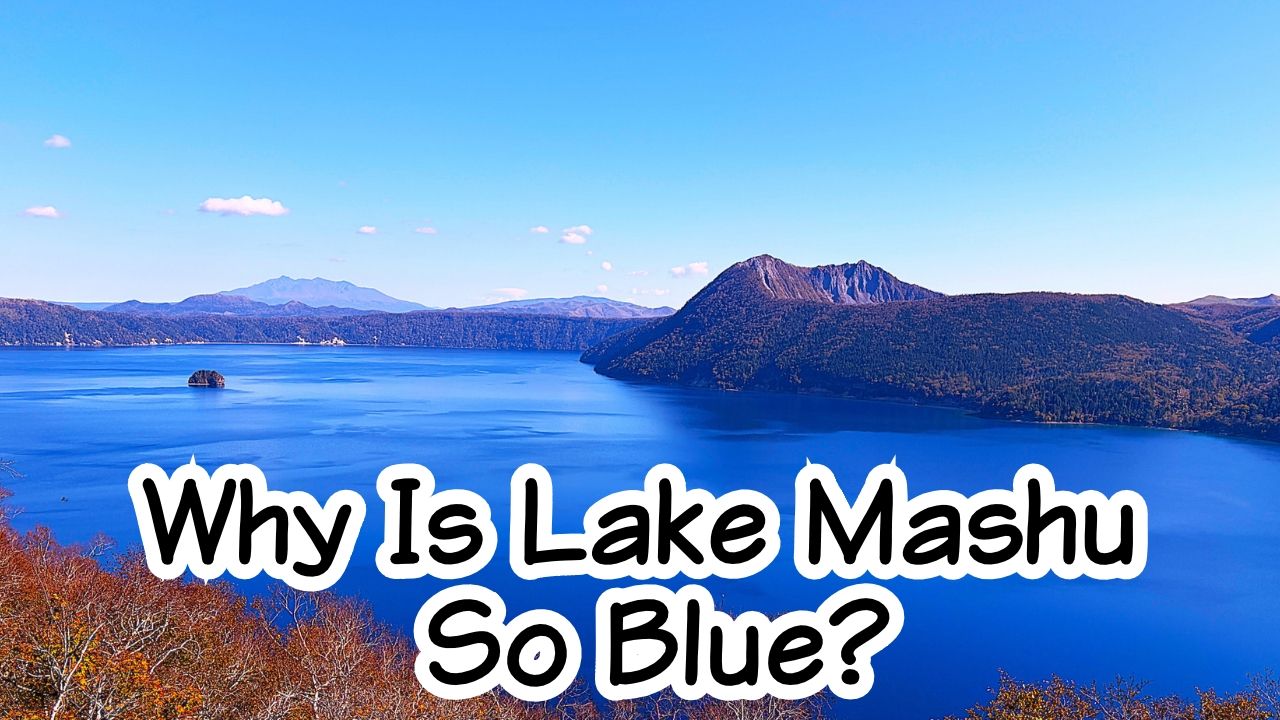
Lake Mashu is exceptionally clear because no rivers or streams flow into or out of the lake. That means very little soil, organic matter, or other material is carried into the water, and there is relatively little plankton to cloud it.
Because the lake is so clear and deep, light can travel far into the water. Redder wavelengths are absorbed more strongly, while blue light is more likely to return to our eyes. On calm days, reflections from the blue sky make the color even more dramatic.
That remarkable shade has become known as:
Mashu Blue.

Why You Should Care
Lake Mashu is beautiful even if you know nothing about it.
But the view changes once you understand what you are looking at.
The steep walls around you are the remains of a huge volcano.
The small island in the middle is actually the visible top of a much larger volcanic structure hidden beneath the water.
The lake has no ordinary rivers bringing water in or taking it away.
And the fact that travelers cannot simply walk down to the shore has helped preserve its unusual environment.
Even the fog that sometimes ruins the “perfect view” is part of the story.
At Lake Mashu, not seeing the lake can be almost as memorable as seeing it.
Why Is Lake Mashu So Blue?
The blue is not created by a special mineral or artificial color.
The key is clarity.
Why Is Lake Mashu’s Water So Clear?
Most lakes receive water from rivers and streams.
Those rivers carry things with them:
soil,
sand,
organic material,
nutrients,
and tiny living organisms.
Lake Mashu is different.
No rivers or streams flow into or out of it. Most of its water comes directly from precipitation, so much less suspended material enters the lake. Official national park interpretation also notes that the amount of plankton is small.
That helps the water remain extraordinarily clear.
Since 2000, official interpretive information has described average transparency at roughly 20 meters.
Did Lake Mashu Really Once Have the World’s Highest Transparency?
Yes.
In 1931, a transparency of 41.6 meters was recorded at Lake Mashu.
Japan’s Ministry of the Environment still highlights this famous measurement in its official introduction to Akan-Mashu National Park.
That number should not be confused with the lake’s transparency today.
Water conditions change over time.
But the historic record helped establish Lake Mashu’s reputation as one of the clearest lakes in the world.
Is “Mashu Blue” Just the Reflection of the Sky?
Not entirely.
The sky can make the blue stronger, especially when the surface is calm.
But the water itself matters too.
In clear, deep water, red and orange wavelengths of sunlight are absorbed more strongly. Blue wavelengths can travel farther and are more likely to be scattered back toward our eyes.
Lake Mashu’s low amount of suspended material allows this optical effect to appear especially strong.
So the famous color comes from a combination of:
extraordinary clarity + great depth + sunlight + the sky above it.
How Was Lake Mashu Created?
The peaceful lake you see today began with something violent.
Volcanic eruptions.
Why Is Lake Mashu a Caldera Lake?
Lake Mashu lies inside the Mashu Caldera, one of several great volcanic landscapes within Akan-Mashu National Park.
A caldera is a large depression created when volcanic activity empties part of the magma chamber below and the ground above collapses.
The Mashu Caldera formed approximately 7,000 years ago, making it much younger than the nearby Akan and Kussharo calderas.
Today, the lake covers roughly 19 square kilometers, while its maximum depth reaches about 212 meters.
The cliffs surrounding the lake rise roughly 150 to 350 meters above the water in places.
Those steep walls are one reason Lake Mashu feels so isolated from the world outside.
What Is the Tiny Island in the Middle of Lake Mashu?
Look toward the center of the lake and you will see a tiny island.
It is called Kamuishu Island.
From an observation deck, it looks small.
Very small.
But most of it is hidden underwater.
Official park information explains that Kamuishu rises about 240 meters from the lakebed, while only around 30 meters appears above the surface. The visible top covers only about 500 square meters.
In other words:
what looks like a tiny rock is actually the tip of a much larger volcanic structure.
That is one of the best “Wow, I didn’t know that!” facts at Lake Mashu.
Why Is Lake Mashu Called the “Lake of the Gods”?
Official national park interpretation introduces the Ainu name Kamui-to, meaning “Lake of the Gods.”
Standing on the caldera rim, it is not difficult to understand why the landscape has inspired such a powerful image.
There are no hotels on the shore.
No sightseeing boats crossing the water.
No busy lakeside promenade.
Just steep volcanic walls, forest, deep water, changing clouds, and silence.
Why Can’t Visitors Walk Down to the Shore?
This is one of the biggest differences between Lake Mashu and lakes such as Lake Akan or Lake Kussharo.
There is no ordinary public access down to the lake itself.
Lake Mashu lies within a highly protected part of Akan-Mashu National Park. Environmental authorities also restrict access because the inner caldera walls are steep and fragile, and human disturbance can cause erosion and threaten the lake environment.
That means travelers experience Lake Mashu mostly from above.
At first, this may seem disappointing.
But it is also part of what makes the lake feel untouched.
You cannot simply walk up to it.
You have to admire it from the rim.
Why Is Lake Mashu So Often Covered in Fog?
You may drive all the way to the observation deck…
and see nothing.
Just white.
Welcome to another famous side of Lake Mashu.
Why Is It Called “Misty Lake Mashu”?
Fog occurs frequently throughout the year, but June and July are especially foggy.
Official tourism interpretation using data from 2008–2018 found that between May and October, the lake was completely hidden by fog on an average of 29 days. June and July were the foggiest months.
The fog is closely connected with eastern Hokkaido’s geography.
Moist air and coastal fog from the Pacific can move inland and become trapped around the large volcanic basins of the region. The enclosed caldera landscape helps create the mysterious white world for which Mashu is famous.
And the weather can change very quickly.
A completely white view can turn blue within minutes.
Is a Foggy Day a Bad Day to Visit?
Not necessarily.
If this is your only chance to visit Lake Mashu, of course you probably hope for a clear view.
But the fog is not an accident that has nothing to do with the lake.
It is part of Lake Mashu’s identity.
Sometimes the mist drifts across only part of the water.
Sometimes Kamuishu Island appears for a few seconds and disappears again.
Sometimes the entire lake is hidden.
That uncertainty gives the place its atmosphere.
Which Lake Mashu Observatory Should You Visit?
There are three main viewpoints, and each gives you a slightly different experience.
Why Is Lake Mashu First Observatory Best for First-Time Visitors?
Lake Mashu First Observatory, now home to the Lake Mashu Kamuy Terrace, is the easiest introduction.
The facility was renovated and reopened in 2022. Its elevated terrace gives wide views over the caldera, and on clear nights the location also offers excellent stargazing.
For most first-time visitors, this is the simplest place to begin.
There are visitor facilities, food, and parking.
And when the lake appears through the mist, the view is spectacular.
Why Visit Lake Mashu Third Observatory?
The Third Observatory sits at about 670 meters, making it the highest of the three main viewpoints.
You can look down toward Lake Mashu and Kamuishu Island.
Then turn around.
Behind you lies another enormous volcanic landscape:
Lake Kussharo and the Kussharo Caldera.
On some early mornings, cloud seas can fill the calderas below.
The Third Observatory is normally closed from late November to early April.
Why Is Ura-Mashu Called the “Hidden” Viewpoint?
Ura-Mashu Observatory lies on the opposite side of the lake from the First and Third observatories.
At about 585 meters, it sits lower than the western viewpoints and official tourism information notes that it tends to experience fog less frequently. It is also quieter and more remote.
If the main viewpoints are wrapped in fog—or you simply want a different perspective—Ura-Mashu can be an excellent choice.
Facilities there are seasonal, however, and are available only during the warmer months.
Why Is Lake Mashu Still Important to Science?
Lake Mashu is not only beautiful.
Its isolation also makes it scientifically valuable.
Because no rivers carry large amounts of material into the lake, changes in water chemistry can provide clues about substances entering through the atmosphere.
The Ministry of the Environment explains that this makes Lake Mashu useful for detecting broader environmental changes. Local municipalities and related organizations continue regular water-quality surveys to monitor the lake.
That gives “Mashu Blue” another meaning.
Keeping the lake blue is not only about protecting a beautiful tourist attraction.
It is about protecting an unusually sensitive natural environment.
Did You Know?
- Lake Mashu recorded a transparency of 41.6 meters in 1931.
- The Mashu Caldera formed roughly 7,000 years ago.
- Lake Mashu reaches a maximum depth of about 212 meters.
- Kamuishu Island rises about 240 meters from the lakebed, although only a small tip appears above the surface.
- June and July are the months when Lake Mashu is most likely to be hidden by fog.
FAQ
Is Lake Mashu Really the Clearest Lake in the World?
Lake Mashu famously recorded 41.6 meters of transparency in 1931, which was recognized as a world-leading measurement at the time.
Transparency today is lower, so it is more accurate to describe Lake Mashu as one of the world’s clearest lakes, rather than simply saying it currently holds the world record.
Can You Swim in Lake Mashu?
No.
There is no public access route down to the lake, and access is restricted to protect the environment and for safety.
Can You Take a Boat on Lake Mashu?
Lake Mashu is not a recreational boating lake.
The lake and surrounding protected areas are subject to strict national park regulations, including restrictions on motorized craft.
What Is the Best Time to See Lake Mashu Without Fog?
There is never a guarantee.
Fog is especially common in June and July. If your priority is a clear view, checking weather conditions shortly before visiting is helpful. Ura-Mashu Observatory is also considered less prone to fog than the main western viewpoints.
Does Lake Mashu Freeze in Winter?
Winter transforms the entire area into a very different landscape, and severe cold can affect the lake and surrounding roads.
The First Observatory remains the most practical winter viewpoint, while the Third Observatory and Ura-Mashu have seasonal closures.
Visit It Yourself
Location
Lake Mashu
Teshikaga, Kawakami District, Eastern Hokkaido
Akan-Mashu National Park
Best Season
May–October is the easiest period for exploring multiple viewpoints.
For deep green scenery: June–August
For autumn colors and generally cooler conditions: September–October
Remember that June and July are the foggiest months.
Winter can be beautiful, but access to some viewpoints is limited.
How to Get There
From JR Mashu Station: buses to the Lake Mashu area take about 25 minutes, although services are limited.
From Memanbetsu Airport to Lake Mashu First Observatory: about 80 minutes by car.
A rental car is the easiest option if you want to combine Lake Mashu with:
Lake Kussharo,
Mt. Io,
Kawayu Onsen,
or other eastern Hokkaido attractions.
Estimated Visit Time
First Observatory only: 45–60 minutes
First + Third Observatory: 1.5–2 hours
Multiple viewpoints + surrounding attractions: half day
Admission Fee
Viewing Lake Mashu itself is free.
At the First Observatory, parking is currently paid from May through October and free from November through April.
The Third Observatory has a small free parking area and closes in winter.
Lake Mashu Kamuy Terrace
Current official tourism information lists:
Hours: 8:30 a.m.–5:00 p.m.
Facility information can change by season.
Please check the official website for the latest information.
Official Website
Final Thoughts
Why is Lake Mashu so blue?
Because almost nothing is allowed to disturb its water.
No river carries muddy water into it.
Very little plankton clouds it.
Its deep volcanic basin absorbs light.
And when the weather is calm, the sky adds another layer of blue.
But Lake Mashu’s story did not begin with blue water.
It began with fire.
Around 7,000 years ago, powerful volcanic activity created the caldera.
Rain filled the great depression.
A volcanic structure remained hidden beneath the lake, with only the tiny top of Kamuishu Island showing above the water.
Forests grew around the walls.
Fog came in from the Pacific.
And today, people stand high above the lake rather than walking along its shore.
Sometimes Lake Mashu gives you the perfect view.
Deep blue water.
Green cliffs.
A tiny island.
A clear sky.
Sometimes it gives you nothing but white fog.
And perhaps that is exactly why the lake has never lost its mystery.
Lake Mashu’s beauty comes partly from what you can see—and partly from what the lake refuses to reveal.







コメント