

My name is MAKO
Based in Sapporo, Hokkaido | Born and raised in Obihiro, Hokkaido | Lover of Sapporo Classic beer and fresh sashimi | Passionate about road trips and camping | Always chasing beautiful scenery
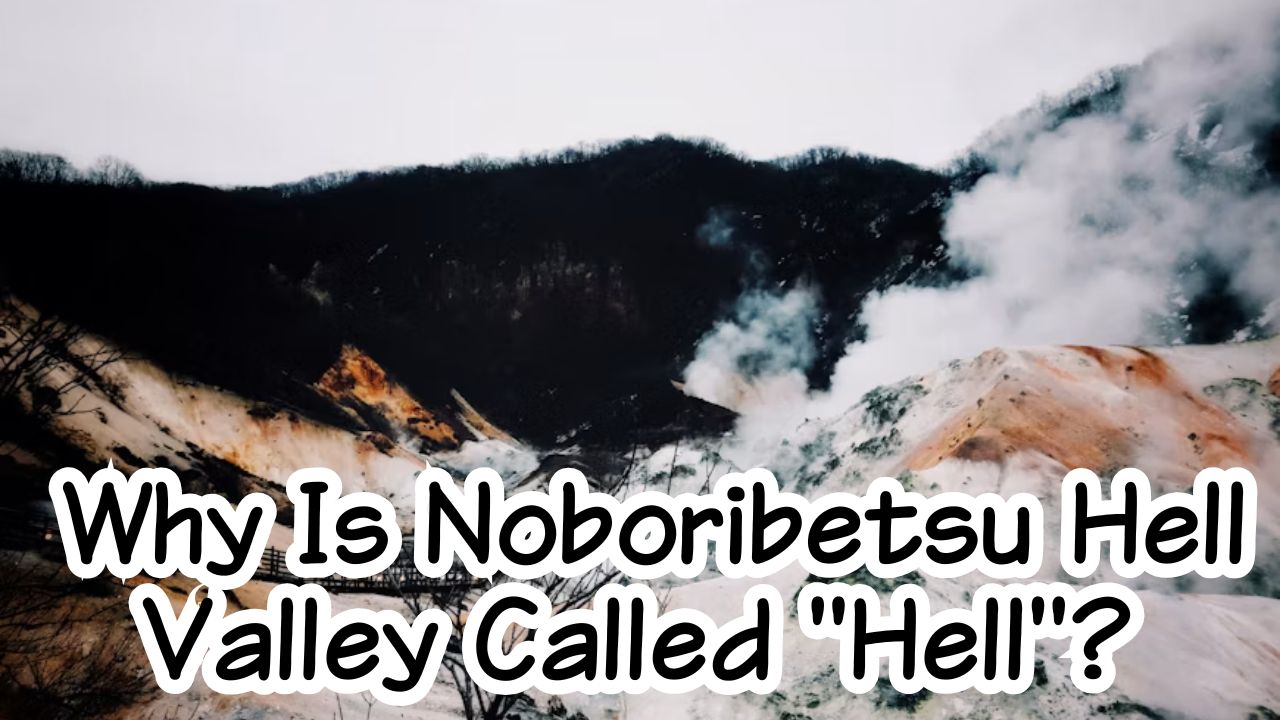
Why Is Noboribetsu Hell Valley Called “Hell”?The Short Answer
Noboribetsu Hell Valley is called “Hell” because its steaming vents, bubbling hot springs, and rugged volcanic landscape resemble the traditional image of the underworld in Japanese folklore.
Despite its dramatic name, it is actually the source of the healing hot spring water that made Noboribetsu one of Japan’s most famous onsen towns.

Why You Should Care
At first glance, Hell Valley may look like a dangerous place.
Steam rises from the ground, sulfur fills the air, and the earth seems to be alive beneath your feet.
But once you know the story behind this landscape, you’ll realize that what looks like “hell” is actually the reason Noboribetsu became one of Japan’s greatest hot spring destinations.
A Valley Born from Fire
Noboribetsu Hell Valley, known in Japanese as Jigokudani, was created by volcanic activity thousands of years ago.
The valley is the remains of an ancient volcanic crater formed by eruptions from nearby Mount Hiyori.
Although the volcano is no longer erupting, geothermal activity continues beneath the surface, sending steam and mineral-rich hot water through cracks in the earth.
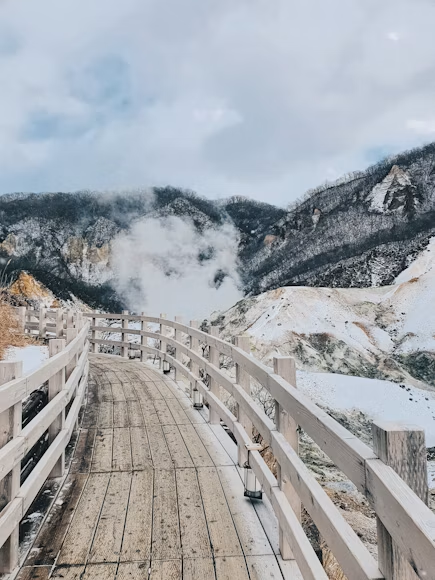
Why Does It Look Like “Hell”?
Steam, Sulfur, and Bubbling Water
When visitors first enter the valley, they often notice the strong smell of sulfur.
Clouds of steam rise from the ground, boiling mud bubbles continuously, and hot water flows through colorful mineral deposits.
To people hundreds of years ago, this mysterious landscape looked like the entrance to the underworld.
That’s why it became known as Hell Valley.
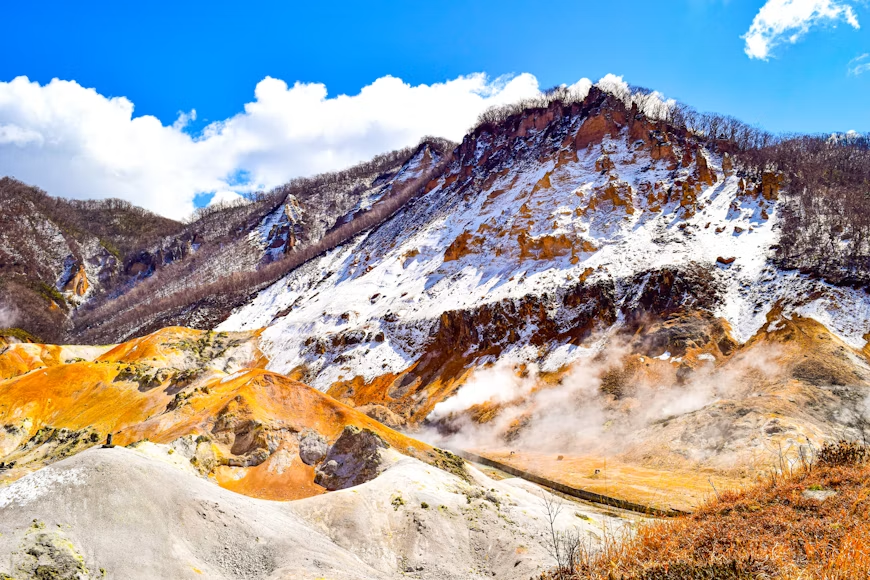
Nature Never Stops Working
More than 10,000 tons of hot spring water flow out of Hell Valley every day.
This naturally heated water supplies many of Noboribetsu’s hotels and public baths.
Without Hell Valley, Noboribetsu would never have become one of Japan’s leading hot spring resorts.
The Source of Japan’s Famous Hot Springs
Noboribetsu is famous because it has one of the richest varieties of hot spring water in Japan.
The area contains several different mineral-rich spring types, including:
- Sulfur springs
- Iron springs
- Salt springs
- Acidic springs
- Radium-containing springs (naturally occurring)
Each type has different mineral characteristics, making Noboribetsu popular with both locals and travelers.
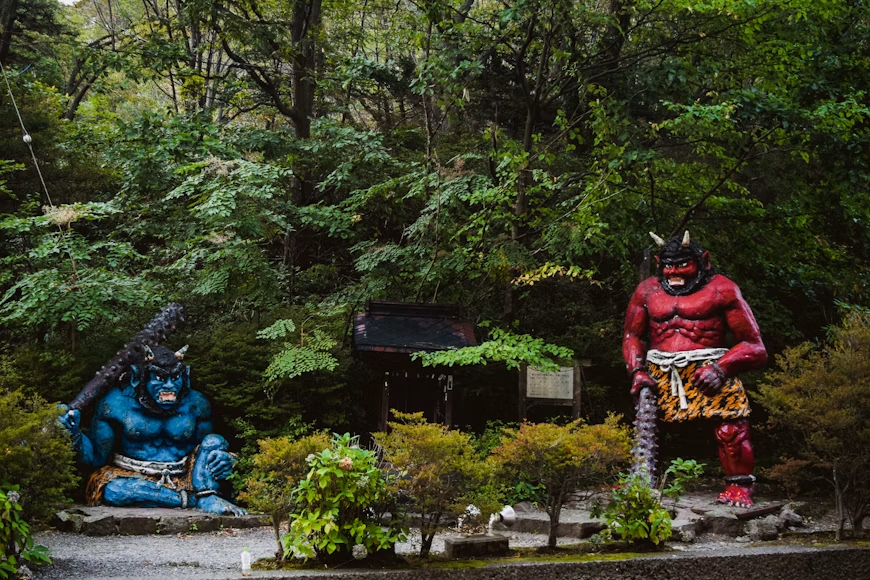
The Oni Who Guard the Valley
Hell Valley is closely connected with oni, the horned ogres of Japanese folklore.
Throughout Noboribetsu, you’ll find giant oni statues, colorful decorations, and festivals celebrating these legendary creatures.
Rather than being frightening monsters, the oni have become friendly symbols of the town and its fiery volcanic landscape.
Every August, the Noboribetsu Hell Festival brings the legend to life with parades, performances, and giant oni carrying a portable shrine through the streets.
A Walk Through Another World
Visitors can explore Hell Valley using wooden boardwalks that pass safely through the volcanic landscape.
One of the most popular walks leads to Oyunuma, a hot volcanic pond, and further on to the natural foot bath along the Oyunuma River.
After hiking through the steaming valley, soaking your feet in naturally warm water is an unforgettable experience.
From “Hell” to Relaxation
It may be called Hell Valley, but almost everyone leaves feeling relaxed.
The same volcanic forces that created the dramatic landscape also provide healing hot springs that people have enjoyed for centuries.
It’s a perfect reminder that nature can be both powerful and comforting at the same time.
A Sweet Stop After Exploring Hell Valley
After walking through the steaming landscape of Noboribetsu Hell Valley, why not reward yourself with a sweet treat?
One of my favorite places in the Noboribetsu Onsen town is Dosanko Purin, the first specialty pudding shop in Noboribetsu. It’s the perfect place to relax after exploring one of Hokkaido’s most dramatic natural attractions.
Dosanko Purin
Dosanko Purin specializes in handmade puddings made with carefully selected Hokkaido ingredients, including fresh local milk and eggs. The puddings are rich, smooth, and creamy, making them a popular dessert for both locals and visitors.
The shop also offers seasonal flavors, so you may discover something new each time you visit. Whether you enjoy the classic custard pudding or a limited-edition flavor, it’s a delicious way to end your visit to Hell Valley.
Why I Recommend It
- The first specialty pudding shop in Noboribetsu Onsen
- Made with fresh Hokkaido milk and eggs
- Rich, creamy, and smooth texture
- Seasonal flavors available throughout the year
Location
Dosanko Purin,Noboribetsu Onsen Town, Noboribetsu, Hokkaido(https://maps.app.goo.gl/bvcYqjLTCGPYiZPd9)
Access
- About 5 minutes on foot from Hell Valley
- Easy to reach while exploring the hot spring town
My Recommended Noboribetsu Itinerary from New Chitose Airport
Noboribetsu is one of the easiest hot spring destinations to visit from New Chitose Airport, taking about an hour by car or airport bus. I recommend spending one night to fully enjoy both Jigokudani (Hell Valley) and the famous hot springs.
Day 1 – Arrive and Relax in Noboribetsu Onsen
- Arrive at New Chitose Airport
- Travel to Noboribetsu Onsen (about 1 hour)
- Check in to your hotel or ryokan
- Walk around the hot spring town
- Relax in one of Japan’s most famous hot springs
Starting your Hokkaido trip with a relaxing onsen is the perfect way to recover after your flight.
Day 2 – Explore Hell Valley Before Heading Home
- Walk through Jigokudani (Hell Valley)
- Visit the wooden boardwalks and steaming volcanic landscape
- Enjoy local treats in the hot spring town
- Return to New Chitose Airport
Hell Valley is only about a 5-minute walk from the Noboribetsu Onsen bus terminal, making it easy to visit before continuing your journey.
Did You Know?
- Hell Valley releases over 10,000 tons of hot spring water every day.
- Noboribetsu has multiple types of hot spring water, making it one of Japan’s most diverse onsen resorts.
- The valley was formed by volcanic activity thousands of years ago.
- The giant oni statues have become symbols of Noboribetsu.
- A natural foot bath can be enjoyed after walking through the valley.
FAQ
Is Hell Valley dangerous?
No. Visitors stay on well-maintained boardwalks, making it safe to explore while enjoying the volcanic scenery.
Why does Hell Valley smell like sulfur?
The smell comes from sulfur gases released by underground geothermal activity.
Can you swim in Hell Valley?
No. The hot springs inside the valley are extremely hot. Instead, enjoy the nearby public baths or the natural foot bath.
How long does it take to visit?
Most visitors spend 1–2 hours exploring the boardwalks and nearby attractions.
When is the best season to visit?
Every season offers a different experience. Autumn colors and snowy winter landscapes are especially popular.
Visit It Yourself
Location
Noboribetsu Onsen, Noboribetsu City, Hokkaido(https://maps.app.goo.gl/T4JewTjqW2Nx3bF59)
Best Season
- Autumn for colorful foliage
- Winter for dramatic snowy scenery and steaming vents
- Spring and summer for comfortable hiking
How to Get There
- About 15 minutes by bus from JR Noboribetsu Station.
- Accessible by car via the Hokkaido Expressway.
Estimated Visit Time
1–2 hours
Admission Fee
Entry to Hell Valley is free.
Please check the official website for the latest information.
Official Website
- Noboribetsu International Tourism & Convention Association(https://noboribetsu-spa.jp/)
- Hokkaido Official Tourism Website(https://www.visit-hokkaido.jp/)
Final Thoughts
Hell Valley may sound frightening, but it is one of Hokkaido’s greatest natural treasures.
Its steaming vents, volcanic landscape, and healing hot springs tell the story of a land that is still alive beneath the surface.
When you walk through Jigokudani, you’re not simply visiting an onsen town.
You’re witnessing the powerful forces that shaped Hokkaido—and continue to make it one of Japan’s most fascinating destinations.







コメント