

My name is MAKO
Based in Sapporo, Hokkaido | Born and raised in Obihiro, Hokkaido | Lover of Sapporo Classic beer and fresh sashimi | Passionate about road trips and camping | Always chasing beautiful scenery
Why Is Wakkanai’s White Road Made of Scallop Shells?The Short Answer
Wakkanai’s famous White Road is a roughly 3-kilometer road covered with crushed scallop shells from the local seafood industry. It was completed in 2011 as part of the Soya Hills footpath, turning a material that had been difficult to dispose of into one of northern Hokkaido’s most beautiful landscapes.
The bright shells create a striking contrast with green hills, blue sky, and the Sea of Okhotsk.

Why You Should Care
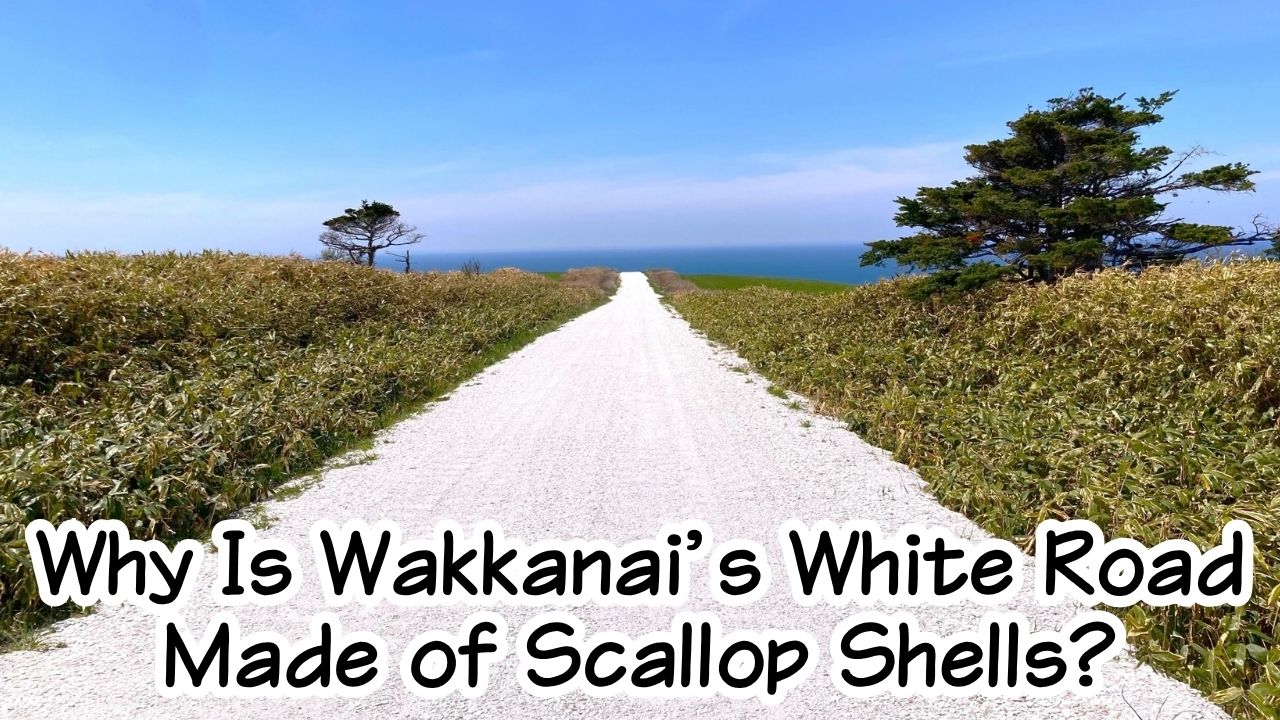
At first glance, Wakkanai’s White Road looks almost unreal.
A pure white line runs across rolling green hills toward a blue sea.
You might think it is:
snow,
white gravel,
or even a specially painted road.
But look more closely.
The road beneath your feet is made from scallop shells.
That small discovery completely changes the landscape.
The White Road connects three important parts of northern Hokkaido in one place:
the sea, the land, and the people who live from them.
The Story Behind Wakkanai’s White Road
Is the White Road Really Made from Scallop Shells?
Yes.
Wakkanai City describes the White Road as a road covered with crushed shells from locally produced scallops.
The shell-covered section is about 3 kilometers long and runs through the Soya Hills near Cape Soya. 稚内市
When you walk across it, the surface feels softer than an ordinary paved road.
The small shell pieces also make a gentle crunching sound under your shoes.
It is simple—but surprisingly memorable.
Why Did Wakkanai Have So Many Scallop Shells?
Scallops are an important part of the seafood economy in the Soya region.
But once the meat is removed, enormous numbers of shells remain.
In the past, finding useful ways to handle those shells was a challenge.
Local records explain that people involved with road and tourism projects began wondering whether this local material could be reused instead of simply being treated as waste.
That question eventually led to something nobody expected:
a tourist attraction.
Was the White Road Originally Created for Tourists?
Not exactly.
The story developed from practical road improvement and a growing footpath project in the Soya Hills.
Local accounts say that during earlier agricultural-road work, people were looking for a material that would fit the surrounding scenery better than ordinary pavement.
Crushed scallop shells became an idea worth exploring. Similar shell roads were known in rural areas overseas, including New Zealand and Scotland.
But it was not as simple as dumping shells onto a road.
The shells had been treated as waste, so legal and cost issues had to be solved before they could be used properly as road material.
Wakkanai City, the tourism association, the chamber of commerce, and other local organizations worked together, and the White Road was completed in 2011.
How Did a Waste Problem Become a Beautiful Landscape?
This is what makes the White Road such a good Why Hokkaido story.
The goal was practical:
find a useful way to reuse a local material.
But the result was unexpectedly beautiful.
White shells reflected the sunlight.
The road stood out against the grass.
Beyond the hills was the blue sea.
Suddenly, a material connected to the fishing industry became part of the scenery.
The road gradually gained attention as visitors photographed its unusual contrast, and Wakkanai City now describes it as one of its increasingly popular sightseeing spots, especially through social media.
Why Are the Soya Hills So Smooth and Rolling?
The road would not look nearly as dramatic without the hills around it.
The Soya Hills have a special landscape called periglacial terrain.
During the cold climate of the Ice Age, repeated freezing and thawing caused the soil to slowly move, helping create the smooth, wave-like slopes visible today. The landscape was designated a Hokkaido Heritage site in 2004.
The area is now largely grassland.
That means few trees interrupt the view.
So the White Road can stretch across the open landscape like a ribbon.
Why Does the White Road Seem to Lead Straight Into the Sea?
This is one of its most photographed views.
Near the downhill section, the white road appears to drop toward the blue sea.
The sea visible from this side of the Soya Hills is the Sea of Okhotsk.
On clear days, official tourism information says visitors may also see Mt. Rishiri in the distance and even the outline of Sakhalin under good conditions.
White road.
Green hills.
Blue sea.
Huge sky.
The colors are simple, but together they create one of northern Hokkaido’s most recognizable landscapes.
Is the White Road Part of a Hiking Trail?
Yes.
The White Road forms part of the Soya Hills footpath.
Older official Wakkanai guides describe the shell-covered section as the final approximately 3 kilometers of the route.
You can walk it, cycle through the area, or travel by car.
Walking has one advantage:
you can actually hear and feel the shells beneath your feet.
Instead of looking through a windshield, you notice the wind, grass, sea, and changing texture of the road.
That slower pace suits the landscape surprisingly well.
Does Wakkanai Have to Keep Adding New Shells?
Yes.
A white road made from shells does not stay perfect forever.
Weather, vehicles, and snow gradually move and wear down the surface.
Wakkanai City has carried out large-scale shell replenishment at roughly two-year intervals. In spring 2026, about 400 tons of crushed shells were added before the road reopened for the season. 稚内市
The road therefore is not a finished monument.
It has to be maintained again and again.
That is another connection between the local scallop industry and the landscape visitors see today.
Why Does the Road Look Whiter After the Shells Are Added?
Fresh shell material may not immediately look bright white.
During the 2026 maintenance work, workers explained that recently delivered shells had a slightly brownish appearance but became much whiter after drying in the sun for several days.
So even the famous color changes with:
weather,
sunlight,
age,
and maintenance.
If you visit soon after fresh shells have been laid, the white can be especially striking.
Why Has the White Road Become So Popular for Photos?
Part of the reason is color.
There are almost no complicated elements in the classic view:
white road,
green land,
blue sky,
blue sea.
The curves of the road naturally pull your eyes into the distance.
Wakkanai itself now promotes the location for its cinematic, almost unreal appearance, and the road has become increasingly popular through social media.
But the best photograph is not necessarily the busiest one.
A wide shot that includes plenty of open sky and hillside often shows what makes this place special better than a close-up selfie.
Can You Drive on the White Road?
Yes, cars and motorcycles can use it.
But the road is narrow.
Wakkanai City documents describe it as about 4 meters wide, which makes passing another vehicle difficult in some places. There is also no dedicated parking area or restroom directly along the White Road.
For 2026, the official tourism association asks drivers to:
- enter from the Cape Soya side
- use the restroom before entering
- slow down and share the road
- never enter the surrounding grasslands
- drive slowly through the Soya settlement near the exit.
The route is not legally one-way, but following the recommended direction helps reduce congestion.
Why Should You Never Walk Into the Grass Beside the Road?
Because those beautiful green fields are not just scenery.
Much of the surrounding land is working pasture.
Entering the grass for a photograph can damage agricultural land and disturb local operations.
Wakkanai City specifically identifies visitors entering surrounding pasture as a problem and asks travelers to remain on the road.
The best photograph is the one you can take without damaging the place you came to see.
Is There Anything Travelers Should Know in 2026?
Yes.
Two current points are especially important.
First, reconstruction of the Soya Misaki Wind Farm began in 2026. Work from roughly May through October may cause temporary traffic restrictions around the White Road and parts of the Soya Hills footpath.
Second, this is wild northern Hokkaido.
Wakkanai City recorded brown bear sightings directly on the White Road on September 21 and September 26, 2026. Travelers planning to walk should check the city’s latest bear information before visiting and follow local guidance.
Nature is part of the attraction here.
It also deserves respect.
Don’t Miss Cape Soya When Visiting the White Road!
If you’re planning to visit Wakkanai’s famous White Road, I highly recommend adding Cape Soya to your itinerary!
Located nearby, Cape Soya is famous as the northernmost point of Japan’s main islands.
Here, you can take a memorable photo at the iconic northernmost-point monument and enjoy breathtaking views of the Sea of Okhotsk.
On a clear day, you may even see Sakhalin Island, Russia, across the sea!
Combining the White Road and Cape Soya is a wonderful way to experience the beauty of northern Hokkaido.
Why Do People Love Cape Soya?
What makes Japan’s northernmost point such a special destination?
Discover the fascinating story behind Cape Soya and why so many travelers visit this remote corner of Hokkaido.
Read next: Why Do People Love Cape Soya? The Story Behind Japan’s Northernmost Point

Did You Know?
- The White Road is about 3 kilometers long and is surfaced with crushed scallop shells.
- The modern White Road was completed in 2011.
- The idea helped turn scallop shells that had been difficult to dispose of into a useful local resource.
- The surrounding Soya Hills are a Hokkaido Heritage landscape shaped by freeze-thaw processes during the Ice Age.
- Around 400 tons of shells were added during maintenance in spring 2026.
FAQ
Is Wakkanai’s White Road Really Made Entirely of Scallop Shells?
The road surface is covered with crushed scallop shells.
The shells form the characteristic white layer visitors see and walk or drive across.
Can I Drive on the White Road?
Yes.
However, it is narrow, shared with pedestrians and cyclists, and passing can be difficult.
The official tourism association recommends entering from the Cape Soya side and driving slowly.
Is the White Road Open in Winter?
No.
Current official tourism information lists the road as closed roughly from mid-November until late April because of winter conditions. In 2026, it reopened on April 24.
Can I See Mt. Rishiri From the White Road?
On a clear day, yes.
Official tourism information says Mt. Rishiri can be visible from parts of the route. Sakhalin may also be visible when atmospheric conditions are especially good.
Is There Parking or a Restroom on the White Road?
There is no dedicated parking area or restroom directly along the approximately 3-kilometer road.
The tourism association recommends using the restroom around Cape Soya before entering.
Visit It Yourself
Location
Wakkanai White Road
Soya, Wakkanai, Hokkaido
The road runs through the Soya Hills, close to Cape Soya.
Best Season
Late April–October
June through September offers green hills and comfortable scenery, while early autumn brings a different color to the grasslands.
The road closes for winter. Current tourism information gives the closure period as approximately mid-November through late April, although snow conditions can change the dates.
How to Get There
The easiest way is by car.
Current official visitor information gives approximate driving times of:
- JR Wakkanai Station: about 60 minutes
- Wakkanai Airport: about 30 minutes
- Cape Soya: about 10 minutes.
For drivers, the tourism association recommends entering the White Road from the Cape Soya side.
Public transportation in this area is limited and seasonal services may change, so check current Wakkanai tourism and bus information before traveling.
Estimated Visit Time
By car with photo stops: 30–60 minutes
Walking the White Road itself: about 1 hour or more, depending on pace and stops
Allow extra time if you also visit Cape Soya or explore more of the Soya Hills.
Admission Fee
Free
There is no admission fee for the White Road.
Opening Period
There are no normal daily opening hours because this is a public road.
However, it is seasonally closed in winter and temporary restrictions may occur.
In 2026, wind-farm reconstruction work may also cause short-term restrictions through approximately October.
Please check the official website for the latest information.
Official Website
Final Thoughts
Why is Wakkanai’s White Road made of scallop shells?
It began with something ordinary.
People ate scallops.
The meat became food.
The shells remained.
There were a lot of them.
So someone asked:
“Could we use these for something?”
The answer eventually became a road.
But then something unexpected happened.
The white shells met the green Soya Hills.
The hills met the blue Sea of Okhotsk.
And a practical idea became one of Wakkanai’s most memorable landscapes.
That is what makes the White Road special.
It is not simply a photogenic road.
It tells you something about the place.
Fishing happens in the sea.
Cattle graze on the hills.
Travelers cross the land between them.
And local scallop shells connect all three.
Wakkanai’s White Road is beautiful because the sea, the land, and local life all meet in one landscape.






コメント