

My name is MAKO
Based in Sapporo, Hokkaido | Born and raised in Obihiro, Hokkaido | Lover of Sapporo Classic beer and fresh sashimi | Passionate about road trips and camping | Always chasing beautiful scenery
Why Is Ishikari Nabe Made with Salmon and Miso? The Short Answer
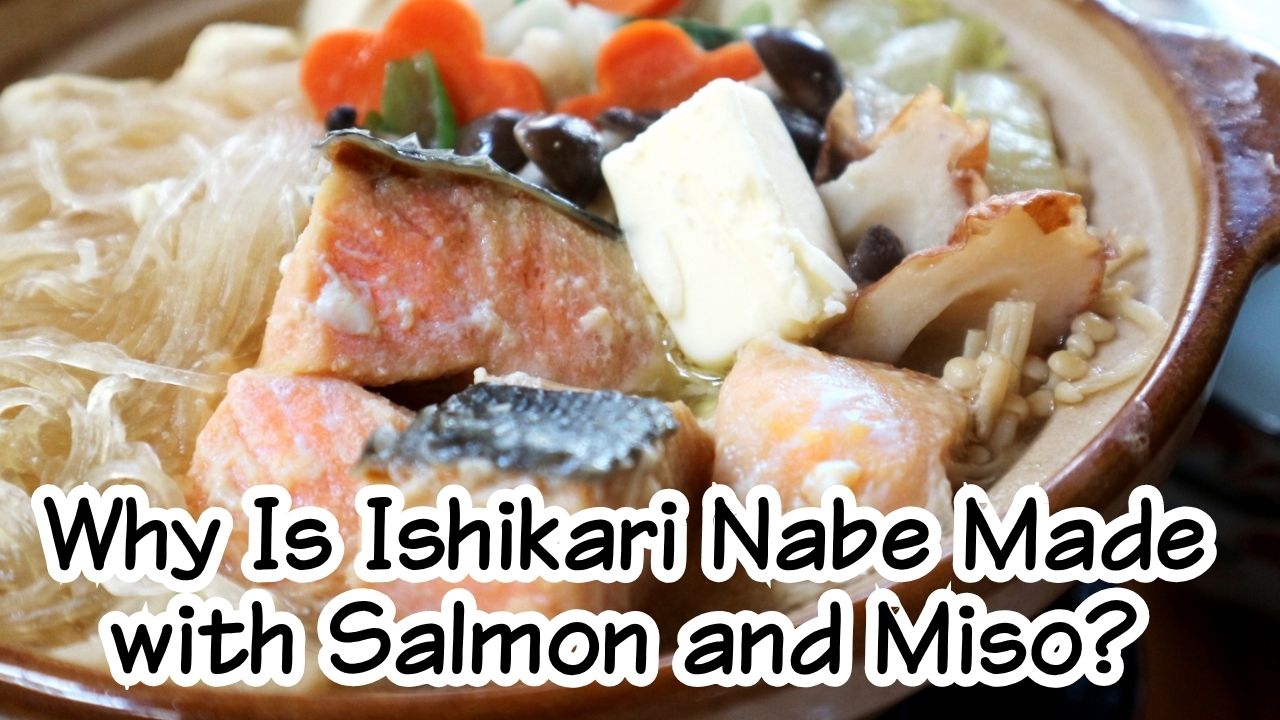
Ishikari Nabe was born in Ishikari, at the mouth of the Ishikari River, where salmon fishing had long been an important part of local life. Fishermen cooked fresh salmon pieces and ara—the head, bones, and other flavorful parts—in a large miso-based pot during breaks from their work.
Today, the classic Ishikari style combines fresh salmon, salmon ara, cabbage, onions, tofu, and other vegetables in a kombu-and-miso broth, finished with a sprinkle of sansho pepper.

Why You Should Care
When most travelers think of Hokkaido salmon, they imagine:
sashimi,
sushi,
grilled fish,
or ikura.
But Ishikari Nabe shows another side of Hokkaido food culture.
This dish was not created to impress tourists.
It grew from the daily lives of people working beside one of Hokkaido’s great salmon rivers.
And once you know why the pot contains salmon bones, cabbage, onions, miso, and even a final shake of sansho, it stops looking like “just salmon soup.”
It becomes a story about:
fishing, cold weather, local agriculture, food preservation, and Hokkaido’s modern development.
What Makes Ishikari Nabe Different from Other Salmon Hot Pots?
There is no single household recipe followed everywhere in Hokkaido.
But Ishikari City describes a classic local version with several clear features:
- fresh salmon cut into chunks
- salmon ara, including backbone and other bony parts
- cabbage and onions
- tofu and other vegetables
- kombu stock
- white miso
- sansho pepper at the end.
Each ingredient tells part of the story.
Why Does Ishikari Nabe Use Salmon and the Ara?
The answer begins with location.
Ishikari sits near the mouth of the Ishikari River, and salmon fishing has been important there since well before modern Hokkaido. Japan’s Ministry of Agriculture describes the area as a major salmon-fishing region and identifies Ishikari Nabe as a fishermen’s dish born there.
Fresh fish was valuable.
So were the parts around the head and backbone.
Rather than use only clean fillets, fishermen could put the salmon ara into the pot too.
Those bones and surrounding flesh add deep flavor to the broth.
It was practical.
And it tasted good.
That idea remains central to authentic Ishikari Nabe today.
Why Is the Broth Made with Miso?
Miso gives Ishikari Nabe its rich, comforting flavor.
The Ministry of Agriculture describes the dish as fresh salmon and vegetables cooked in kombu broth, with the flavor adjusted using miso. It also notes that Ishikari Nabe became a classic cold-season food that warms the body.
Salmon is a rich fish.
Miso is also strong and savory.
Together, they create a broth that can stand up to fatty salmon, fish bones, and plenty of vegetables.
This is one of the easiest ways to distinguish Ishikari Nabe from another Hokkaido salmon soup called Sanpeijiru.
Sanpeijiru traditionally uses salted fish and relies strongly on that salt for seasoning.
Ishikari Nabe, by contrast, is known for fresh salmon and miso.
Why Are Cabbage and Onions So Important?
This is one of the most interesting details.
You might expect an old Japanese fishermen’s dish to use only traditional Japanese vegetables.
But Ishikari Nabe often contains cabbage and onions.
The Agency for Cultural Affairs notes that vegetables such as cabbage became more widely cultivated in Hokkaido after the Meiji period, meaning the ingredients of Ishikari Nabe also reflect the history of Hokkaido’s agricultural development.
Ishikari City also explains that cabbage and onion are used because their sweetness works especially well in the pot.
So one bowl brings together two Hokkaido industries:
salmon from the water
and
vegetables from the land.
Why Do People Sprinkle Sansho on Ishikari Nabe?
Here is the finishing touch many travelers do not expect.
Sansho pepper.
Ishikari City describes a final sprinkle of sansho as one of the characteristics of authentic local Ishikari Nabe. The city explains that it helps reduce strong fish and miso aromas while bringing out the dish’s umami.
Sansho is not the same as black pepper.
It has a fresh, citrus-like fragrance and can create a light tingling sensation.
You do not need much.
But that small amount changes the aroma of the entire pot.
How Did a Fishermen’s Meal Become Hokkaido’s Famous Hot Pot?
Ishikari Nabe did not begin with that name.
Its story starts with something much more practical.
What Was the Fishermen’s “Dainabe”?
According to Ishikari City and the Agency for Cultural Affairs, the predecessor of Ishikari Nabe was a fishermen’s meal called “dainabe.”
The exact kanji spelling varied, but it referred to a large-pot dish fishermen ate during breaks from work.
Fresh salmon was cut into pieces.
The ara went in too.
Everything was cooked together in a large pot.
This made sense in Ishikari.
Before modern refrigeration became common, a dish centered on fresh, uncured salmon could develop most naturally in a place where salmon was being caught right there. The Agency for Cultural Affairs specifically highlights this connection between fresh salmon and Ishikari’s fishing industry.
Was It Always Called “Ishikari Nabe”?
No.
This is one of the best surprises in the story.
The name “Ishikari Nabe” came later, after World War II.
Ishikari City explains that the dish had already developed from fishermen’s cooking before the war, but the present name became established when it was served to tourists who came to watch the region’s famous salmon beach-seine fishing.
In other words:
the food came first.
The famous name came later.
How Did Salmon Fishing Turn the Dish Into a Tourist Attraction?
By the postwar period, Ishikari’s large-scale salmon beach-seine fishing had become famous enough to attract visitors.
The Ministry of Agriculture notes that the fishing operation was seen as a symbol of Hokkaido’s fishing industry. Tourists came to watch the huge nets being pulled in.
There was a waiting period between setting the nets and hauling them back.
So visitors were served hot salmon stew while they waited.
They loved it.
That fishermen’s food began to travel beyond Ishikari.
The Agency for Cultural Affairs says the dish later spread through promotion by Ishikari Town and through restaurants in Sapporo presenting it as a Hokkaido specialty.
How Does Ishikari Nabe Reflect Hokkaido’s History?
A bowl of Ishikari Nabe looks rustic.
But it contains several layers of Hokkaido history.
Why Could This Dish Only Have Developed in a Salmon Town?
Today, we can buy fresh salmon almost anywhere with modern refrigeration.
That was not always true.
The Agency for Cultural Affairs points out that the use of fresh salmon and fresh salmon ara was closely connected to Ishikari’s location and its abundant salmon fishery.
This was a meal created where the ingredient actually arrived from the river and sea.
That is why its origin matters.
Move the same recipe somewhere without fresh salmon, and the story would be completely different.
What Do Cabbage and Onions Tell Us About Hokkaido’s Development?
The vegetables are just as interesting as the fish.
Hokkaido underwent rapid agricultural development from the Meiji period onward.
New crops and farming methods expanded.
The Agency for Cultural Affairs specifically notes that the western vegetables used in Ishikari Nabe, including cabbage, reflect that development history.
So the dish connects:
an older salmon-fishing culture
with
the newer agricultural society that developed during modern Hokkaido.
That is a lot of history for one hot pot.
Why Is Kindaitei Important to the Ishikari Nabe Story?
If you want to eat Ishikari Nabe somewhere connected directly to its history, Kindaitei is one of the most important places.
The restaurant was founded in 1880 and is officially introduced by Ishikari City as a salmon-and-trout restaurant associated with the birthplace of Ishikari Nabe. Its original Meiji-era building is still in use.
Kindaitei serves salmon in many forms, not only in hot pot.
That makes the meal feel less like ordering one famous dish and more like entering the food culture that created it.
Why Is Ishikari Nabe Still Important Today?
The fishing world that created the dish has changed dramatically.
But Ishikari Nabe did not disappear.
Instead, it became something bigger.
How Did Ishikari Nabe Become One of Hokkaido’s Representative Foods?
In 2007, the Ministry of Agriculture selected Ishikari Nabe, salmon chanchan-yaki, and Jingisukan among the dishes representing Hokkaido in its “100 Selected Rural, Mountain and Fishing Village Foods” project. Ishikari City now promotes all three as major Hokkaido regional dishes.
Ishikari Nabe also appears in homes across Hokkaido.
Recipes vary.
Some families add different root vegetables.
Some change the miso.
Some add salmon roe.
That flexibility helped a fishermen’s pot become a familiar home meal.
What Is “Ishikari Nabe Day”?
There is even a day for it.
September 15 is officially registered as Ishikari Nabe Day.
The local group promoting the dish chose the date using a Japanese wordplay connected with the idea of “the right time to eat” and “let’s go eat.” The date was officially registered in 2008.
September is also perfectly suited to the theme.
It is the season when autumn salmon culture becomes especially visible in Ishikari.
Is Ishikari Nabe a “100-Year Food”?
Yes.
The Agency for Cultural Affairs recognized Ishikari Nabe as a 100-Year Food in fiscal 2023, and it also received a special expert award. The current Culture Agency database places it in the category for food cultures created in the modern Meiji–Taisho era.
That recognition fits the story beautifully.
A meal once eaten beside salmon nets is now considered a food culture worth passing to future generations.
How Should Travelers Experience Ishikari Nabe?
The easiest option is to eat it in Ishikari itself.
That way, the name, the river, the salmon history, and the food all connect in one trip.
What Should You Look for in an Authentic Ishikari Nabe?
If you want the classic local experience, look for:
- fresh salmon rather than salted salmon
- salmon ara as well as fillet
- cabbage and onion
- miso-based broth
- tofu and other vegetables
- sansho at the end.
Do not worry if every restaurant is not identical.
Ishikari City and the Ministry of Agriculture both note that recipes vary by household and restaurant.
That variation is part of a living food culture.
When Is the Best Season to Eat Ishikari Nabe?
You can find Ishikari Nabe at participating restaurants beyond one short season.
But autumn and winter feel especially appropriate.
Autumn connects the dish with salmon season.
Cold weather makes the steaming miso broth even more satisfying.
September is also a special month in Ishikari, with salmon-related events traditionally held in the city and Ishikari Nabe Day on September 15.
Should First-Time Visitors Try Kindaitei?
If history is part of why you travel, yes.
Kindaitei was founded in 1880, still uses its historic building, and is officially recognized by Ishikari City as a restaurant closely connected with Ishikari Nabe’s origins.
Current city information lists:
Hours: 11:00 a.m.–7:00 p.m.
Closed: Irregularly
Reservation: Required
It is a particularly good choice if you want to understand the dish as history rather than simply order a bowl of soup.
My Recommendation: Enjoy Ishikari Nabe with Sapporo Classic!
If you’re planning to try Ishikari Nabe in Hokkaido, I personally recommend pairing it with a cold glass of Sapporo Classic beer!
Sapporo Classic is a popular beer made for the Hokkaido market, and its refreshing taste goes wonderfully with the rich miso broth and delicious salmon in Ishikari Nabe.
For me, enjoying a hot bowl of Ishikari Nabe with a cold Sapporo Classic is one of the best ways to experience Hokkaido’s local food culture!
Why Is Sapporo Classic Only Sold in Hokkaido?
Have you ever wondered why Sapporo Classic is so closely associated with Hokkaido?Discover the story behind this beloved local beer and why it makes such a memorable part of a Hokkaido trip.
Read next: Why Is Sapporo Classic Only Sold in Hokkaido? The Local Beer That Becomes the Perfect Travel Memory
Did You Know?
- Ishikari Nabe developed from a fishermen’s large-pot meal known as dainabe.
- The name “Ishikari Nabe” became established only after World War II, even though the dish itself was older.
- Authentic Ishikari-style versions use both salmon meat and salmon ara such as the backbone.
- A final sprinkle of sansho pepper is a distinctive local finishing touch.
- September 15 is Ishikari Nabe Day.
FAQ
Is Ishikari Nabe the Same as Sanpeijiru?
No.
Both can contain salmon, but they are different Hokkaido dishes.
Ishikari Nabe is known for fresh salmon and a miso-based broth.
Sanpeijiru traditionally uses salted fish, and the salt from the fish plays a major role in seasoning the soup.
Does Ishikari Nabe Always Contain Salmon Bones?
Traditional versions often use ara, including the backbone and other bony parts, as well as pieces of salmon meat.
That is one of the features emphasized by Ishikari City.
Is Ishikari Nabe Spicy?
No.
Miso provides the main flavor.
Sansho is often sprinkled on top, but it is aromatic and lightly tingling rather than hot like chili pepper.
Is Ishikari Nabe Only a Winter Food?
No.
It can be eaten at other times of year, depending on the restaurant.
However, autumn connects it with salmon season, and winter is naturally perfect for a hot miso-based dish.
Can I Eat Ishikari Nabe in Sapporo?
Yes, some restaurants outside Ishikari serve it.
In fact, Sapporo restaurants helped spread its reputation as a Hokkaido specialty after the war.
But if the story matters to you, eating it in Ishikari gives the dish much more context.
Visit It Yourself
Location
For a historic experience:
Kindaitei
1 Shinmachi, Ishikari, Hokkaido
The restaurant is in Ishikari’s old Honcho area near the Ishikari River and coast.
Best Season
September–February is especially atmospheric.
Autumn connects with salmon season, while winter is ideal for a steaming hot pot.
Ishikari Nabe itself may be available outside these months depending on the restaurant.
How to Get There
The Ishikari Honcho area is easiest to reach by car.
Ishikari City lists the area at approximately 40 minutes by car from Sapporo-kita IC via the local road network.
Bus services also connect Sapporo and Ishikari, but routes and timetables can change.
Check current transportation information before traveling.
Estimated Visit Time
Meal only: 1–2 hours
If you also explore the Ishikari River mouth, local salmon history, or the coast, allow half a day.
Admission Fee
There is no admission fee.
You pay for your meal.
Kindaitei is a reservation-based restaurant, so confirm the current menu and price when booking.
Opening Hours
Current Ishikari City information for Kindaitei:
11:00 a.m.–7:00 p.m.
Irregular holidays
Reservation required
Please check the official website for the latest information.
Official Website
Final Thoughts
Why is Ishikari Nabe made with salmon and miso?
Because the dish grew beside a river full of salmon.
Fishermen had fresh fish in front of them.
They used the meat.
They used the bones and ara.
They put everything into a large pot.
Miso made the broth rich and warming.
Later, cabbage and onions became part of the dish as Hokkaido agriculture developed.
Then tourists arrived to watch the salmon nets.
They were served the fishermen’s food.
They loved it.
A working meal gained a name.
The name became famous.
And eventually,
a pot once eaten during breaks from salmon fishing became one of Hokkaido’s representative regional dishes.
So when you eat Ishikari Nabe, do not look only at the salmon.
Look at the entire pot.
The fish tells the story of the river.
The vegetables tell the story of Hokkaido’s farms.
The miso and sansho preserve the local style.
Ishikari Nabe is more than salmon in miso soup.
It is a pot filled with the history of the Ishikari River and the people who lived beside it.



コメント