
My name is MAKO
Based in Sapporo, Hokkaido | Born and raised in Obihiro, Hokkaido | Lover of Sapporo Classic beer and fresh sashimi | Passionate about road trips and camping | Always chasing beautiful scenery
Why Is Hokkaido Famous for Hokke?The Short Answer
Hokke—known in English as arabesque greenling—lives around almost all of Hokkaido, and the island dominates Japan’s domestic catch. Hokkaido Research Organization reports that Hokkaido accounted for about 98% of Japan’s hokke landings in 2023, while Hokkaido’s 2026 Data Book still ranks the prefecture first nationally for hokke production.
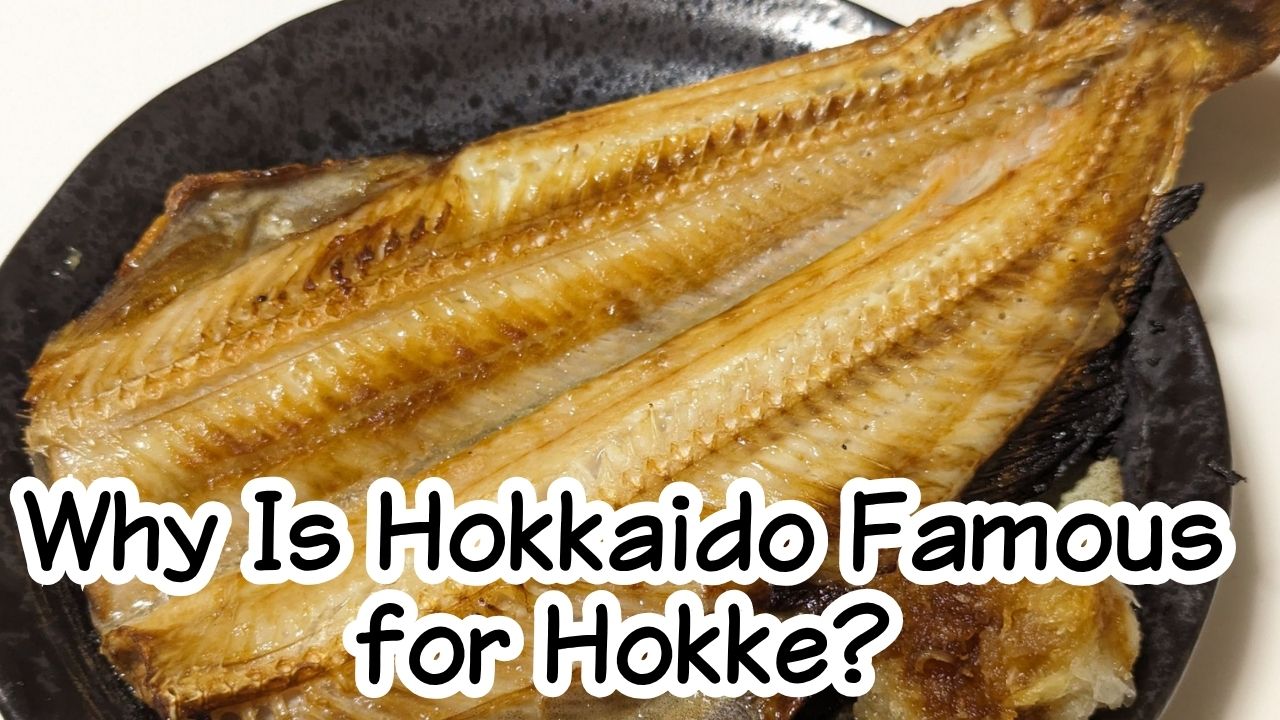
The fish became especially famous through hokke no hiraki: hokke split open, lightly salted, dried, and grilled. Today, that large open fish is one of the most familiar sights on a Hokkaido izakaya table.

Why You Should Care
Hokkaido is famous for expensive seafood.
Crab.
Sea urchin.
Salmon roe.
Hokke is different.
It became loved not as a luxury food, but as a familiar fish for ordinary people.
And its story is surprisingly rich.
The same fish changes names as it grows.
Young hokke travel through northern waters before settling near rocky seabeds.
Male hokke even guard their eggs without eating until they hatch.
And the famous grilled “split-open hokke” that now feels traditional is actually a relatively recent food culture.
Once you know that, the big fish on your izakaya table becomes much more interesting.
Why Is Hokkaido the Home of Hokke?
Hokke’s scientific name is Pleurogrammus azonus.
Its standard English name is arabesque greenling, and it belongs to the greenling family—not the mackerel family.
Hokkaido’s official fish guide says hokke lives around almost the entire island. Depending on the region, it is caught by gill nets, bottom-set nets, purse seines, offshore trawlers, and other fishing methods.
Why Are So Many Hokke Caught Around Hokkaido?
Hokkaido is surrounded by three very different seas:
the Sea of Japan,
the Sea of Okhotsk,
and the Pacific Ocean.
Hokke populations live across these northern waters, with important fishing grounds around places such as Rishiri and Rebun, Rausu, the northern Sea of Japan, Musashi Bank, and the Okhotsk coast.
The numbers show how strong that connection is.
In 2023, around 98% of Japan’s domestic hokke landings came from Hokkaido.
So if you want to understand this fish, Hokkaido is the place to start.
When Is Hokkaido Hokke at Its Best?
Hokke can be caught in different parts of Hokkaido through much of the year.
But Hokkaido Gyoren highlights May through July as an especially good season. In spring, hokke approach the coast to feed heavily, and fish caught during this period can develop good fat content.
There is a nice local way to remember it.
When the cherry blossoms finally reach Hokkaido,
hokke is also becoming delicious.
Why Does Hokke Have So Many Different Names?
One of the most interesting things about hokke is that people in Hokkaido use different names for the fish depending on its age and way of life.
The fish itself does not change species.
Its lifestyle changes.
From Aobokke to Nebokke: How Does Hokke Change as It Grows?
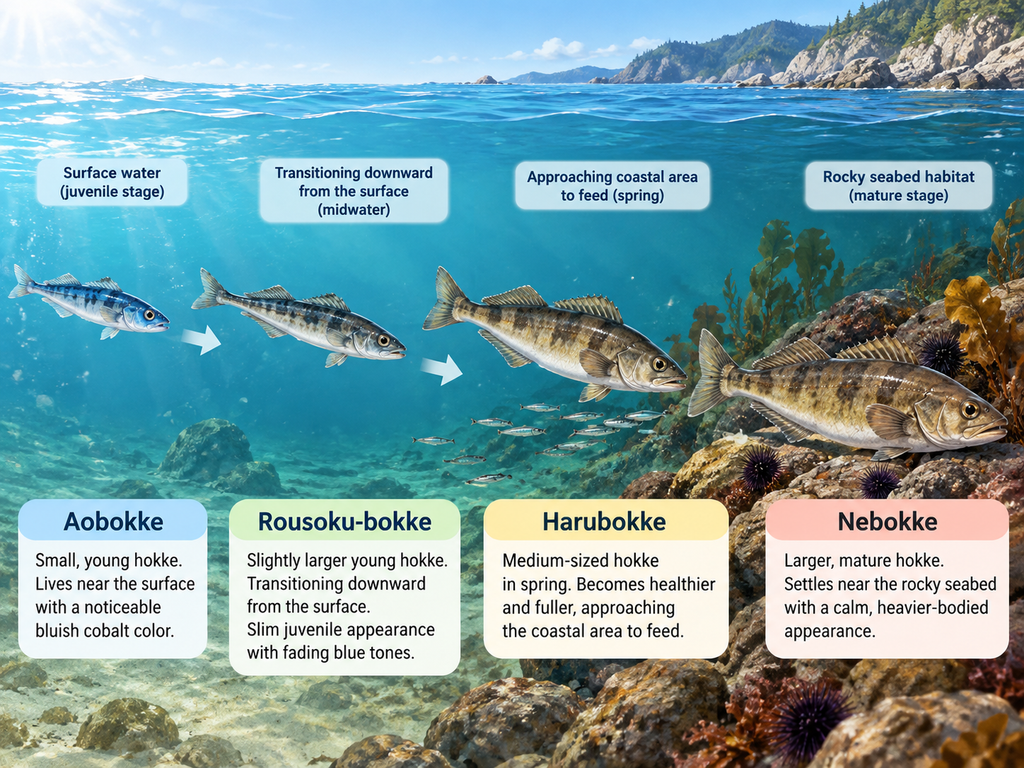
Hokkaido’s official fish guide explains the sequence like this:
- Aobokke — young hokke living near the surface. Their bodies have a bluish cobalt color.
- Rousoku-bokke — young fish that have moved from the surface toward the seabed.
- Harubokke — hokke that move closer to shore in spring to feed.
- Nebokke — older fish that settle around rocky areas.
In other words, these names work almost like chapters in the fish’s life.
A young blue fish traveling through northern waters becomes a bottom-dwelling fish, approaches the coast to feed, and eventually settles into a more stable adult habitat.
That is a lot of story hidden inside one menu word.
Do Male Hokke Really Guard Their Eggs?
Yes.
During the spawning season, male hokke create territories around rocky areas.
After a female lays her eggs, the male guards the egg mass, drives other fish away, and even blows fresh seawater over the eggs with his mouth. Hokkaido fisheries researchers report that the male continues guarding them until they hatch—and does not feed during that period.
It is probably not the behavior you imagine when a grilled hokke arrives at your table.
But beneath that simple dish is a surprisingly complex northern fish.
Why Is Hokke Usually Served Split Open and Grilled?
Ask many Japanese people to imagine hokke, and they will probably picture the same thing:
a large fish split open from end to end,
grilled until golden brown.
But this style was not always the standard.
Was “Hokke no Hiraki” Always Popular?
No.
According to Hokkaido Gyoren, split-open hokke did not become widely sold until around the late 1970s and early 1980s.
Before that, heavily salted hokke was an important preserved food, particularly in the difficult years after World War II. Even on Rebun Island, which is now famous for hokke, people commonly ate the fish grilled with salt or as surimi rather than as the familiar open-dried fish.
The story becomes even more surprising if you go further back.
During the great herring-fishing era, hokke was sometimes treated as an unwelcome fish because people believed it ate valuable herring eggs.
A fish once seen as a problem eventually became one of Hokkaido’s most recognizable dishes.
Why Does Drying Work So Well for Hokke?
Hokke loses freshness relatively quickly, which helps explain why processing has long been important.
In the familiar hiraki style, the fish is opened, salted, and dried. Hokkaido Gyoren explains that drying allows the flavor to mature and also firms the fish enough that it holds together well during cooking.
Then it goes onto the grill.
The skin browns.
The surface becomes fragrant.
The thick meat stays soft inside.
You usually eat it simply, perhaps with grated daikon radish, lemon, and a little soy sauce.
What Is the Difference Between Ma-Hokke and Shima-Hokke?
This is useful to know before ordering in Japan.
You may see both names on menus or in supermarkets.
Are Ma-Hokke and Shima-Hokke the Same Fish?
No.
The hokke native to Hokkaido that this article mainly discusses is Pleurogrammus azonus, the arabesque greenling.
Shima-hokke, meanwhile, is Pleurogrammus monopterygius, a related but different species that prefers colder northern waters from the Sea of Okhotsk toward the Bering Sea. It is commonly known in English as Atka mackerel.
Despite that English name, shima-hokke is also part of the greenling family.
Hokkaido Research Organization notes that much of the shima-hokke used for dried-open fish in Japan has historically been imported from places such as Alaska and Russia; only relatively small amounts are caught around Hokkaido compared with the local hokke species.
Which One Should Travelers Try?
If a restaurant offers Hokkaido ma-hokke, it is a great choice if you want a fish closely tied to Hokkaido’s own waters.
Shima-hokke is also popular and is often large and rich.
Neither is automatically “better.”
But now you know they are not simply two names for the same fish.
Is Grilled Hokke the Only Way Hokkaido Eats It?
Definitely not.
The grilled split-open version became the national image of hokke, but Hokkaido has a much wider food culture around the fish.
What Else Can You Eat Besides Hokke no Hiraki?
Hokkaido’s official fish guide recommends hokke in dishes such as:
- simmered fish
- fried hokke
- surimi soup
- simple grilled fresh hokke.
In coastal Hokkaido, finding fresh hokke can be a special experience because the fish deteriorates quickly after being caught. Hokkaido Gyoren notes that fresh hokke is much easier to enjoy near production areas than far from them.
If you see fresh hokke rather than dried hokke on a local menu, consider trying it.
You will meet a different side of the same fish.
Is Hokke Used in Traditional Hokkaido Food?
Yes.
One example is izushi, a traditional cold-region fermented food.
Fish, rice, vegetables, and koji are fermented together at low temperatures. The Ministry of Agriculture lists hokke among the fish traditionally used for Hokkaido izushi, along with salmon, herring, Pacific saury, and others.
This is a reminder that hokke existed in Hokkaido kitchens long before the modern izakaya-style grilled fish became famous.
Why Does Protecting Hokke Matter Today?
Being common does not mean being unlimited.
Hokkaido’s hokke catch fell sharply after 2010, and fishermen responded with measures such as reducing fishing effort and protecting younger fish.
Recent assessments show why long-term monitoring still matters. Hokkaido’s 2025 stock-assessment map classified the northern Sea of Japan–Okhotsk hokke resource around the middle level with a roughly stable outlook, while conditions in other areas can differ.
Hokkaido officials have also noted that voluntary cooperation between coastal and offshore fishermen has helped the northern stock move toward recovery.
So when you eat hokke today, you are also eating a fish connected to an ongoing question:
How can Hokkaido keep this familiar food on future tables?
Did You Know?
- Hokkaido accounted for about 98% of Japan’s domestic hokke landings in 2023.
- Hokke is called Aobokke, Rousoku-bokke, Harubokke, and Nebokke at different stages of its life.
- Male hokke guard their eggs without eating until they hatch.
- The now-famous split-open hokke became widely sold only from around the late 1970s onward.
- Ma-hokke and shima-hokke are different species.
Where Can You Eat Hokke in Sapporo? Try Susukino!
If you’re visiting Sapporo and want to try Hokkaido’s famous grilled hokke, I recommend heading to Susukino!
Susukino is Sapporo’s lively entertainment district, filled with restaurants and traditional Japanese pubs called izakaya.
Many seafood izakaya in Susukino serve grilled hokke (hokke no hiraki), known for its crispy skin, tender meat, and rich flavor.
It’s a wonderful way to enjoy one of Hokkaido’s favorite fish dishes while experiencing Sapporo’s nightlife!
Why Is Susukino So Famous?
Have you ever wondered why Susukino became Hokkaido’s most famous entertainment district?
Discover the fascinating story behind Sapporo’s lively nightlife area!
Read next: Why Is Susukino So Famous? The Story Behind Hokkaido’s Entertainment District
FAQ
What Is Hokke in English?
Hokke (Pleurogrammus azonus) is usually called arabesque greenling in English.
Is Hokke a Mackerel?
No.
It belongs to the greenling family.
The confusion partly comes from shima-hokke, a related species whose English name is Atka mackerel.
Is Hokke Full of Bones?
A whole grilled hokke does contain bones, but the cooked flesh separates quite easily.
The central skeleton is large and easy to see, which makes the split-open fish relatively simple to share with chopsticks.
What Is the Best Season for Hokke in Hokkaido?
For especially fatty Hokkaido hokke, May through July is a good target. Hokke is also caught during other seasons depending on the region, and frozen or dried-open hokke is available throughout the year.
Can I Eat Hokke Outside Hokkaido?
Yes.
Hokke no hiraki is sold across Japan.
But Hokkaido gives you a better chance to try locally caught ma-hokke and, in coastal areas, fresher preparations beyond the standard dried version.
Visit It Yourself
Location
There is no single “hokke destination.”
You can find grilled hokke at izakayas, seafood restaurants, markets, and hotels across Hokkaido.
If you want to connect the food with its fishing culture, well-known production areas include:
- Rebun Island
- Rausu
- Shakotan and the western Hokkaido coast.
Best Season
For locally caught, fatty hokke:
May–July
is especially attractive.
For grilled hokke no hiraki, however:
Year-round
is perfectly fine.
How to Get There
You do not need to make a special trip just to try hokke.
In Sapporo, Otaru, Hakodate, Asahikawa, and many other Hokkaido cities, look for an izakaya or seafood restaurant and search the menu for:
ほっけ
ほっけの開き
or
真ほっけ
For a deeper seafood experience, combine it with a trip to coastal Hokkaido.
Estimated Visit Time
Izakaya meal: 1–2 hours
If you order a whole large hokke, sharing it between two or more people is often a good idea.
Admission Fee
None
You simply pay for your meal.
Restaurant prices and menus vary depending on fish size, origin, and season.
Please check the official website for the latest information.
Official Website
Final Thoughts
Why is Hokkaido famous for hokke?
The simple answer is:
because Hokkaido is surrounded by hokke waters.
But the full answer is much more interesting.
A tiny blue Aobokke swims near the surface.
It grows and moves toward the seabed.
It becomes Rousoku-bokke.
Then Harubokke.
Eventually, some settle into rocky areas as Nebokke.
Male fish guard their eggs in the cold northern sea.
Fishermen around Hokkaido catch them in different seasons and different waters.
For years, hokke was an ordinary fish.
At one time, herring fishermen even disliked it.
After the war, heavily salted hokke helped feed people.
Then, from around the late 1970s, the split-open dried style became increasingly popular.
The fish arrived on izakaya grills.
And eventually, a big golden-brown hokke became one of the foods many Japanese people immediately associate with Hokkaido.
So when one arrives at your table, look at its size before you start eating.
Then remember:
Hokke is more than a big grilled fish on an izakaya plate.
Its changing names, northern habitat, fishing history, and simple grilled style tell the story of how Hokkaido learned to live with—and enjoy—the fish of its cold seas.

コメント