

My name is MAKO
Based in Sapporo, Hokkaido | Born and raised in Obihiro, Hokkaido | Lover of Sapporo Classic beer and fresh sashimi | Passionate about road trips and camping | Always chasing beautiful scenery
The Short Answer
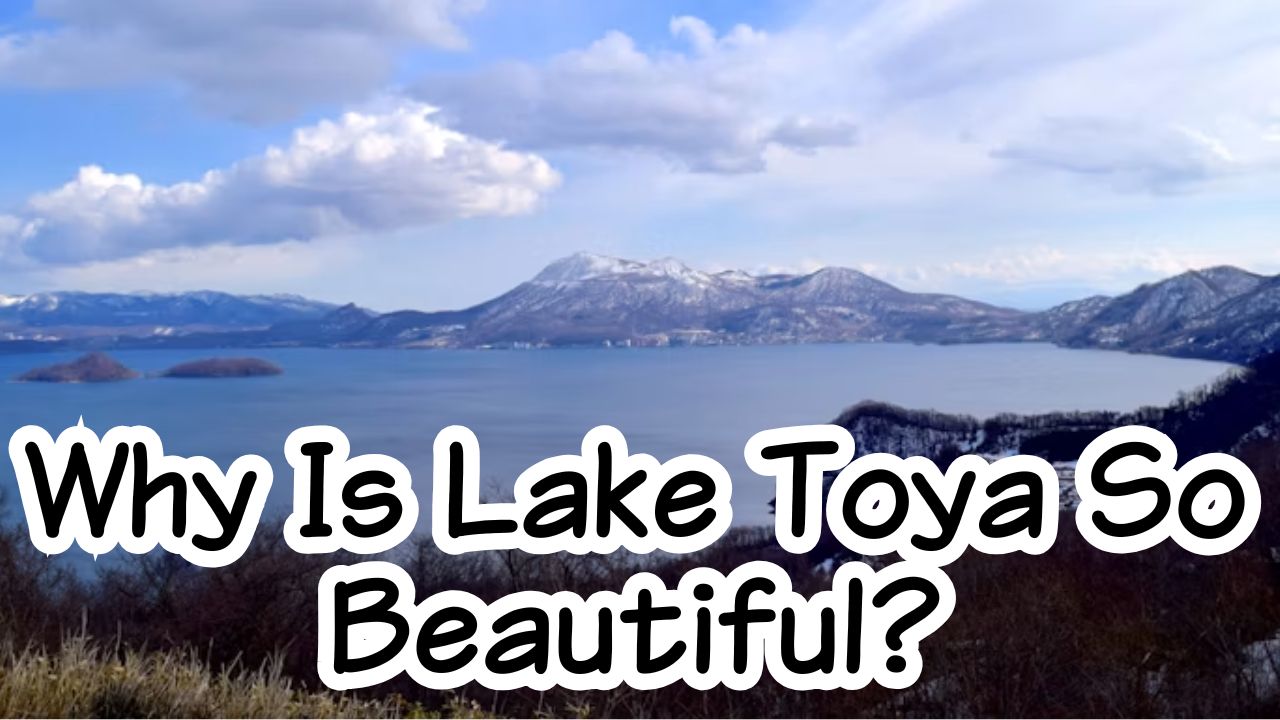
Lake Toya is beautiful because it was created by powerful volcanic eruptions thousands of years ago.
Its crystal-clear water, forested islands, surrounding mountains, and nearby hot springs come together to create one of Hokkaido’s most breathtaking landscapes.

Why You Should Care
Many visitors come to Lake Toya because they have seen beautiful photos.
But the real beauty isn’t just what you see.
It’s understanding that this peaceful lake was born from one of nature’s most powerful forces.
Once you know its story, every mountain, island, and shoreline becomes part of an incredible journey that began thousands of years ago.
A Lake Born from Fire
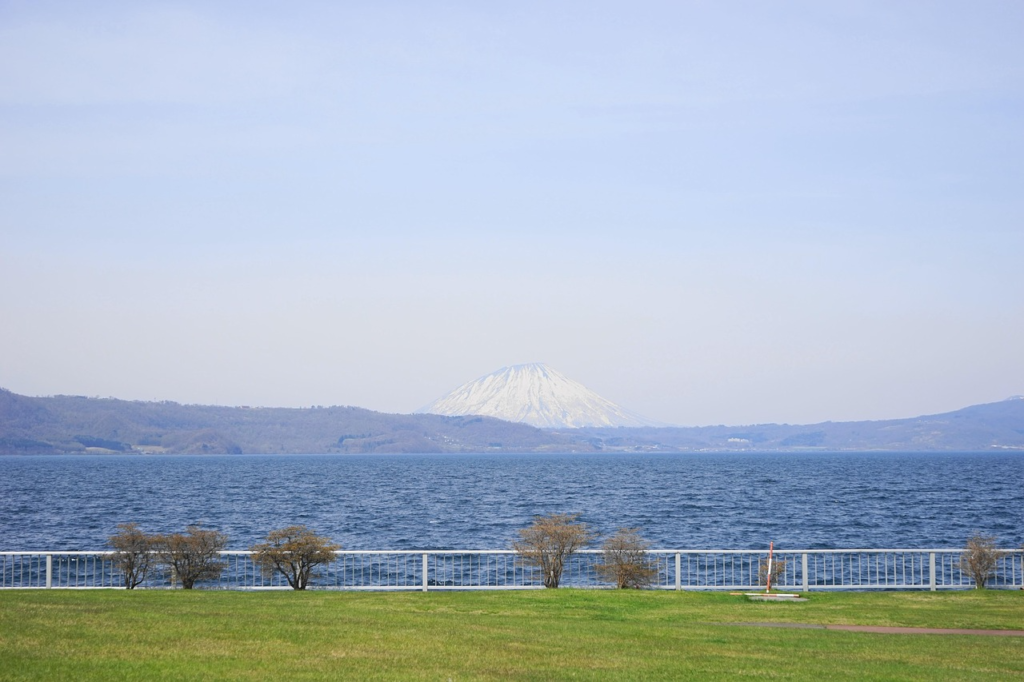
Looking at Lake Toya today, it’s hard to imagine that this peaceful landscape was once the site of enormous volcanic eruptions.
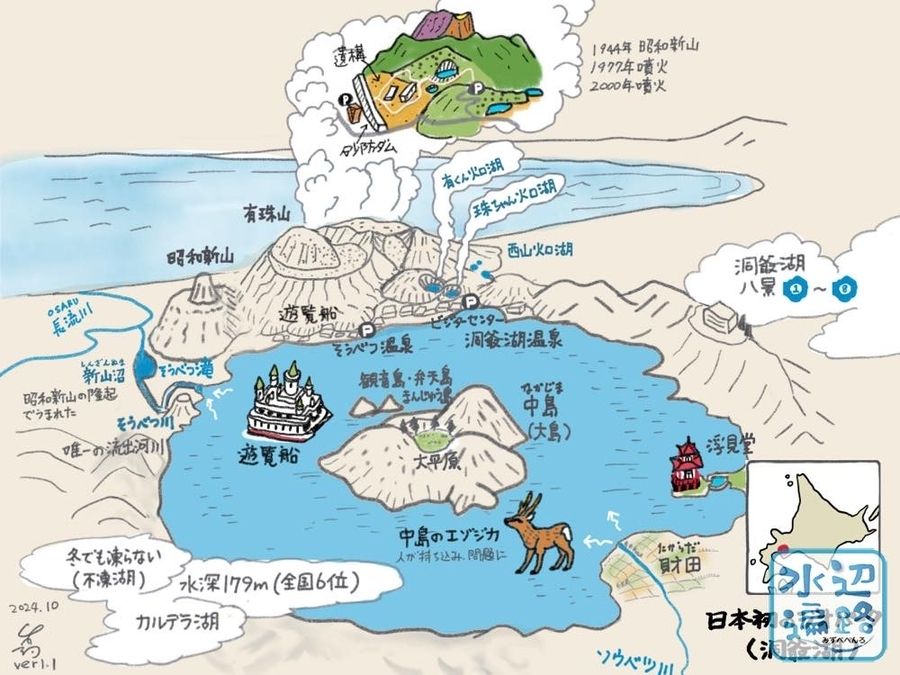
Around 110,000 years ago, repeated eruptions caused the ground to collapse, creating a huge circular depression known as a caldera.
Over time, rainwater and underground springs filled the basin, forming the lake we see today.
Its calm surface is the result of dramatic geological events that shaped southern Hokkaido.
What Is a Caldera?
A caldera is a large basin that forms after a massive volcanic eruption.
When a volcano empties much of its underground magma, the land above can collapse, leaving a wide crater behind.
Many famous lakes around the world were formed this way, but Lake Toya is one of Japan’s finest examples.
Why Is There an Island in the Middle?
One of the first things visitors notice is the large island in the center of the lake.
This isn’t just one island.
It’s actually a group of islands known as Nakajima, created by volcanic activity after the lake itself had already formed.
The forests covering Nakajima are home to many wild animals and native plants, making the island an important part of the local ecosystem.
Nature Left Untouched
Unlike the towns around the lake, much of Nakajima has remained untouched.
Visitors can explore hiking trails, observe native wildlife, and enjoy quiet forests that feel far removed from modern life.
The island reminds us that even in a popular tourist destination, nature still plays the leading role.
Why Doesn’t Lake Toya Freeze?
One surprising fact about Lake Toya is that it rarely freezes, even during Hokkaido’s cold winters.
The lake is relatively deep, reaching a maximum depth of about 180 meters (591 feet).
Its large volume of water stores heat, making it much slower to cool than shallow lakes.
This helps keep the water from freezing over in most winters, creating beautiful blue scenery even when snow covers the surrounding mountains.
A Winter Landscape Unlike Anywhere Else
Because the lake usually remains open, visitors can enjoy a striking contrast between snow-covered peaks and shimmering blue water.
Steam rising from nearby hot springs adds another layer of beauty to the winter scenery.
It’s one of the reasons Lake Toya is considered a year-round destination.
Living with Volcanoes
Lake Toya is closely connected to nearby volcanoes, including Mount Usu, one of Japan’s most active volcanoes.
Rather than avoiding these powerful natural forces, local communities have learned to live alongside them.
Volcanic activity has shaped not only the landscape but also the region’s famous hot springs, fertile soil, and rich natural environment.
A Landscape Still Changing
Although Lake Toya looks peaceful today, the surrounding area is still geologically active.
Mount Usu has erupted several times in modern history, reminding both residents and visitors that nature continues to shape this remarkable landscape.
At the same time, careful monitoring and disaster preparedness have allowed people to live safely while sharing this unique environment with travelers.
Why Lake Toya Became a Famous Hot Spring Resort
Lake Toya’s beauty isn’t its only attraction.
The same volcanic activity that created the lake also produced rich geothermal resources beneath the ground.
Over time, natural hot springs emerged along the lakeshore, giving birth to Toyako Onsen, one of Hokkaido’s best-loved resort towns.
Today, visitors can soak in warm mineral-rich waters while enjoying spectacular views of the lake and surrounding mountains.
Relaxing in Nature
One of the best ways to experience Lake Toya is to slow down.
Imagine sitting in an outdoor bath after a day of sightseeing.
The lake is calm.
The mountains reflect on the water.
Steam rises into the cool air.
Moments like these explain why so many travelers remember Lake Toya long after their trip has ended.
Why Are There So Many Hot Springs in Hokkaido?
Lake Toya is not only famous for its beautiful scenery but also for its relaxing hot springs.
After a day of sightseeing, soaking in a natural onsen is one of the best ways to experience Hokkaido. Discover why the island is blessed with so many hot springs and the fascinating volcanic story beneath your feet.
Read next: Why Are There So Many Hot Springs in Hokkaido? The Amazing Story Beneath Your Feet
Lake Toya Long-Run Fireworks Festival
One of the best reasons to stay overnight at Lake Toya Onsen is the Lake Toya Long-Run Fireworks Festival. Held almost every night from late April to the end of October, it’s one of Hokkaido’s most popular summer events.
The fireworks are launched from a boat traveling across the lake, so the display can be enjoyed from many different spots along the shore.
Many lakeside hotels also offer fantastic views, allowing guests to watch the fireworks from their rooms or while relaxing in an open-air hot spring.
Why I Recommend It
- Fireworks are held almost every night during the season.
- Fireworks are launched from a boat on Lake Toya.
- Many lakeside hotels offer spectacular views.
- A unique combination of hot springs, nature, and fireworks.
Event Period
Late April – Late October (subject to weather and event schedules)
Start Time
Around 8:45 PM (may vary depending on the season)
Visit Nakajima Island
At the center of Lake Toya lies Nakajima Island, a beautiful group of four uninhabited islands surrounded by crystal-clear water.
During the warmer months, sightseeing boats take visitors from Toyako Onsen to the island, where you can enjoy peaceful forest trails, beautiful nature, and the Nakajima Island Forest Museum. It’s a wonderful escape for anyone looking to experience another side of Lake Toya beyond the hot spring town.
A Lake That Lights Up the Night
From late April through the end of October, Lake Toya hosts one of Hokkaido’s most unique events—the Lake Toya Long Run Fireworks Festival.
Unlike a one-night fireworks show, fireworks are launched almost every evening from boats that travel across the lake.
As the boats move, visitors staying at different lakeside locations can enjoy the display from various viewpoints.
The reflections dancing across the water create an unforgettable summer evening.
A Different View Every Night
Because the fireworks are launched from moving boats, no two evenings look exactly the same.
Whether you watch from the lakeshore, a sightseeing boat, or your hotel room, the experience always feels unique.
It’s another reason many travelers choose to stay overnight instead of making only a day trip.
A Landscape Recognized Around the World
Lake Toya and nearby Mount Usu are part of the Toya-Usu UNESCO Global Geopark.
The geopark celebrates landscapes shaped by volcanic activity while promoting education, conservation, and sustainable tourism.
Here, visitors can see how volcanoes continue to shape the land—and how local communities have learned to live safely alongside them.
This recognition reminds us that Lake Toya isn’t just beautiful.
It’s a place where nature is still writing its story.
Learning from Nature
A visit to Lake Toya offers more than beautiful scenery.
It helps visitors understand how powerful natural forces can create places of incredible beauty.
The lake, the islands, the hot springs, and the surrounding volcanoes are all connected.
Together, they tell one remarkable story.
Did You Know?
- 🌋 Lake Toya is one of Japan’s best-known caldera lakes, formed by a massive volcanic eruption.
- 🏝️ Nakajima is actually a group of islands created by later volcanic activity within the lake.
- ❄️ Lake Toya rarely freezes, even during Hokkaido’s cold winters.
- 🎆 The Lake Toya Long Run Fireworks Festival takes place almost every night from late April to the end of October.
- 🌍 Lake Toya and Mount Usu are part of a UNESCO Global Geopark, recognized for their outstanding geological heritage.
FAQ
Why is Lake Toya so beautiful?
Its beauty comes from a combination of volcanic history, crystal-clear water, forested islands, surrounding mountains, and nearby hot springs.
Can you swim in Lake Toya?
Yes. Swimming, kayaking, canoeing, and sightseeing cruises are popular during the warmer months, though visitors should always follow local safety guidance.
Does Lake Toya freeze in winter?
No. Because of its depth and large volume of water, the lake rarely freezes completely.
Is Lake Toya worth staying overnight?
Absolutely. Staying overnight allows you to enjoy hot springs, evening fireworks (during the festival season), and peaceful sunrise views over the lake.
What is the best season to visit?
Lake Toya is a year-round destination. Summer is popular for outdoor activities and fireworks, autumn for colorful foliage, winter for snowy scenery and hot springs, and spring for fresh greenery.
Visit It Yourself
Location
Lake Toya (Tōya-ko), Toyako Town and Sobetsu Town, Hokkaido, Japan(https://maps.app.goo.gl/aENH2b65EzBrwmW4A)
Best Season
Year-round. Summer is ideal for cruises and fireworks, while winter offers peaceful snowy scenery and relaxing hot springs.
How to Get There
About two hours by car from Sapporo. Express buses and JR train connections (via Toya Station and local bus) are also available.
Estimated Visit Time
Half a day for sightseeing, or one to two nights to fully enjoy the lake and hot springs.
Admission Fee
The lake itself is free to visit. Fees apply for sightseeing cruises, ropeways, museums, and hot spring facilities.
Official Website
Please check the official website for the latest information on transportation, cruises, fireworks schedules, and seasonal events(https://www.laketoya.com/).
Final Thoughts
Lake Toya is more than a beautiful lake.
It is the result of powerful volcanic forces, shaped over thousands of years and transformed into one of Hokkaido’s most peaceful destinations.
Whether you’re relaxing in a hot spring, watching fireworks over the water, or standing on a scenic viewpoint overlooking the caldera, you’ll experience a place where nature’s power and beauty exist side by side.
Because Lake Toya isn’t beautiful despite its volcanic past—it is beautiful because of it.








コメント