

My name is MAKO
Based in Sapporo, Hokkaido | Born and raised in Obihiro, Hokkaido | Lover of Sapporo Classic beer and fresh sashimi | Passionate about road trips and camping | Always chasing beautiful scenery
Why Is Sapporo’s Tanukikoji Called “Tanuki Alley”?The Short Answer
No one knows the exact origin of the name Tanukikoji, which literally means “Tanuki Alley.”
One famous explanation from an 1891 book says the name came from comparing women who cleverly attracted male customers to tanuki, animals famous in Japanese folklore for trickery and transformation. Another theory says real tanuki once lived in the area.

Why You Should Care
At first, Tanukikoji looks like a convenient shopping street.
Souvenirs.
Restaurants.
Drugstores.
Bars.
Old shops.
New shops.
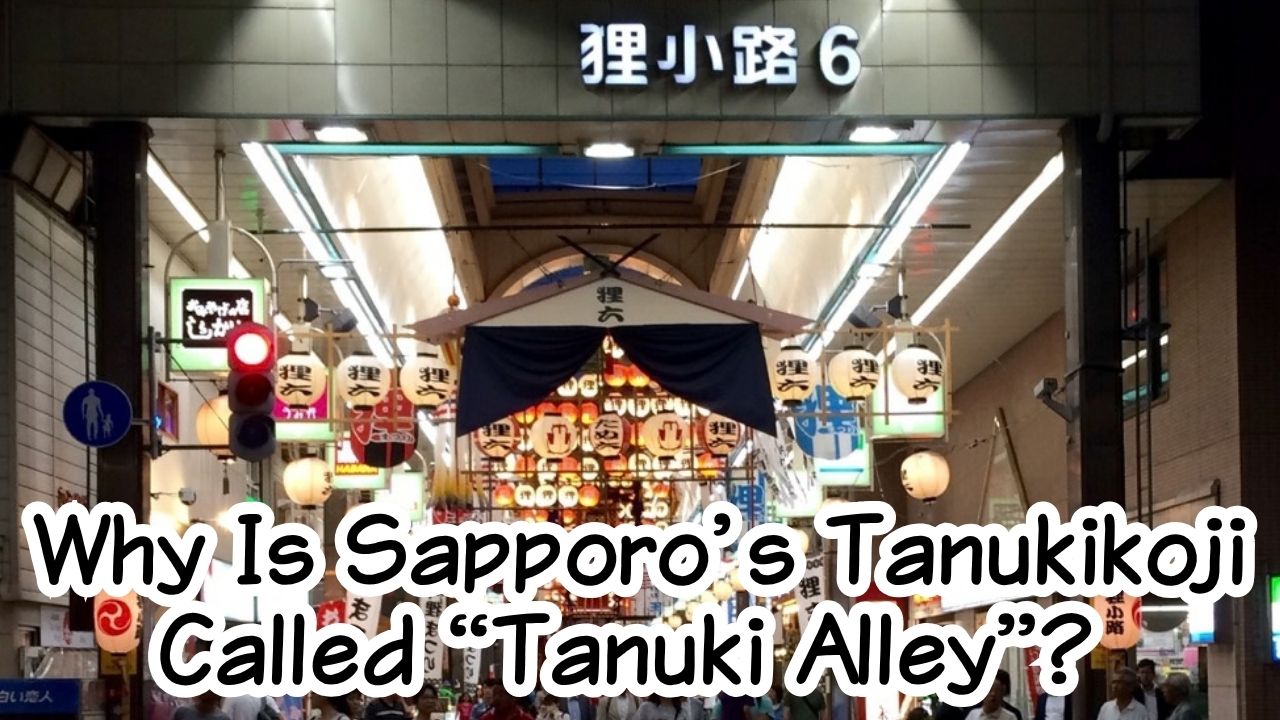
But this 900-meter arcade is also a timeline of Sapporo itself.
It began when modern Sapporo was still being built in the early Meiji era. It survived war, changing shopping habits, underground malls, redevelopment, and more than 150 Hokkaido winters. Today, about 200 businesses still line its seven main blocks.
If you know that history before you visit, Tanukikoji stops feeling like just another shopping arcade.
It becomes a street that grew up together with Sapporo.
The Story Behind Tanukikoji
How Did Tanukikoji Begin in Early Sapporo?
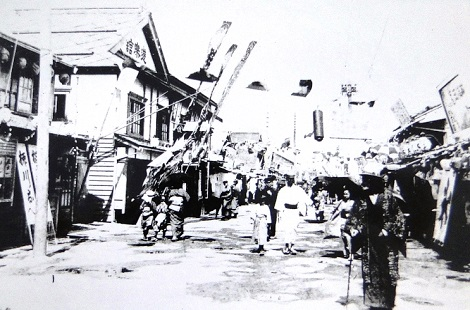
The story starts soon after the Meiji government established the Hokkaido Development Commission in Sapporo in 1869.
Shops and restaurants began gathering around what are now Tanukikoji 2-chome and 3-chome.
By around 1873, people were already calling the area Tanukikoji. In 2026, the shopping street marks about 153 years of history, making it one of Hokkaido’s oldest shopping streets.
Back then, Sapporo was not the large modern city you see today.
Tanukikoji grew as the new city grew.
Why Is It Called “Tanuki Alley”?
This is the best mystery in the story.
Even the shopping street’s official history says:
the exact origin is unknown.
One often-cited explanation comes from the 1891 book Sapporo Hanjo-ki.
It described women working around the restaurants of the area and compared their skill at attracting male customers to the way tanuki were believed to trick people in Japanese folklore. This became the best-known explanation for the name.
There is also a simpler theory:
perhaps actual tanuki once lived nearby.
No surviving source proves either explanation beyond doubt.
That uncertainty makes the name even more interesting.
Tanukikoji may be one of Sapporo’s best-known streets—
but the story behind its name is still partly a mystery.
What Is a Tanuki Anyway?
A tanuki is the Japanese raccoon dog.
In Japanese folklore, tanuki are often playful supernatural creatures that can change shape, fool humans, and bring good fortune.
That is why tanuki statues often appear outside restaurants and shops across Japan.
So when English speakers see “Tanuki Alley,” it is tempting to translate it as “Raccoon Alley.”
But biologically, a tanuki is not a raccoon.
And culturally, the Japanese word tanuki carries a much richer meaning.
How Did Tanukikoji Become Sapporo’s Shopping Street?
As Sapporo grew, Tanukikoji became one of the city’s major commercial areas.
The street was quick to adopt new ideas.
In 1916, cross-street lamps appeared.
From 1927, distinctive lily-of-the-valley-shaped streetlights became one of the arcade’s symbols.
In 1936, neon lights were introduced.
During World War II, the lamps were removed for military materials, but the famous lights returned in 1949.
Tanukikoji was not a street that stayed frozen in the past.
It repeatedly adopted whatever felt modern at the time.
Why Was Tanukikoji Known for Trying New Things?
The official shopping street history describes Tanukikoji as a place that has long loved new technology and new ideas.
When telephone service arrived in Sapporo in 1889, Tanukikoji merchants were among those quick to install phones.
When radio broadcasting began, the street promoted its shops on radio.
When television arrived, merchants quickly began using TV advertising.
Even one of its famous sales events changed with the times.
The cash-grab promotion, which began in 1949, used increasingly valuable banknotes as new denominations appeared.
This willingness to change became one reason the street survived.
Why Does Tanukikoji Have Such a Long Roof?
If you visit Sapporo in winter, the answer becomes obvious.
Snow.
Tanukikoji’s first full-roof arcade began appearing in 1958, starting in 3-chome.
By 1960, the streets from 1-chome through 7-chome were covered, and the shopping street became known as a kind of “horizontal department store.”
The roof made shopping easier in:
- snow
- rain
- strong summer sun
The present unified arcade over 1-chome through 6-chome was completed in 1982, replacing the older arcades that had different designs in each block.
Why Was the Arcade So Important in a Snowy City?
Sapporo receives heavy winter snow.
Without a covered street, walking from shop to shop would mean stepping through snow, slush, ice, and freezing wind.
The arcade changed the experience.
Today, Tanukikoji is still promoted as an all-weather shopping street, where visitors can walk without worrying much about rain or snow.
That practical roof became part of the street’s identity.
It is a good example of how Hokkaido’s climate shapes city design.
Did Tanukikoji Ever Lose Its Popularity?
Yes.
No shopping street stays successful automatically.
As Sapporo developed new underground shopping areas and larger commercial facilities, customer traffic changed.
Tanukikoji responded by modernizing its aging arcade, creating a more unified design, improving lighting, installing digital displays, and continuing to mix traditional shops with newer businesses.
That may be the secret of Tanukikoji.
It survived not because everything stayed the same.
It survived because it kept changing.
What Is Tanukikoji Like Today?
Today, the official shopping street covers 1-chome through 7-chome, stretching about 900 meters with roughly 200 shops.
You can find:
souvenir stores,
restaurants,
bars,
fashion,
drugstores,
entertainment,
daily necessities,
and long-running local businesses.
The eastern side around 1–3 chome has especially strong links to the street’s early commercial history, while later blocks have developed their own atmosphere.
There is no single “correct” way to walk Tanukikoji.
That is part of the fun.
Why Is There a Tanuki Shrine Inside the Shopping Street?
If a street is called Tanukikoji for 150 years, eventually the tanuki becomes more than a name.
In 1973, the shopping street created Honjin Tanuki Daimyo Shrine as part of its 100th anniversary celebrations.
The shrine has moved several times over the years.
The shopping street also established a Tanuki Shrine area in Tanuki COMICHI in 2022, where visitors can see a tanuki statue associated with eight blessings. The official site gives examples such as good business fortune and safe childbirth.
It is playful.
It is local.
And it is very Tanukikoji.
What Are the Tanuki Festivals?
The shopping street has turned its unusual name into part of its identity.
In summer, Tanukikoji holds events connected with the tanuki theme.
The annual Tanuki Hachitoku Festival includes taiko drumming and a tanuki mikoshi procession through the arcade.
This is a nice example of how a mysterious old nickname became modern local culture.
Nobody can prove exactly why the street was called Tanukikoji in 1873.
But 150 years later,
the tanuki definitely belongs here.
Why Does Tanukikoji Feel Different From a Shopping Mall?
A mall is usually designed all at once.
Tanukikoji was not.
It grew shop by shop,
generation by generation,
block by block.
That is why you can find an old local business near a modern chain, a small bar near a souvenir shop, and a new restaurant inside an old building.
The official tourism site describes the arcade as a place where local residents still shop and spend time, not only a place for tourists.
That mixture is what makes Tanukikoji interesting.
You are not walking through a recreated historic street.
You are walking through a historic street that is still alive.
My Travel Tip: Explore Tanukikoji on Rainy or Snowy Days!
As someone who lives in Sapporo, I highly recommend walking through Tanukikoji Shopping Street on rainy or snowy days, especially during Hokkaido’s cold winter.
The shopping street has a long covered arcade, so you can enjoy shopping and sightseeing without worrying too much about rain or snow.
However, Tanukikoji can get very crowded! Be careful not to bump into other pedestrians, especially when the street is busy with tourists.
You Can Explore Central Sapporo Through Underground Walkways!
Another great thing about Tanukikoji is its convenient access to Sapporo’s underground shopping streets.
From Tanukikoji, you can enter the underground shopping area and walk to Odori Subway Station.
Once underground, you can continue to several popular destinations without going outside:
- Sapporo Station: Follow the underground pedestrian walkway called Chi-Ka-Ho.
- Susukino Station: Walk through Pole Town, an underground shopping street.
- Sapporo TV Tower: Follow Aurora Town toward the eastern end of Odori Park.
This underground network is especially useful during Sapporo’s snowy winter!
Did You Know?
- Tanukikoji dates back to around 1873 and reached about 153 years of history in 2026.
- The exact origin of the name Tanukikoji is unknown.
- The shopping street stretches about 900 meters across seven main blocks with roughly 200 shops.
- The first full-roof arcade appeared in 1958.
- The Tanuki Shrine tradition began as part of the street’s 100th anniversary in 1973.
FAQ
What Does “Tanukikoji” Mean?
Tanuki means Japanese raccoon dog.
Koji means a small street or alley.
So the name can be understood as “Tanuki Alley.”
Why Is It Called Tanukikoji?
Nobody knows for certain.
The best-known theory compares women who attracted male customers in the early entertainment district to trickster tanuki.
Another theory says actual tanuki may once have lived nearby.
Is Tanukikoji Good in Winter?
Yes.
That is one of the best times to appreciate the arcade.
Most of the street is covered, making it much easier to shop and walk when Sapporo is snowy or icy. 狸小路商店街
Is Tanukikoji Only for Tourists?
No.
Visitors come for souvenirs and food, but Sapporo residents also use the street for everyday shopping, eating, and entertainment.
How Long Does It Take to Walk Tanukikoji?
Walking straight through the approximately 900-meter shopping street does not take long.
But if you stop for food, shopping, photos, and side streets, you can easily spend one to three hours.
Visit It Yourself
Location
Tanukikoji Shopping Street
Minami 2-jo and Minami 3-jo, Nishi 1-chome to Nishi 7-chome, Chuo-ku, Sapporo.
Best Season
Year-round
Winter is especially interesting because the arcade shows why covered shopping streets are so useful in Hokkaido.
Summer is also lively, especially during seasonal shopping-street events.
How to Get There
From Odori Station: about 5 minutes on foot.
From Susukino Station: about 3 minutes on foot.
From the Tanukikoji tram stop: about 1 minute on foot.
Estimated Visit Time
1–3 hours
Allow more time if you plan to eat, shop for souvenirs, or explore the side streets.
Admission Fee
Free
Tanukikoji is a public shopping street.
Individual shops, restaurants, and entertainment facilities have their own prices.
Opening Hours
There are no single opening hours for the entire arcade.
Each shop sets its own business hours.
Please check the official website for the latest information.
Official Website
Sapporo Tanukikoji Shopping Street Official Website
Final Thoughts
Why is Sapporo’s Tanukikoji called “Tanuki Alley”?
The most interesting answer may be:
we do not know for sure.
Maybe the name came from people being compared to trickster tanuki.
Maybe real tanuki lived nearby.
What we do know is what happened afterward.
A small commercial street appeared in a young Sapporo.
It added lights.
Then neon.
Then a roof.
It used phones.
Radio.
Television.
Digital screens.
Old stores disappeared.
New stores arrived.
The city changed.
Tanukikoji changed with it.
And more than 150 years later, people are still walking beneath the same name.
So when you visit, do not only look for souvenirs.
Look at the street itself.
Tanukikoji survived not by staying the same, but by changing with Sapporo.








コメント