
My name is MAKO
Based in Sapporo, Hokkaido | Born and raised in Obihiro, Hokkaido | Lover of Sapporo Classic beer and fresh sashimi | Passionate about road trips and camping | Always chasing beautiful scenery
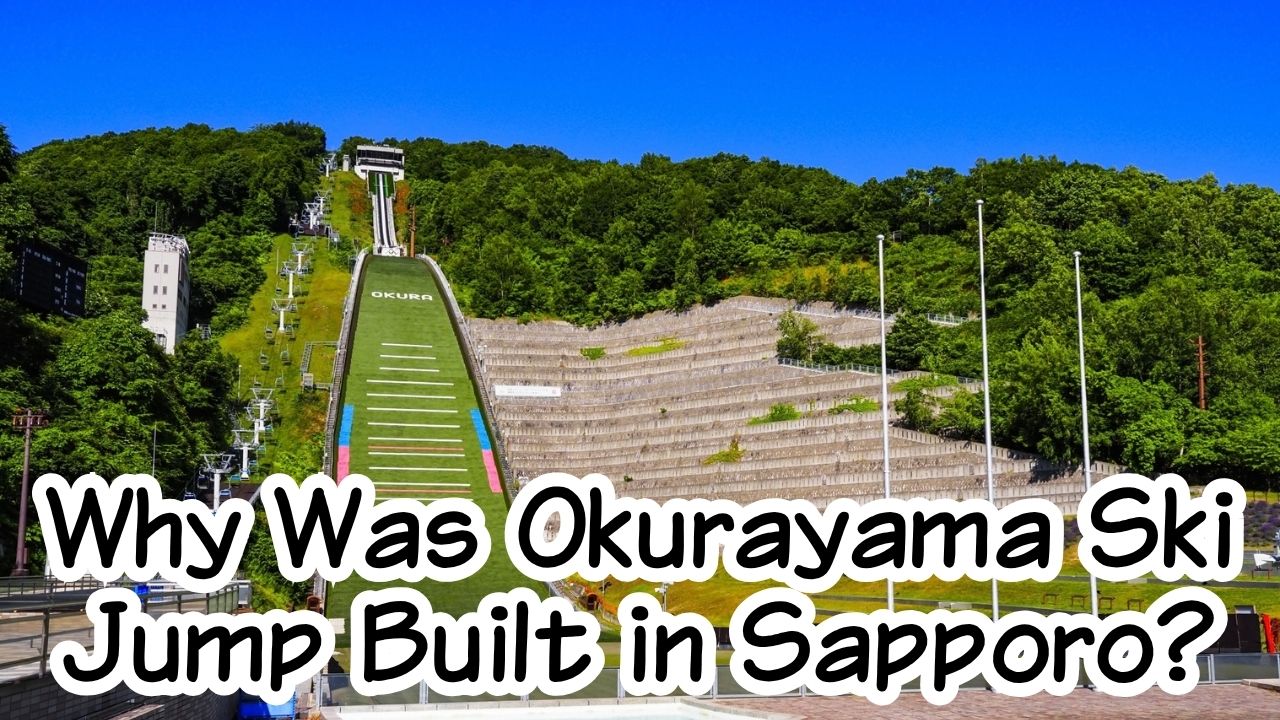
Why Was Okurayama Ski Jump Built in Sapporo?The Short Answer
Okurayama Ski Jump was built because Sapporo already had a growing ski culture—and local leaders dreamed of creating a world-class jump suitable for international competition.
With financial support from Baron Kishichiro Okura and technical guidance from Norwegian ski expert Olaf Helseth, the original jump was completed in 1931, more than 40 years before the 1972 Sapporo Winter Olympics.

Why You Should Care
Most travelers see Okurayama and think:
“This must have been built for the 1972 Olympics.”
It was not.
The ski jump was already here decades earlier.
That changes the story completely.
Okurayama is not simply a leftover Olympic venue. It represents an older dream to make Sapporo one of Japan’s great winter-sports cities—a dream that existed long before the Olympic flame finally arrived.
And today, you can ride a chairlift almost to the same starting point used by ski jumpers and look down over Sapporo from their perspective.
The Story Behind Okurayama Ski Jump
Was Skiing Already Popular in Sapporo Before Okurayama?
Yes.
Sapporo’s relationship with winter sports began long before the Olympics.
Official Sapporo tourism history records that skiing spread among students in the early 20th century. By 1917, Sapporo had its first temporary ski-jumping hill on Mt. Sankaku, and in 1922, Hokkaido University’s ski club built Japan’s first fixed ski jump there.
Several small jumps followed.
But local skiers wanted something bigger.
Something modern.
Something that could match international standards.
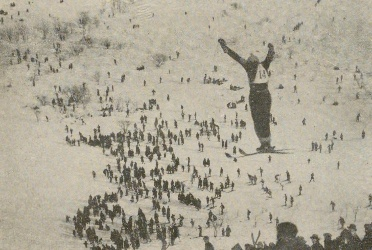
Why Did Sapporo Want a World-Class Ski Jump?
By the 1920s, winter sports were becoming part of Sapporo’s identity.
Official Sapporo history recounts that when Prince Chichibu visited Hokkaido, he supported the idea of creating a full-scale ski jump suitable for Olympic-level competition.
In 1928, he promised Hokkaido University ski leader Dr. Seiichi Ono support for the project. The construction costs were then provided by Baron Kishichiro Okura.
This is important:
Okurayama was built with international ambitions before Sapporo had ever hosted an Olympics.
The hill came first.
The Olympic moment came much later.
Why Was a Norwegian Expert Invited?
Japan was still developing its knowledge of modern ski-jump design.
So Sapporo turned to one of the strongest ski nations in the world:
Norway.
In 1929, Lieutenant Olaf Helseth, who had coached Norway’s team at the 1928 St. Moritz Winter Olympics, came to Hokkaido.
He helped select the present slope and designed the new jump. Construction began in July 1931.
Just a few months later, in October, the new 60-meter-class ski jump was completed.
Sapporo finally had the large modern hill it wanted.
Why Is It Called “Okurayama”?
The answer is a person.
Baron Kishichiro Okura paid the construction costs and donated the completed ski jump to Sapporo.
At the opening ceremony in January 1932, the city named it Okura Schanze in recognition of his contribution. “Schanze” is a German-derived term historically used in Japan for a ski-jumping hill.
Its first official competition followed that same month.
Over time, “Okura Schanze” became the place name Okurayama—Mt. Okura.
So the mountain’s famous name is closely tied to the man who helped make the jump possible.
Was Okurayama Built for the 1972 Sapporo Olympics?
No—and this is one of the best facts to know before visiting.
Okurayama was completed in 1931.
The Sapporo Winter Olympics took place in 1972.
That is a gap of more than 40 years.
In fact, Sapporo had been selected to host the 1940 Winter Olympics, but Japan returned the hosting rights as the Sino-Japanese War intensified. The Games never took place.
Sapporo’s Olympic dream therefore disappeared once before it finally became reality.
Okurayama remained.
How Did Okurayama Change for the 1972 Olympics?
The original hill was far too small for modern Olympic competition.
It had already been enlarged once in 1952.
Then, in 1970, Okurayama underwent a major reconstruction for the coming Sapporo Winter Olympics.
The new facility had a K-point of 110 meters and spectator capacity of about 50,000 people. It also received its modern name, Okurayama Ski Jump Stadium.
In February 1972, more than 42,000 spectators gathered here for the Olympic 90-meter ski-jumping event—the event now known as the large hill.
Did Japan Win Gold at Okurayama in 1972?
This is a common point of confusion.
Japan’s famous medal sweep—the “Hinomaru Flying Squadron” taking gold, silver, and bronze—did happen during the 1972 Sapporo Olympics.
But it happened at Miyanomori Ski Jump Stadium, in the 70-meter event.
Yukio Kasaya won gold, Akitsugu Konno silver, and Seiji Aochi bronze.
At Okurayama’s 90-meter event, Poland’s Wojciech Fortuna won gold.
Kasaya was the highest-placed Japanese jumper, finishing seventh.
Knowing the difference makes visiting both Olympic hills much more interesting.
Why Does Okurayama Point Straight Toward Sapporo?
Stand at the top and the design suddenly makes sense.
The jump follows the mountain slope, but the view opens directly toward the city.
From the observation lounge near the starting point at an elevation of about 307 meters, you can look over the jump itself toward central Sapporo, the Ishikari Plain, and on clear days even toward Ishikari Bay.
That creates one of the most unusual views in Sapporo.
You are not simply looking at the city from a mountain.
You are looking at it down an Olympic ski jump.
Can Ordinary Travelers Really Go Up to the Starting Area?
Yes.
You do not need skis.
A chairlift carries visitors up beside the landing slope to the observation area.
Before the lift was installed in 1982, reaching the summit took around 20 minutes on foot. The lift reduced the journey to roughly four minutes.
At the top, the start line is close enough to make you appreciate just how steep the jump really is.
Looking down may leave you with one thought:
“People actually launch themselves from here?”
That feeling is part of the experience.
Is Okurayama Still Used for Ski Jumping?
Absolutely.
Okurayama is not a retired Olympic monument.
The modern hill has a K-point of 123 meters and hill size of 137 meters, and it continues to host domestic and international ski-jumping competitions in both winter and summer.
Modern equipment allows summer jumping and nighttime competition as well.
That means the same mountain that hosted Olympic athletes in 1972 is still part of competitive ski jumping today.
What Is the Sapporo Olympic Museum?
At the base of Okurayama is the Sapporo Olympic Museum.
It opened in 2000 and tells the story of the Sapporo Olympics and winter sports through historical displays and interactive attractions.
The museum currently has six winter-sports simulation experiences, including ski jumping and cross-country skiing. A typical museum visit takes around 40–60 minutes.
The interactive simulator displays were renewed before the museum reopened on January 17, 2026.
It is especially fun after seeing the real jump outside.
First you wonder how anyone could jump from Okurayama.
Then the museum lets you pretend to try.
Have Extra Time? Hike from Mt. Sankaku to Okurayama!
If you have extra time in Sapporo and enjoy hiking, I recommend exploring Mt. Sankaku (Sankakuyama) before visiting Okurayama Ski Jump Stadium!
Mt. Sankaku is a small mountain in Sapporo, known for its beautiful views of the city.
From there, you can follow the mountain trails toward Mt. Okura (Okurayama), enjoying Hokkaido’s forests and natural scenery along the way.
It’s a wonderful way to combine hiking with a visit to Sapporo’s famous Olympic ski jump venue!
However, brown bears have been spotted around Mt. Sankaku and Okurayama, so safety is extremely important.
Why Are Brown Bears So Important in Hokkaido?
Did you know that Hokkaido is home to Japan’s largest wild land animal, the brown bear?
Discover why these powerful animals are such an important part of Hokkaido’s natural environment and culture.
Read next: Why Are Brown Bears So Important in Hokkaido? The Powerful Symbol of Hokkaido’s Wild Nature

Did You Know?
- Okurayama was completed in 1931, more than 40 years before the Sapporo Olympics.
- Norwegian expert Olaf Helseth helped select and design the site.
- “Okurayama” comes from Baron Kishichiro Okura, who financed the original jump.
- The famous Japanese gold-silver-bronze Olympic sweep happened at Miyanomori, not Okurayama.
- From the observation area, you can see Sapporo from roughly the same direction as a ski jumper preparing to launch.
FAQ
Can You Visit Okurayama Without Watching a Competition?
Yes.
It operates as a sightseeing attraction as well as an active ski-jumping venue.
However, the observation lift may close during competitions, official practices, or bad weather.
Can You Ride the Lift in Winter?
Yes, when weather and competition schedules allow.
Winter lift hours are currently 9:00 a.m.–5:00 p.m. from November 1 to April 5.
Is Okurayama Worth Visiting in Summer?
Yes.
Summer gives you clear views of the shape and steepness of the jump, and the hill is still used for summer ski-jumping competitions.
From July through September, the observation lift also normally has extended evening operations.
Is the Sapporo Olympic Museum Separate From the Lift?
Yes.
As of October 2026, the standard round-trip lift ticket is ¥1,000 for adults, while the Olympic Museum is ¥670 for high-school age and older. A combined adult ticket is ¥1,370.
Can I Actually Ski Jump at Okurayama?
Not as an ordinary tourist.
The real hill is a professional competition venue.
But the Olympic Museum has a ski-jump simulator where visitors can experience a virtual version of the sport.
Visit It Yourself
Location
Okurayama Ski Jump Stadium
Miyanomori 1274, Chuo-ku, Sapporo, Hokkaido.
Best Season
May–October: best for comfortable sightseeing, green mountain scenery, and a clear look at the jump structure.
Winter: best if you want the classic snow-covered Olympic landscape.
July–September: especially attractive if you want an evening city view during scheduled extended lift hours.
How to Get There
Take the Sapporo Subway Tozai Line to Maruyama Koen Station.
From the connected Maruyama Bus Terminal, take the JR Hokkaido Bus Kuramaru-go to Okurayama Ski Jump Stadium.
The bus ride takes about 15 minutes.
By car, it is roughly 30 minutes from central Sapporo, depending on traffic. Free parking is available, although parking may be restricted during competitions and events.
Estimated Visit Time
Observation deck only: about 60 minutes
Observation deck + Sapporo Olympic Museum: about 1.5–2.5 hours
The museum itself typically takes around 40–60 minutes.
Admission Fee
As of October 2026:
Observation Lift — Round Trip
- Adult: ¥1,000
- Elementary school age and younger: ¥500
Sapporo Olympic Museum
- High school age and older: ¥670
- Junior high school age and younger: Free
Combined adult ticket: ¥1,370
Opening Hours
Observation Lift
- April 22–October 31: 8:30 a.m.–6:00 p.m.
- July 1–September 30 extended evening hours: until 8:30 p.m.
- November 1–April 5: 9:00 a.m.–5:00 p.m.
Sapporo Olympic Museum
- April 22–October 31: 9:00 a.m.–6:00 p.m.
- November 1–April 21: 9:30 a.m.–5:00 p.m.
Competition days, official training, weather, and maintenance may change operations.
Please check the official website for the latest information.
Official Website
Okurayama Ski Jump Stadium Official Website
Visit the official Okurayama website
Final Thoughts
Why was Okurayama Ski Jump built in Sapporo?
Not because Sapporo suddenly needed an Olympic venue in 1972.
The story began much earlier.
Skiing became popular.
Small jumps appeared.
Local skiers wanted something better.
Prince Chichibu supported the idea.
Baron Okura provided the money.
A Norwegian expert found the right mountain.
And in 1931,
the jump was built.
Then history took a long road.
Sapporo lost its planned 1940 Olympics.
The city tried again.
The hill was rebuilt.
And finally, in 1972, Olympic athletes flew through the air above Sapporo.
Today, you can ride the same mountain and look down toward the city from beside the starting point.
When you do, remember:
Okurayama was not created because Sapporo hosted the Olympics.
In many ways, Okurayama was part of the dream that helped Sapporo become an Olympic city in the first place.









コメント