

My name is MAKO
Based in Sapporo, Hokkaido | Born and raised in Obihiro, Hokkaido | Lover of Sapporo Classic beer and fresh sashimi | Passionate about road trips and camping | Always chasing beautiful scenery
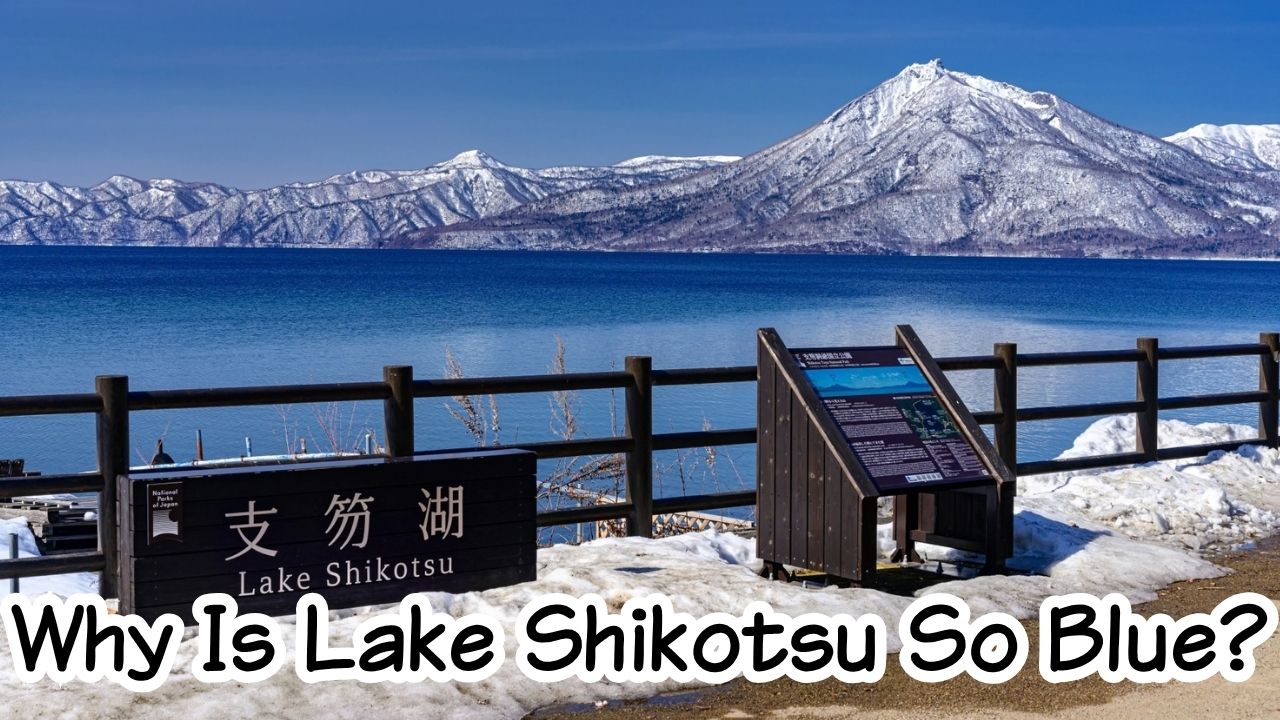
Why Is Lake Shikotsu So Blue?The Short Answer
Lake Shikotsu is famous for its blue water because it is extremely clear and very deep. The lake contains relatively few nutrients and plankton, and little sediment enters the water, allowing sunlight to travel deep below the surface.
Water naturally absorbs red wavelengths of light more strongly than blue ones. In a deep, clear lake like Shikotsu, this effect helps create the rich color known locally as “Shikotsu Blue.”

Why You Should Care
At first, Lake Shikotsu looks simple.
A blue lake surrounded by mountains.
But once you know its story, the scenery changes.
The water below you fills a giant hollow created by one of Hokkaido’s ancient volcanic eruptions. The lake drops to around 360 meters, making it Japan’s second-deepest lake. Its clear water has ranked first in Japan’s national water-quality measurements 20 times, according to current Chitose tourism materials.
So when you see that blue color, you are really looking at a combination of:
- ancient volcanic activity
- extraordinary depth
- very clear water
- low levels of plankton
- light traveling through a huge body of water
That is what makes Lake Shikotsu more than a pretty photo stop.
The Story Behind Lake Shikotsu
How Did a Giant Volcano Create Lake Shikotsu?
Lake Shikotsu began with destruction.
Around 40,000 years ago, a huge eruption of the ancient Shikotsu volcano caused the ground to collapse, leaving behind an enormous volcanic depression called a caldera.
Water gradually collected inside that hollow and formed the lake we see today.
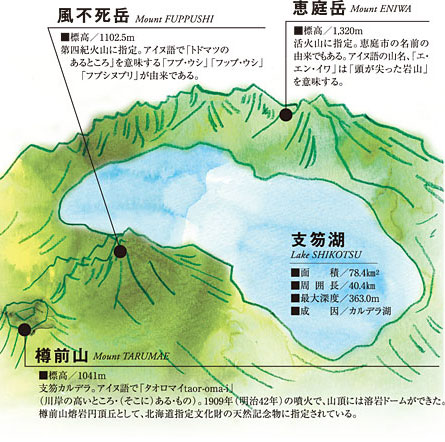
Later volcanic activity created mountains around the lake, including Mt. Fuppushi, Mt. Eniwa, and Mt. Tarumae. The Ministry of the Environment describes the entire area as one of Japan’s representative volcanic landscapes. 境省
So the peaceful blue lake you see today exists because of an extremely violent geological past.
Why Is Lake Shikotsu So Deep?
A caldera is not simply a shallow volcanic crater.
When a huge amount of magma leaves an underground chamber during a major eruption, the ground above can collapse dramatically.
That created a very deep basin at Shikotsu.
Today, Lake Shikotsu has:
- a maximum depth of about 360 meters
- an average depth of about 265 meters
- a circumference of about 40 kilometers
- a surface area of roughly 78 square kilometers
Only Lake Tazawa in Akita Prefecture is deeper among Japanese lakes.
Its enormous depth is one of the keys to understanding both its blue color and its unusual winter behavior.
Why Is Lake Shikotsu So Clear?
The answer is partly about what the lake does not have.
Lake Shikotsu contains relatively few nutrients.
That means less plankton grows in the water.
There is also comparatively little soil and sediment flowing into the lake. As a result, fewer suspended particles cloud the water.
This type of nutrient-poor lake is sometimes called oligotrophic.
You do not need to remember that word.
Just remember this:
Less plankton + less sediment = clearer water.
That clarity is one reason Lake Shikotsu has repeatedly ranked among Japan’s best lakes for water quality.
Why Does Clear Water Look So Blue?
Here is the surprising part:
Water itself has a slight blue color.
A glass of water looks clear because light only travels through a small amount of it.
But in a deep body of very clear water, sunlight travels much farther. Water molecules absorb more of the red part of visible light, while blue wavelengths remain visible over a longer distance.
At Lake Shikotsu, the effect becomes especially striking because the lake is both deep and clear.
The color can change depending on:
- sunlight
- cloud cover
- viewing angle
- wind
- water depth
Sometimes it looks bright turquoise.
Sometimes cobalt blue.
Sometimes almost dark navy.
That changing color is what people call Shikotsu Blue.
Is “Shikotsu Blue” Just the Reflection of the Sky?
Not entirely.
The sky can certainly influence what you see on the surface.
But clear water itself also becomes blue when light travels through enough of it because red wavelengths are absorbed more strongly.
That is why looking down into deep, clear water can still reveal strong blue tones.
Lake Shikotsu’s unusual clarity makes this natural optical effect easier to appreciate.
What Does the Name “Shikotsu” Mean?
Even the name tells part of the geological story.
“Shikotsu” is believed to come from the Ainu expression shi-kot, meaning something like “a large hollow” or “a large depression.”
That is an amazingly fitting description for a giant caldera.
The wider Chitose area was once also called Shikotsu.
In 1805, the area’s name was changed to Chitose, inspired by the many cranes seen there and the traditional phrase “cranes live a thousand years.” The lake, however, kept the old Shikotsu name.
So the lake preserves an older name for the landscape.
Why Doesn’t Lake Shikotsu Freeze Easily?
This is another surprise.
Hokkaido is famous for severe winters.
Yet Lake Shikotsu is known as Japan’s northernmost ice-free lake.
Its great depth means it contains an enormous volume of water. Vertical circulation within the lake helps keep surface temperatures from falling low enough for the entire lake to freeze over.
Small areas near the shore can freeze during cold weather.
But the lake as a whole usually remains open.
That creates a remarkable winter scene:
snow-covered mountains surrounding dark blue water.
If the Lake Does Not Freeze, How Can There Be an Ice Festival?
Because people use the lake water to make the ice.
The famous Chitose–Lake Shikotsu Ice Festival sprays Lake Shikotsu water onto frameworks during the freezing winter air.
Layer after layer freezes into huge ice formations.
During the day, the extremely clear lake water creates a natural pale-blue appearance. At night, the structures are illuminated.
The next festival is currently scheduled for:
January 30–February 23, 2027.
This means that even in winter, Shikotsu Blue becomes part of the experience.
What Is the Famous “Shikotsu Chip”?
There is another Lake Shikotsu story hiding on the restaurant menu.
You may see a fish called:
Shikotsu-ko Chip
“Chip” is the Hokkaido name for kokanee salmon, a landlocked form of sockeye salmon.
Surprisingly, this fish was not originally native to Lake Shikotsu.
It was introduced from Lake Akan in 1894 and successfully established itself in the lake.
Today, it has become one of Lake Shikotsu’s best-known local foods.
You may find it served as:
- grilled fish
- sashimi
- sushi
- smoked fish
Eating Shikotsu Chip beside the lake adds another layer to the story.
What Is the Best Way to See Shikotsu Blue?
Looking from shore is beautiful.
But getting onto the water makes the color easier to understand.
Lake Shikotsu offers activities such as:
- canoeing
- kayaking
- SUP
- sightseeing boats
- pedal boats
One particularly interesting option is the underwater sightseeing boat.
Large windows below the waterline let passengers look directly into the clear lake and see underwater rock formations and, sometimes, fish.
The trip takes about 30 minutes.
This may be the closest you can get to actually entering “Shikotsu Blue” without getting wet.
My Recommendation: Take a Scenic Drive Along Lake Shikotsu!
One of my favorite ways to enjoy Lake Shikotsu is by driving along its beautiful lakeside roads!
The scenery is breathtaking, with crystal-clear blue water, lush forests, and majestic mountains surrounding the lake.
I especially recommend Route 453, which runs along the eastern and northeastern shores of Lake Shikotsu.
On a sunny day, you can enjoy stunning views of the famous “Shikotsu Blue” from the road.
The scenery changes with the seasons, from fresh green forests in summer to colorful autumn leaves.
Did You Know?
- Lake Shikotsu is about 360 meters deep, making it Japan’s second-deepest lake.
- Current Chitose tourism materials say its water quality has ranked No. 1 in Japan 20 times in national surveys.
- Its name comes from an Ainu word meaning “large hollow.”
- Lake Shikotsu is known as Japan’s northernmost lake that does not completely freeze over.
- The famous Shikotsu Chip was introduced from Lake Akan in 1894 rather than being originally native to the lake.
FAQ
Is Lake Shikotsu Really That Blue?
Yes, but its appearance changes with weather, sunlight, wind, and viewing angle.
On a clear day, especially when viewed over deeper water, the lake can show striking blue tones known as Shikotsu Blue.
Can You Swim in Lake Shikotsu?
Water activities are possible in designated areas, but Lake Shikotsu is deep and cold, and conditions can change.
Visitors should follow local safety rules and use established beaches, operators, or guided activities where appropriate. The Lake Shikotsu Visitor Center publishes local rules for safe use of the national park.
Does Lake Shikotsu Freeze in Winter?
The entire lake normally does not freeze over.
Its enormous depth and water circulation help keep it open even through Hokkaido’s winter, which is why it is known as Japan’s northernmost ice-free lake.
Can I Visit Lake Shikotsu Without a Car?
Yes.
A public bus connects New Chitose Airport, Minami-Chitose Station, Chitose Station, and Lake Shikotsu.
The ride from New Chitose Airport takes about 55 minutes.
Is Lake Shikotsu Worth Visiting in Winter?
Definitely.
The contrast between snowy mountains and unfrozen blue water is beautiful, and the annual Ice Festival adds a completely different experience.
For winter 2027, the Ice Festival is scheduled for January 30 to February 23.
Visit It Yourself
Location
Lake Shikotsu
Chitose, Hokkaido
The main visitor area is around Shikotsuko Onsen on the eastern shore.
Best Season
- May–October: Best for canoeing, sightseeing boats, hiking, and enjoying Shikotsu Blue.
- October: Excellent for autumn colors around the lake.
- Winter: Best for snowy scenery, hot springs, and the Ice Festival.
There is no single bad season. Lake Shikotsu looks very different throughout the year.
How to Get There
From New Chitose Airport, take the Hokkaido Chuo Bus bound for Lake Shikotsu.
Travel time is approximately 55 minutes.
From JR Chitose Station, the bus takes approximately 44 minutes.
By car, Lake Shikotsu is also easily reached from Chitose and is roughly 55 km from central Sapporo.
Estimated Visit Time
Quick visit: 2–3 hours
Lake + boat/canoe + lunch: half day
Lake + hot spring + activities: full day or overnight
An overnight stay is a great choice if you want to see the lake early in the morning when the water can be especially calm.
Admission Fee
Lake Shikotsu itself: Free
Lake Shikotsu Visitor Center: Free
Activities such as sightseeing boats, canoe tours, parking, and the Ice Festival have separate fees.
As of 2026, the underwater sightseeing boat costs ¥2,000 for adults and ¥1,000 for elementary school students.
Visitor Center Hours
Current listed hours are:
May–November: 9:00 a.m.–5:30 p.m.
December–March: 9:30 a.m.–4:30 p.m.
It is closed on Tuesdays from December through March, with adjustments for holidays, as well as during the New Year period.
Please check the official website for the latest information.
Official Website
- Official Chitose Tourism – Lake Shikotsu
- Lake Shikotsu Visitor Center
- Shikotsu-Toya National Park, Ministry of the Environment
Final Thoughts
Why is Lake Shikotsu so blue?
There is no artificial color.
No special lighting.
No single magical ingredient.
First came a massive volcanic eruption.
The land collapsed.
Water filled the enormous hollow.
The lake became deep.
Very deep.
Few nutrients meant fewer plankton.
Little sediment helped keep the water clear.
Sunlight entered that clear water.
Red wavelengths disappeared more quickly.
Blue remained.
And over tens of thousands of years, the result became what travelers now call:
Shikotsu Blue.
So when you stand beside the lake, do not only look at the color.
Look at the mountains around it.
Imagine the volcanic explosion that created the hollow beneath the water.
Then look back at the blue.
Lake Shikotsu is not blue because someone created the color.
Volcanoes, deep water, forests, light, and time created it together.




コメント