
My name is MAKO
Based in Sapporo, Hokkaido | Born and raised in Obihiro, Hokkaido | Lover of Sapporo Classic beer and fresh sashimi | Passionate about road trips and camping | Always chasing beautiful scenery
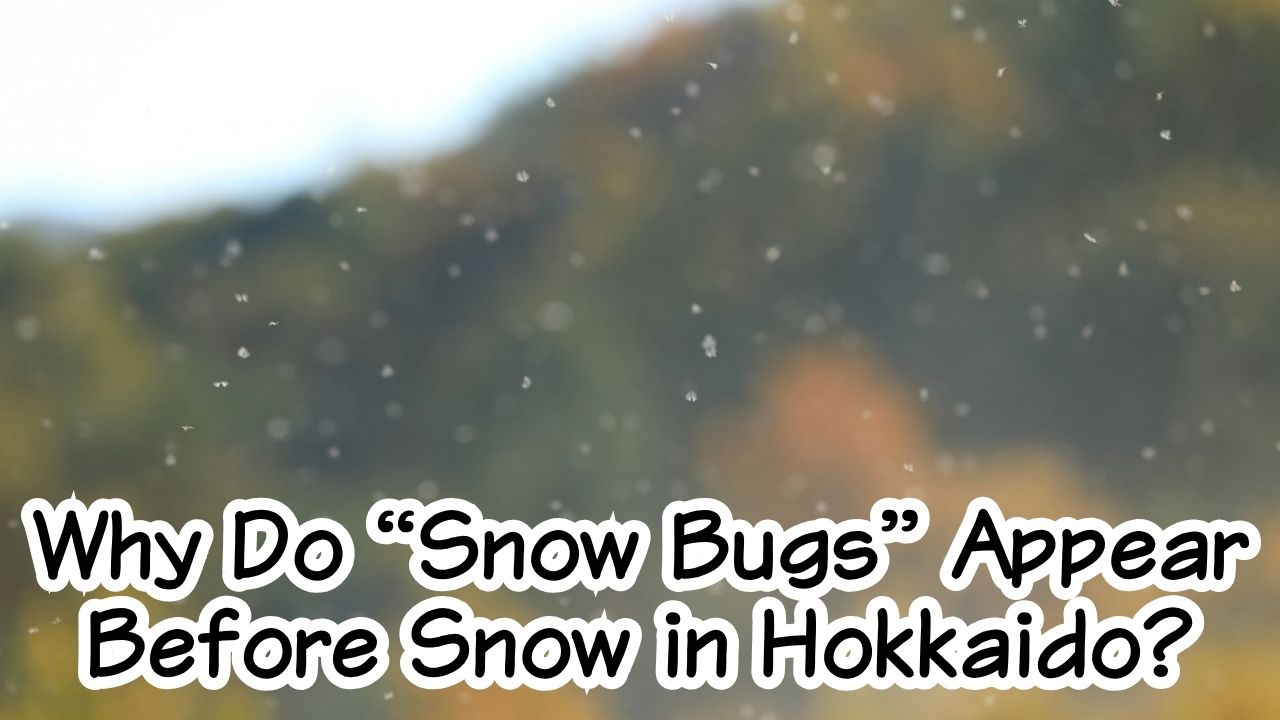
Why Do “Snow Bugs” Appear Before Snow in Hokkaido?The Short Answer
Every autumn in Hokkaido, tiny white insects called yukimushi, or “snow bugs,” begin floating through the air shortly before winter arrives.
They are not predicting the weather. Their autumn migration simply happens during the same period when temperatures are falling toward Hokkaido’s first snow, which is why generations of locals have treated their appearance as a sign that snow is coming soon.
Why You Should Care
If you visit Hokkaido in late autumn, you may see something strange.
It is not snowing.
But tiny white things are floating everywhere.
They land on your coat.
They drift past your face.
From a distance, they almost look like the first snowflakes of winter.
A local may look at them and say:
“Snow will be here soon.”
That moment is one of Hokkaido’s small seasonal traditions.
Yukimushi are not a major tourist attraction.
There is no ticket.
There is no famous viewing platform.
But noticing them can make you feel as if you are experiencing Hokkaido’s changing seasons the way local people do.
Why Is Hokkaido So Cold?
Snow bugs are often seen as a sign that Hokkaido’s long, snowy winter is approaching.
But have you ever wondered why Hokkaido gets so much colder than other parts of Japan?
Discover the fascinating reasons behind Hokkaido’s freezing winters!
Read next: Why Is Hokkaido So Cold? The Story Behind Japan’s Winter Wonderland

The Story Behind Yukimushi
What Exactly Is a Yukimushi?
Despite the cute name, a yukimushi is actually an aphid.
“Yukimushi” is a common Japanese name used for small aphids covered with white waxy material. One of the classic species associated with Hokkaido’s autumn snow bugs is Prociphilus oriens, called todonone-oowatamushi in Japanese.
The insect itself is tiny.
What makes it easy to notice is the fluffy white material surrounding its body.
When many of them float through the air together, they look surprisingly similar to snow.
Why Are Snow Bugs White?
The white “cotton” is not hair and it is not snow.
It is made from a waxy substance produced by the insect’s body.
That wax creates the soft, snowy appearance that gave yukimushi their nickname.
Interestingly, Sapporo City notes that exactly why Prociphilus oriens covers itself in this white material is still not completely understood.
So even something Hokkaido residents see almost every autumn still has a little mystery left in it.
Why Do Yukimushi Suddenly Fly in Autumn?
For much of their lives, these aphids are not flying around people at all.
They live on different trees during different parts of the year.
The life cycle of Prociphilus oriens is especially unusual.
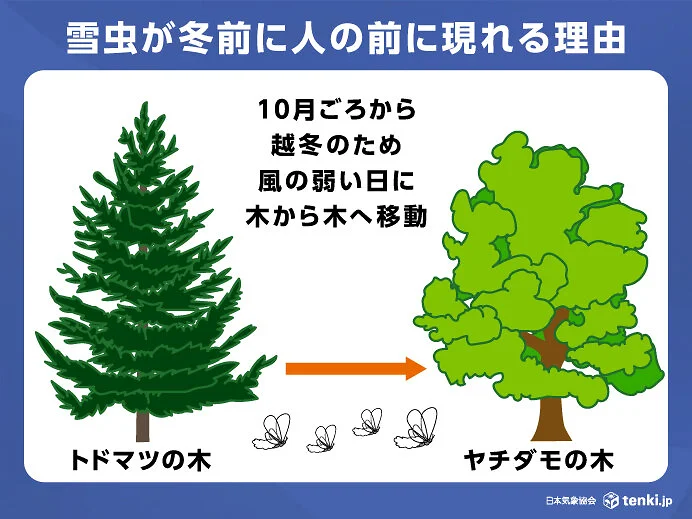
In spring, eggs hatch on trees such as Japanese ash, or yachidamo.
Around early summer, winged generations move from those trees to Todo fir trees, where they spend the summer around the roots and lower parts of the trees.
Then autumn arrives.
Around October, a new winged generation appears.
Those insects leave the Todo firs and fly back toward ash trees, where the next stage of their life cycle takes place and eggs are eventually laid for winter.
The famous autumn “snow bug” flight is actually a mass seasonal move between two kinds of trees.
Why Do Yukimushi Appear Just Before the First Snow?
This is the part that created the legend.
Their autumn flight happens when Hokkaido is already becoming cold.
Sapporo City describes yukimushi as insects often seen on cold autumn days before the snow begins to fall.
Hokkaido’s Rumoi regional government also notes that large numbers tend to take flight on relatively warm, calm autumn days and says that snow on the plains often begins roughly two to four weeks after the insects start flying.
In Sapporo, there is an even stronger local saying:
“About a week after the snow bugs appear, the first snow falls.”
Sapporo City presents this as a traditional saying rather than a scientific forecasting rule.
That distinction matters.
Yukimushi do not know next week’s weather forecast.
Their seasonal life cycle simply happens at almost the same time that Hokkaido is moving from autumn into winter.
Can Yukimushi Really Predict Snow?
Not in the way a weather forecast can.
The first snow changes every year.
So does the timing of the yukimushi flight.
Weather, local temperatures, geography, and insect development can all affect when each happens.
That means:
yukimushi = winter is getting close
is reasonable.
But:
yukimushi = snow will fall exactly seven days later
is not.
The connection works better as a seasonal sign than as a prediction.
That is why Visit Sapporo describes the appearance of white, fluffy snow bugs after the autumn leaves fall as a sign that the city’s first snow is approaching.
Are Yukimushi Dangerous?
No.
Sapporo City states that these aphids do not harm people.
They do not sting you.
They are not trying to bite you.
They are simply moving between trees.
However, when huge numbers appear, they can be annoying.
They may stick to clothing or fly around your face as you walk or cycle.
If that happens, remember:
you are standing in the middle of a tiny seasonal migration.
Why Have Snow Bugs Become Part of Hokkaido Culture?
Hokkaido’s seasons change dramatically.
Summer can be green and warm.
Then autumn leaves appear.
Temperatures fall quickly.
Yukimushi begin to fly.
And soon afterward, snow changes the landscape completely.
Because the insects appear at this turning point every year, locals began associating them with the arrival of winter.
They became a kind of living seasonal calendar.
For travelers, this is what makes yukimushi special.
You do not need to understand entomology.
If you see tiny white insects floating through a cold Hokkaido afternoon, you have learned one useful local phrase:
Winter is almost here.
Watch Out When Snow Bugs Appear in Huge Numbers!
Snow bugs may look cute when just a few are floating through the air, but large swarms can be surprisingly troublesome!
During a mass emergence, thousands of tiny insects can fill the air, sticking to your clothes and hair.
They can even fly into your mouth, nose, or eyes, especially when you’re cycling or walking through a swarm.
Why Does the City Smell Strange During a Snow Bug Outbreak?
Here’s another surprising fact: massive snow bug outbreaks can even make the city smell unpleasant!
In October 2023, residents of Sapporo reported a strange odor resembling damp laundry or dirty towels.
The cause was a massive outbreak of keyaki aphids, a type of insect also commonly grouped with snow bugs in Hokkaido.
When these insects appear in enormous numbers, their odor can become noticeable across parts of the city.
So, snow bugs aren’t always as charming as their name suggests!
Did You Know?
- Yukimushi are aphids, not tiny flies or snowflakes.
- Their fluffy white covering is made from a waxy substance produced by their bodies.
- The classic Hokkaido species Prociphilus oriens moves between Todo fir and ash trees during its life cycle.
- In Hokkaido, people have long associated the appearance of yukimushi with snow arriving soon.
- Yukimushi do not harm people, even when large numbers suddenly appear.
FAQ
When Do Snow Bugs Appear in Hokkaido?
The classic autumn flight is usually seen around October, especially as temperatures begin to fall toward winter.
Exact timing varies by region and year. Forest Research and Sapporo City sources place the main autumn movement around October.
Does Snow Always Fall One Week After Yukimushi Appear?
No.
That is a well-known local saying, not a scientific rule.
Some Hokkaido sources describe snow arriving roughly two to four weeks after the insects begin appearing, showing how much the timing can vary.
Do Yukimushi Bite?
No.
Sapporo City states that they do not harm humans.
Why Are They Called “Snow Bugs”?
Their bodies are covered in white wax, and when large numbers fly together they look like tiny snowflakes floating through the air.
Their appearance shortly before winter makes the name even more fitting.
Are Yukimushi Found Only in Hokkaido?
No.
The representative species Prociphilus oriens is also recorded in other parts of Japan and Northeast Asia.
However, yukimushi have an especially strong cultural connection with autumn and the coming snow in Hokkaido.
See Yukimushi Yourself
Location
There is no single “Yukimushi Spot.”
In autumn, they can appear in Sapporo and many other parts of Hokkaido, particularly around places with suitable trees and vegetation.
You may simply encounter them while walking through a park, residential neighborhood, or tree-lined street.
Best Season
October to early November, depending on the region and year.
Warm, relatively calm autumn days can be especially noticeable for mass flights.
How to Find Them
You do not really need to search.
If conditions are right, they may find you.
Look for tiny white dots floating slowly through the air, especially during the late-autumn period before the first snow.
Estimated Visit Time
There is no required visit time.
Yukimushi are simply part of Hokkaido’s outdoor autumn landscape.
Travel Tip
If you see large numbers of yukimushi during your Hokkaido trip, check the weather forecast.
The insects themselves cannot promise snow.
But they are a good reminder that winter is getting very close.
Final Thoughts
Why do snow bugs appear before snow in Hokkaido?
They are not predicting the future.
They are completing a journey.
Spring begins on one tree.
Summer takes them to another.
Autumn gives them wings.
Then millions of tiny white insects rise into the cold air and move again.
At almost the same time,
the leaves fall.
The temperature drops.
The mountains turn white.
And eventually,
snow reaches the city.
That timing turned a tiny aphid into one of Hokkaido’s signs of winter.
So if you visit Hokkaido in late autumn and suddenly see white dots floating around you, do not mistake them for snow.
Not yet.
But you may want to prepare your winter coat.
In Hokkaido, when the snow bugs begin to fly, real snow may not be far behind.







コメント