
My name is MAKO
Based in Sapporo, Hokkaido | Born and raised in Obihiro, Hokkaido | Lover of Sapporo Classic beer and fresh sashimi | Passionate about road trips and camping | Always chasing beautiful scenery
Why Is Bibai Yakitori Made with So Many Chicken Parts?The Short Answer
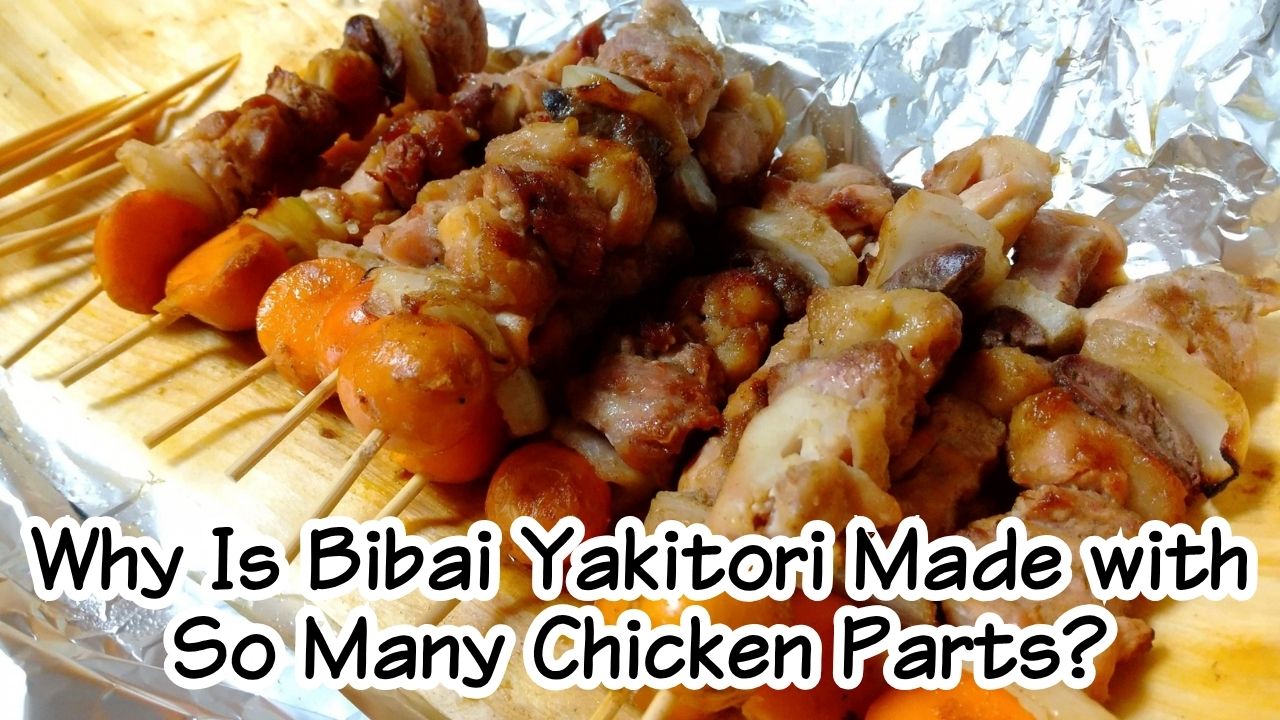
Bibai Yakitori developed in the early-to-mid 1950s in Bibai, a city that was booming with coal miners. A classic motsu skewer combines different chicken parts—including liver, heart, gizzard, skin, thigh meat, and sometimes kinkan, an unlaid egg—together with local onion.
The idea was simple: do not waste a valuable chicken. Affordable, filling, and rich in different flavors and textures, the skewers became closely connected with the everyday lives of Bibai’s workers.

Why You Should Care
Bibai Yakitori looks simple.
Chicken.
Onion.
Salt and pepper.
But one bite tells a much bigger story.
It tells you about a city that once grew around coal mines.
It tells you why people tried to use every part of a chicken.
It tells you why onions from the surrounding farmland ended up on the same skewer.
And it even tells you how locals still like to order and finish a meal today.
This is exactly the kind of food that makes travel more interesting.
You are not only eating yakitori.
You are eating part of Bibai’s history.
What Makes Bibai Yakitori Different?
Bibai City describes its yakitori as a local soul food that has been loved since around the middle of the Showa 20s—the early 1950s. Its defining feature is the motsu skewer, where several different chicken parts can be enjoyed on a single stick.
Why Are So Many Chicken Parts Put on One Skewer?
A classic Bibai-style skewer may include:
- liver
- heart
- gizzard
- chicken skin
- thigh meat
- kinkan, an unlaid egg or developing yolk
Instead of separating every part, Bibai Yakitori lets you experience several textures in one skewer. Hokkaido’s official tourism organization describes the style as a way of enjoying the flavor of the whole chicken without waste.
One bite may be soft.
The next may be chewy.
Then rich.
Then juicy.
That changing texture is part of the experience.
Why Does Bibai Yakitori Use Onion Instead of Green Onion?
Many Japanese chicken skewers use long green onion.
Bibai uses onion.
A Bibai City publication explains that onions were widely grown locally, so they became the natural choice between the pieces of chicken.
The onion also works beautifully on the grill.
Heat brings out its sweetness, which balances the salty, smoky chicken.
So this small detail connects two sides of Bibai:
the coal-mining city and the surrounding agricultural land.
How Did Coal Mining Shape Bibai Yakitori?
To understand Bibai Yakitori, you need to understand the city.
Bibai was once one of Hokkaido’s important coal-mining communities. The mountainous eastern side of the city produced large amounts of coal, while the western side developed into productive farmland on the Ishikari Plain.
At its peak, the mines brought workers and families into the city.
Those workers needed food that was affordable, satisfying, and easy to enjoy after work.
Yakitori fit that world very well.
Who Was Fukutaro Mifune?
Bibai City materials trace the roots of the local style to Fukutaro Mifune, who opened a food stall called Mifune in 1953. Hokkaido’s official tourism site more broadly dates the birth of Bibai Yakitori to around 1955, so the safest way to understand the history is that the style took shape in the early-to-mid 1950s.
Mifune used parts of the chicken that were not always valued at the time.
And instead of throwing them away, he found ways to prepare them so they could be enjoyed as yakitori.
That decision helped create the style that became associated with Bibai.
Why Were the Offal and Other Parts Used?
The key idea was very Japanese:
mottainai.
It means something like:
“What a waste.”
A chicken was valuable food.
So why eat only the familiar meat and throw away useful parts?
Bibai City materials explain that Mifune prepared organs that had previously been underused, including by parboiling and other techniques, and turned them into tasty skewers.
Today, using many parts of an animal can sound fashionable or sustainable.
In Bibai, it began as practical food wisdom.
Why Did Coal Miners Love Bibai Yakitori?
Hokkaido’s official tourism organization describes Bibai Yakitori as an affordable and nourishing food that became popular with coal-mine workers.
That makes sense.
After physically demanding work, a plate of hot grilled chicken provided:
protein,
fat,
salt,
and plenty of flavor.
It was not elegant food.
It was food for people who had worked hard.
That connection is why Bibai Yakitori is now recognized as a representative example of “Coal, Iron, and Port Cuisine,” food culture linked to the industrial history that helped modernize Hokkaido and Japan.
How Do Locals Eat Bibai Yakitori?
Knowing what to order is only half the story.
How people eat Bibai Yakitori is also different.
Why Do Locals Order Ten Skewers at a Time?
Hokkaido’s official tourism information notes that ordering Bibai Yakitori in groups of ten skewers is a familiar local style.
That sounds like a lot if you are used to ordering yakitori one or two sticks at a time.
But Bibai Yakitori grew as casual local food.
It was meant to be eaten generously.
Bibai City even describes people eating 10 or 20 skewers per person as an ordinary part of the local food culture.
For your first visit, you do not need to challenge yourself to 20.
But seeing a large pile of skewers arrive at the table helps you understand that Bibai Yakitori is not a delicate tasting menu.
It is comfort food.
Why Do People Put Yakitori Into Soba?
Here is the part many overseas travelers will not expect.
After eating yakitori, some locals finish with a bowl of hot kake soba.
Then they put a skewer of Bibai Yakitori into the broth.
The chicken and onion soak up the hot soup, while their smoky flavor moves into the broth. Hokkaido’s official tourism site and Bibai City materials both introduce this as a distinctive Bibai way to finish the meal.
Crispy grilled edges become softer.
The salty seasoning mixes with the dashi.
Yakitori becomes part of the noodle soup.
It may sound unusual.
But once you know the coal-town background, it feels completely natural:
simple,
warm,
filling,
and satisfying.
Why Has Bibai Yakitori Survived After the Coal Mines?
Coal mining no longer defines everyday Bibai in the way it once did.
But the food remained.
That is what makes local food culture so interesting.
Industries change.
Populations change.
The memories attached to food can survive.
How Did Bibai Yakitori Become a Local Food Culture?
Bibai City officially describes the dish as a soul food still loved by residents today. In 2006, local businesses formed the Bibai Yakitori Association, and the group also became involved with Japan’s national network of yakitori communities.
Today, several shops around Bibai continue to serve the local style.
City materials list restaurants including Mifune, Tatsumi, Fukuyoshi, Torinoya, Katsu, and Daigo among places associated with Bibai Yakitori.
So the tradition did not remain frozen in a museum.
It stayed on the grill.
What Does Bibai Yakitori Tell Us About Bibai Today?
Bibai is no longer simply a coal-mining town.
The city is also known for rice fields, agriculture, Miyajima Marsh, and the Arte Piazza Bibai sculpture park. But the old mining landscape still forms an important part of its identity.
Bibai Yakitori connects those worlds.
The coal mines explain the workers.
The farms explain the onions.
The chicken reflects a culture of using valuable food carefully.
And the local restaurants keep the story alive.
That is why the dish matters.
It gives you a way to taste several parts of Bibai’s history on one skewer.
Did You Know?
- Bibai Yakitori developed in the early-to-mid 1950s; Bibai City traces its roots to Fukutaro Mifune’s stall, opened in 1953.
- A classic motsu skewer can combine liver, heart, gizzard, skin, thigh meat, and kinkan.
- The vegetables between the chicken pieces are traditionally onions, not long green onions.
- Locals are known for ordering skewers in groups of ten.
- A traditional finishing move is to put Bibai Yakitori into hot kake soba.
FAQ
Is Bibai Yakitori Made Only with Chicken Offal?
No.
The famous motsu skewer combines organ meat with other parts such as thigh meat and chicken skin.
What Is “Kinkan” in Bibai Yakitori?
Kinkan is an unlaid egg or developing egg yolk found inside a hen before the egg is fully formed.
Its rich texture makes it one of the most unusual parts of the classic skewer.
Is Bibai Yakitori Spicy?
Usually no.
The traditional style is simple, with salt and pepper playing an important role rather than a heavy sweet sauce. Bibai City’s local materials describe the seasoning as straightforward and simple.
Is Bibai Yakitori the Same as Muroran Yakitori?
No.
This is a great Hokkaido food comparison.
Bibai Yakitori is famous for chicken, multiple parts on one skewer, and onion.
Muroran Yakitori is famous for pork with onion and is usually eaten with mustard.
Two cities.
Two completely different ideas of “yakitori.”
Why Is Muroran Yakitori Made with Pork?
Unlike Bibai yakitori, which uses various chicken parts, Muroran yakitori is traditionally made with pork and onions!
But why is it called “yakitori” if it doesn’t use chicken?
Discover the fascinating story behind Hokkaido’s unusual pork skewers!
Read next: Why Is Muroran Yakitori Made with Pork? The Story Behind Hokkaido’s Unusual Skewers

Can I Eat Bibai Yakitori All Year?
Yes.
It is an everyday local food rather than a seasonal specialty.
Restaurant opening days and hours vary, so check the individual shop before visiting.
Visit It Yourself
Location
Bibai lies between Sapporo and Asahikawa on the JR Hakodate Main Line and National Route 12.
Several restaurants in the city serve Bibai-style yakitori.
Where Should First-Time Visitors Try It?
One traveler-friendly option is Yakitori Tatsumi.
A recent English-language Bibai restaurant guide lists it at:
1-1-15 Nishi 1-jo Minami, Bibai
with an English menu available.
Other long-established choices listed in Bibai City materials include Mifune and Fukuyoshi.
Trying different shops can be fun because small differences in grilling, seasoning, and the order of the chicken parts give each place its own character.
Best Season
Year-round
Bibai Yakitori has no special season.
Summer makes it easy to combine the meal with a Hokkaido road trip.
Autumn is excellent for exploring central Hokkaido.
And in winter, smoky hot yakitori and a bowl of soba feel especially comforting.
How to Get There
Bibai City’s official tourism information lists travel by JR at approximately:
37 minutes from Sapporo
51 minutes from Asahikawa
depending on the train service.
Bibai is also about 60 km from Sapporo by road.
Train schedules can change, so check current JR Hokkaido information before traveling.
Estimated Visit Time
Yakitori meal only: 45–90 minutes
Bibai food + local sightseeing: half day
If you have time, combine your meal with places connected to Bibai’s history and landscape, such as Arte Piazza Bibai or the former coal-mining area.
Admission Fee
There is no admission fee to experience Bibai Yakitori.
You simply pay for your food.
Prices differ by restaurant and order size.
Opening Hours
Opening hours and regular holidays differ by restaurant.
A recent multilingual Bibai restaurant guide lists Yakitori Tatsumi as 11:00 a.m.–9:00 p.m., with last orders at 8:30 p.m. and Tuesday as its regular closing day except public holidays.
Please check the official website for the latest information.
Official Website
Final Thoughts
Why does Bibai Yakitori put so many different chicken parts on one skewer?
Because in the coal-mining city of Bibai,
a chicken was too valuable to waste.
Someone looked at the liver.
The heart.
The gizzard.
The skin.
The thigh.
Even the unlaid eggs.
And instead of asking,
“Which parts should we throw away?”
the better question became:
“How can we make all of them delicious?”
Local onions went between the pieces.
Salt and pepper kept the flavor simple.
The skewers fed miners after hard days of work.
People ordered them by the ten.
And at the end of the meal, some dropped another skewer into hot soba.
The mines eventually closed.
But the food stayed.
That is why Bibai Yakitori is more than chicken on a stick.
It is a taste shaped by coal miners, local farms, and the idea of wasting nothing.








コメント