

My name is MAKO
Based in Sapporo, Hokkaido | Born and raised in Obihiro, Hokkaido | Lover of Sapporo Classic beer and fresh sashimi | Passionate about road trips and camping | Always chasing beautiful scenery
Why Is Muroran Yakitori Made with Pork?The Short Answer
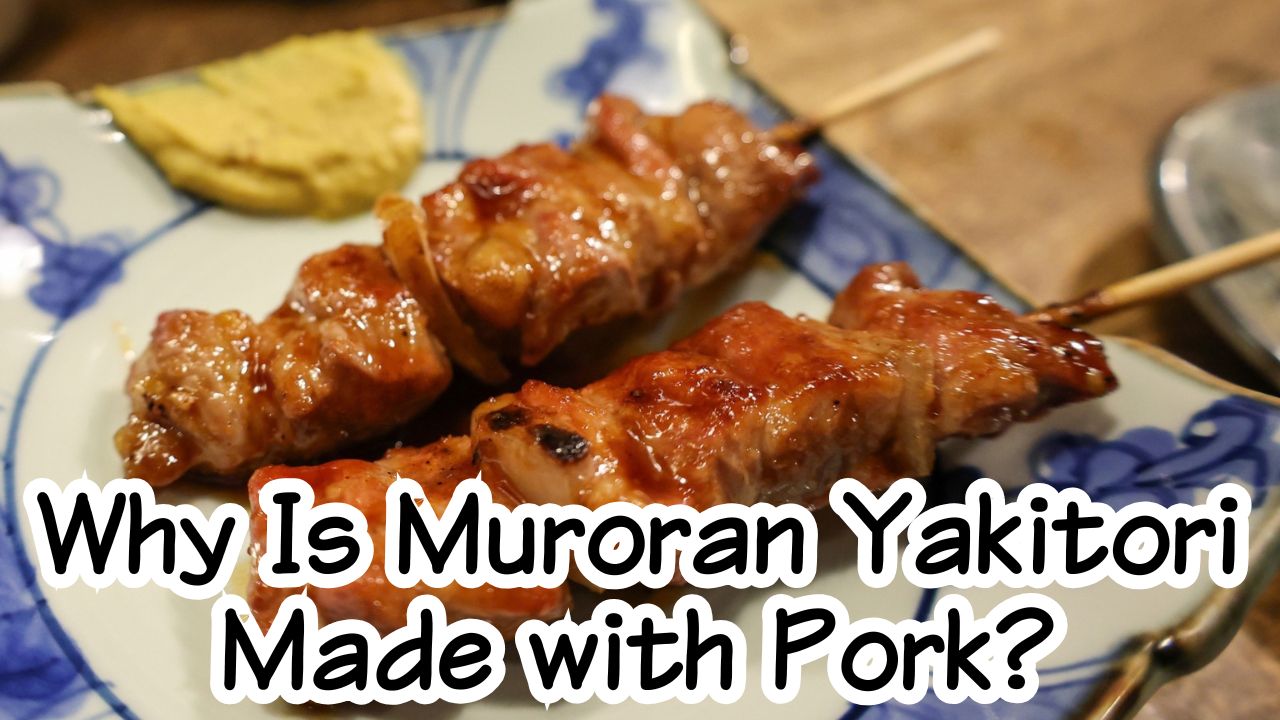
Muroran yakitori is made mainly with pork instead of chicken because pork was cheaper and easier to obtain in Muroran when this local food culture developed in the early 20th century.
The classic style combines pork, onion, a sweet-savory tare sauce, and a little karashi mustard. It became closely connected with Muroran’s identity as an industrial city.

Why You Should Care
Most travelers learn one simple rule in Japan:
Yakitori means grilled chicken.
Then they arrive in Muroran.
Order yakitori here, and you may receive juicy pieces of pork between chunks of onion.
That small surprise tells you something important about Hokkaido.
Local food does not always follow the rules you expect.
Muroran yakitori grew from the history of the city itself—its food stalls, its workers, the ingredients available in Hokkaido, and the tastes local people developed over generations.
So when you eat one skewer, you are also tasting part of Muroran’s industrial history.
The Story Behind It
Why Does Muroran Yakitori Use Pork Instead of Chicken?
The story goes back to the early Showa period in the 1930s.
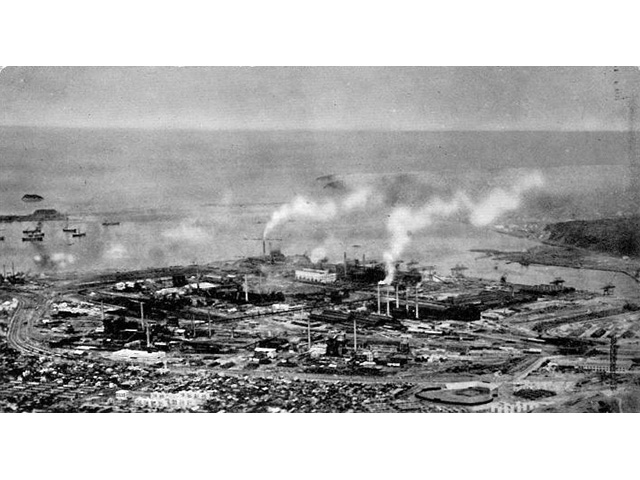
At that time, Muroran was developing as a major steel and industrial city.
Food stalls served grilled skewers to workers, including pork offal and other meats. Pork was generally cheaper and easier to obtain than chicken, so pork gradually became strongly associated with the local style of “yakitori.”
The Muroran Tourism Association traces the style to food stalls in the Wanishi area around 1933.
For workers finishing long shifts in an industrial city, hot grilled meat was simple, filling, and affordable.
That is how something unusual happened.
In Muroran,
“yakitori” stopped meaning only chicken.
Why Is Onion Used Instead of Japanese Leek?
Typical yakitori elsewhere in Japan often places naganegi, or Japanese leek, between pieces of chicken.
Muroran uses onion.
Why?
The official Muroran tourism site gives a very practical explanation.
Hokkaido was already a major onion-producing region, which made onions relatively easy and inexpensive to obtain. They also worked particularly well with pork.
When grilled, the onion becomes soft and sweet.
That sweetness balances the rich pork and salty-sweet tare.
So the famous combination was not created because someone wanted to make an unusual tourist dish.
It developed naturally from local ingredients and everyday life.
Why Does Muroran Yakitori Come With Mustard?
This may be the second biggest surprise.
Muroran yakitori is usually served with karashi, a sharp Japanese-style mustard.
A small amount changes the whole flavor.
The sweet tare becomes less heavy, while the mustard adds a quick, spicy kick that works especially well with fatty pork. Hokkaido’s official tourism site describes karashi as an important finishing touch that cuts through the richness of the sauce.
But exactly how this custom began is not completely certain.
The Muroran Tourism Association says there are several theories, including the idea that mustard was borrowed from foods such as oden or tonkatsu.
So this is one part of the story where the honest answer is:
No one knows for sure.
What is certain is that today, pork + onion + tare + mustard is the classic Muroran combination.
Why Was Muroran the Perfect City for This Food?
Muroran grew as one of Hokkaido’s major heavy-industry cities.
Steel, manufacturing, shipbuilding, and port industries helped shape the city and its neighborhoods. Hokkaido’s official tourism information describes Muroran as a major industrial and port city, and its factory landscape remains one of its best-known attractions today.
Local yakitori grew alongside that working-city culture.
The official tourism site says the dish has supported workers in the “city of iron” for more than 80 years.
Imagine finishing a physical shift.
You enter a small food stall or restaurant.
Charcoal is glowing.
Fat drips onto the fire.
The smell of tare fills the room.
A few hot pork skewers arrive with mustard on the side.
That is the kind of environment in which Muroran yakitori became a soul food, not just a specialty created for visitors.
What Makes Real Muroran Yakitori Different?
There is no single sauce recipe used by every restaurant.
That is part of the fun.
Restaurants often develop and protect their own tare recipes. Hokkaido’s official tourism site highlights the sweet-savory sauces as one of the main differences from shop to shop.
The classic version is generally:
- pork, often shoulder or belly
- onion between the pieces
- grilled over charcoal
- sweet-savory tare
- karashi mustard on the side
For example, the long-running Yakitori no Ippei uses Hokkaido pork shoulder, onion, its house tare, and mustard. The restaurant dates to 1950.
That means trying more than one shop can be worthwhile.
The basic idea stays the same.
The flavor does not.
Why Is It Still Called “Yakitori”?
This is probably what an overseas traveler will ask first.
“Yaki” means grilled.
“Tori” normally means bird or chicken.
So why call pork yakitori?
There is no need to invent a complicated explanation.
The local food culture simply developed that way.
Muroran’s official tourism information explains that pork skewers became known locally as “yakitori” as pork replaced or became more common than chicken in the city’s food-stall culture.
Today, the word itself is part of the tradition.
Ask for Muroran yakitori, and locals know what you mean.
That slight contradiction is not a mistake.
It is part of what makes the dish Muroran’s own.
Where Should First-Time Visitors Try Muroran Yakitori?
Muroran’s official tourism website lists several specialist restaurants across the city, including long-established shops and smaller local favorites.
Two areas are especially convenient for travelers:
Muroran / Chuo area
Close to JR Muroran Station, with older downtown restaurants.
Higashi-Muroran / Nakajima area
A lively dining district with several yakitori restaurants.
For example, Yakitori no Ippei Honten in Nakajima has been operating since 1950 and serves the classic pork, onion, tare, and mustard combination. It is about a 14-minute walk from JR Higashi-Muroran Station.
Did You Know?
- Muroran yakitori is usually made with pork, not chicken.
- The local style is said to have started around 1933 in food stalls in Wanishi.
- Onion became common partly because it was inexpensive and easy to obtain in Hokkaido.
- Karashi mustard is one of the defining features, although its exact origin is uncertain.
- Muroran yakitori has been part of the city’s food culture for more than 80 years.
FAQ
Is Muroran Yakitori Really Pork?
Usually, yes.
When people talk about the classic Muroran style, they mean skewers of pork and onion served with tare and mustard. Some restaurants also serve chicken and other skewers.
What Part of the Pig Is Used?
It varies by restaurant.
Pork shoulder is common, while some traditional shops use belly or other cuts. Individual restaurants have their own preferred meat and preparation.
Is Muroran Yakitori Spicy?
The tare itself is usually sweet and savory rather than very spicy.
The heat comes from the karashi mustard, and you can decide how much to add.
Can I Eat Muroran Yakitori for Lunch?
Many specialist shops mainly open in the evening, but some restaurants also offer it at lunchtime.
The Muroran Tourism Association recommends checking individual restaurants because hours and closing days vary.
Visit It Yourself
Location
Yakitori restaurants can be found in several parts of the city, especially around the Chuo and Nakajima/Higashi-Muroran areas.
Best Season
Year-round
Muroran yakitori is not seasonal.
Winter, however, has a special atmosphere: cold Hokkaido air outside, hot charcoal-grilled pork inside.
How to Get There
According to the Muroran Tourism Association:
- Sapporo → Muroran: about 1 hour 30 minutes by limited express train
- Minami-Chitose → Muroran: about 1 hour by limited express train
- Sapporo → Muroran: about 2 hours by car
- New Chitose Airport → Muroran: about 1 hour by car
If Muroran yakitori is your main goal, staying overnight makes it easier to enjoy the evening restaurant scene without rushing back.
Estimated Visit Time
1–2 hours for dinner
Combine it with Muroran’s factory night view, Cape Chikyu, or the Hakucho Bridge for a half-day or full-day visit.
Admission Fee
There is no admission fee.
You simply pay for your food and drinks at the restaurant.
Official Website
Muroran Tourist Association – Muroran Yakitori
Restaurant hours, closing days, and prices vary.
Please check the official website for the latest information.
Final Thoughts
Why is Muroran yakitori made with pork?
Because Muroran did not create its food culture by following a rulebook.
It created it from what people had.
Pork that was affordable.
Onions that were easy to find in Hokkaido.
Small food stalls.
Hungry workers.
And a city growing around heavy industry.
Then someone added tare.
Someone added mustard.
And generation after generation kept eating it.
That is how food becomes culture.
So when a plate of Muroran yakitori arrives, do not worry that the “yakitori” contains no chicken.
That is exactly the point.
The pork, onion, sauce, and mustard tell the story of Muroran far better than ordinary chicken yakitori ever could.







コメント