
My name is MAKO
Based in Sapporo, Hokkaido | Born and raised in Obihiro, Hokkaido | Lover of Sapporo Classic beer and fresh sashimi | Passionate about road trips and camping | Always chasing beautiful scenery
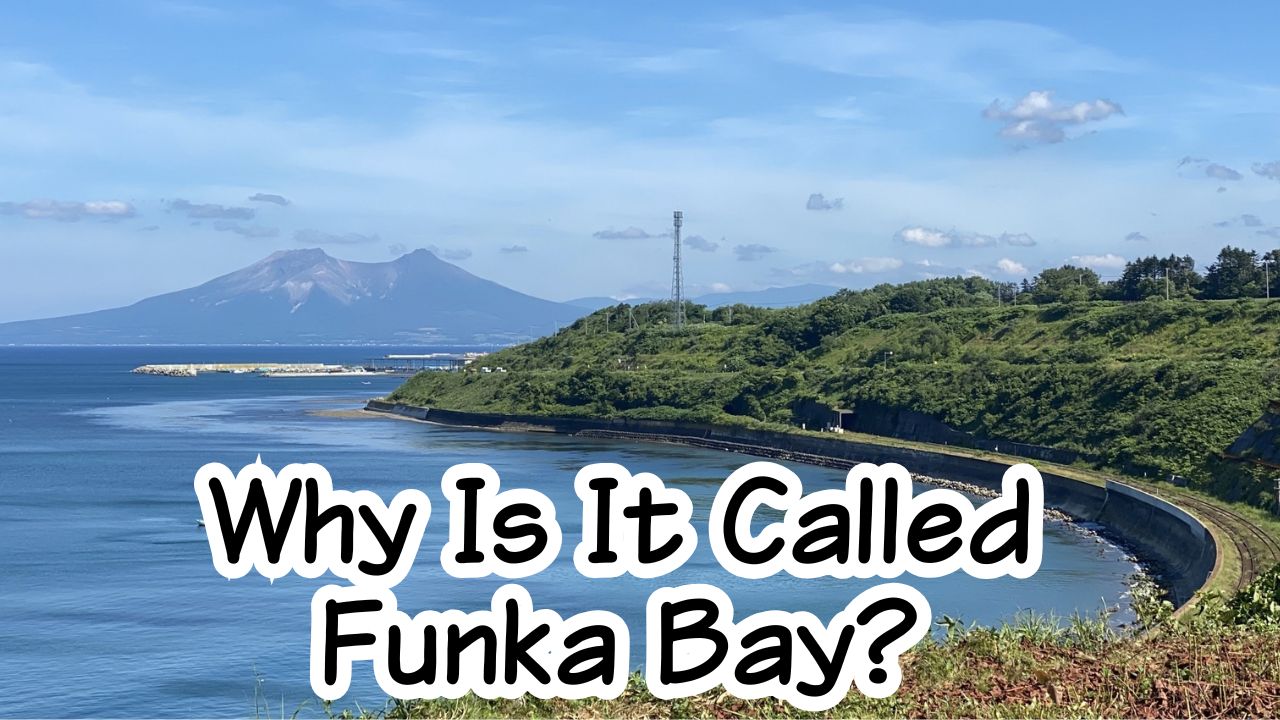
Why Is It Called Funka Bay?The Short Answer
Funka Bay is called “Volcano Bay” because British naval officer William Robert Broughton visited the area in 1796 and saw several volcanoes surrounding the bay. He called it “Volcano Bay,” and the Japanese name Funka-wan later became widely used.
But here is the surprise:
Funka Bay was not created by one giant volcanic eruption. Geological evidence does not support the idea that the entire bay is an ancient volcanic crater.

Why You Should Care
At first, “Funka Bay” sounds dramatic.
In Japanese, funka means eruption.
So it is easy to imagine that this huge round bay was created when a giant volcano exploded.
But that is not the real story.
Its name came from what a British explorer saw around the bay, not from how the bay itself was formed.
Once you know that, the landscape becomes more interesting.
The sea, Mt. Usu, Hokkaido Komagatake, and other volcanic landscapes are all part of a much bigger story about southwestern Hokkaido.
The Story Behind It
Who Named Funka Bay “Volcano Bay”?
The story begins in 1796.
William Robert Broughton, captain of the British naval ship Providence, was surveying waters around northern Japan.
When he entered this large bay, he saw volcanoes rising around the coastline. Records from the Toya-Usu UNESCO Global Geopark explain that mountains including Mt. Esan, Hokkaido Komagatake, and Mt. Usu inspired Broughton to call the area “Volcano Bay.”
The Japanese name Funka-wan carries essentially the same meaning.
Today, the bay is also known as Uchiura Bay. Japan’s Meteorological Agency uses “Uchiura Bay” in geographic terminology while noting that “Funka Bay” is also used.
Was Funka Bay Really Created by an Eruption?
No.
This is probably the most surprising fact about the bay.
Because of its rounded shape and volcanic name, you might think Funka Bay is a giant caldera like Lake Toya.
However, the Toya-Usu UNESCO Global Geopark explains that if one enormous eruption had created the bay, huge amounts of volcanic material from that event should be found around it.
Such evidence has not been found.
For that reason, Funka Bay is not considered a giant volcanic crater created by a single eruption.
So the name describes the volcanic scenery around the sea, not the origin of the sea itself.
How Big Is Funka Bay?
Funka Bay is much larger than it may look on a map.
Japan’s Ministry of the Environment gives the bay an area of about 2,485 square kilometers.
Its entrance is about 30 kilometers wide, while the deepest part reaches about 107 meters.
The bay stretches between the Muroran side in the north and the Mori side in southern Hokkaido.
That scale explains why different towns around Funka Bay can have very different scenery.
One side may show volcanic mountains.
Another has cliffs.
Another opens onto fishing ports and quiet coastal towns.
Why Does the Water in Funka Bay Change With the Seasons?
Funka Bay has another unusual feature.
The character of its seawater changes during the year.
In spring, cold water influenced by the Oyashio Current enters the bay.
From autumn into winter, relatively warmer water influenced by the Tsugaru Warm Current flows in from the south.
In simple terms, the bay does not contain exactly the same water all year.
The seasonal exchange affects water temperature, nutrients, plankton, and the marine environment.
And that helps lead us to another important Funka Bay story:
seafood.
Why Is Funka Bay Famous for Scallops?
Look along the coastline and you may see floats and aquaculture equipment in the water.
Scallop farming is one of the major fisheries in Funka Bay. Japan’s Ministry of the Environment specifically identifies scallop aquaculture as an important activity here.
The Hokkaido Government’s Oshima office explains that warm and cold waters mix in the bay and nutrients from the Pacific support a rich marine environment.
Funka Bay scallops are commonly grown using a suspended culture method.
Instead of placing young scallops on the seabed, farmers suspend them from ropes in the water. This helps keep them away from sand and allows them to grow into firm, sweet scallops.
Are Volcanoes Connected to Life Around Funka Bay?
Yes—but not in the simple way the name might suggest.
The volcanoes did not create the entire bay in one enormous explosion.
However, volcanic landscapes have shaped much of the land around it.
Mt. Usu, for example, has repeatedly erupted in modern history. Hokkaido Komagatake also has a long history of explosive eruptions.
That means a journey around Funka Bay is also a journey through volcanic Hokkaido.
You can see the sea.
Then turn inland and find volcanoes, lava landscapes, hot springs, fertile land, and communities that have learned to live beside active mountains.
That contrast is what makes the region special.
Where Can You Get a Great View of Funka Bay?
One easy place is Funka Bay Panorama Park in Yakumo.
The park sits on gentle hills overlooking the bay, giving visitors a broad view over the water and surrounding landscape. Yakumo Town recommends the site specifically as a place to look across Funka Bay.
It is also a useful stop if you are traveling by car between Hakodate and the Toya area.
Instead of simply driving past the bay, stop for a moment.
Look across the water.
Then imagine a British ship sailing into this same landscape more than 200 years ago and seeing volcanoes rising around it.
Suddenly, the name “Volcano Bay” makes much more sense.
Did You Know?
- Funka Bay is also called Uchiura Bay.
- The name “Volcano Bay” is linked to British explorer William Robert Broughton’s 1796 voyage.
- Despite its name, Funka Bay is not considered a giant volcanic crater.
- The bay covers about 2,485 km² and reaches a maximum depth of about 107 meters.
- Funka Bay is an important area for scallop aquaculture.
FAQ
Is Funka Bay the Same as Uchiura Bay?
Yes.
Both names are used for the large bay in southwestern Hokkaido.
“Uchiura Bay” appears in official geographic and weather terminology, while “Funka Bay” remains widely used locally and in tourism.
Was Funka Bay Created by a Volcano?
No.
The bay is surrounded by volcanic landscapes, but geological evidence does not support the idea that the entire bay was formed by one enormous volcanic eruption.
Which Volcanoes Are Around Funka Bay?
The wider region includes several famous volcanoes, including Mt. Usu and Hokkaido Komagatake. Broughton’s historical naming story also refers to Mt. Esan.
What Seafood Is Funka Bay Famous For?
Scallops are especially important.
They are widely farmed in the bay using suspended aquaculture techniques.
Visit It Yourself
Location
Funka Bay Panorama Park
Hamamatsu 368-8, Yakumo, Hokkaido.
Best Season
May–October
The bay can be enjoyed year-round, but the warmer months are especially comfortable for driving and enjoying the outdoor viewpoints.
How to Get There
Funka Bay Panorama Park is about a 10-minute drive from JR Yakumo Station.
A rental car is the easiest option if you want to explore more of the Funka Bay coastline.
Estimated Visit Time
30–60 minutes
Allow longer if you want to use the park facilities, have lunch, or simply relax with the view.
Admission Fee
Free
The Panorama Hall is also free to enter.
Opening Hours
The Panorama Hall is open:
10:00 a.m.–6:00 p.m.
It operates year-round but is generally closed on Mondays and during the New Year holiday period. Some outdoor facilities operate seasonally.
Please check the official website for the latest information.
Official Website
Funka Bay Panorama Park Official Website
Final Thoughts
“Funka Bay.”
The name sounds like the story of one enormous eruption.
But it is not.
It is the story of an explorer sailing into Hokkaido more than 200 years ago and seeing volcanoes rising around a huge blue bay.
Those volcanoes gave the sea its memorable nickname.
But the bay has another story too.
Cold water arrives.
Warm water arrives.
Scallops grow beneath the surface.
Fishing towns line the shore.
And active volcanoes rise beyond them.
So when you drive along Funka Bay, do not see it as just another stretch of ocean.
Look toward the mountains.
Then look back at the sea.
The name “Volcano Bay” is really about the meeting of those two landscapes.
And that meeting is one of the reasons southwestern Hokkaido is so fascinating.




コメント