

My name is MAKO
Based in Sapporo, Hokkaido | Born and raised in Obihiro, Hokkaido | Lover of Sapporo Classic beer and fresh sashimi | Passionate about road trips and camping | Always chasing beautiful scenery
Why Is Hokkaido Famous for Sanma?The Short Answer
Hokkaido is famous for sanma, or Pacific saury, because the fish begin their autumn southward migration through waters east of Hokkaido after feeding in northern seas.
Nemuro became especially famous because its fishing ports developed close connections with the saury fishery. When fishing grounds form near eastern Hokkaido, freshly caught sanma can reach Hanasaki Port quickly, making freshness one of Nemuro’s traditional strengths.

Why You Should Care
In Japan, sanma is more than just another fish.
It is one of the classic tastes of autumn.
Grilled whole over charcoal, with crispy skin, rich meat, grated daikon, and a squeeze of citrus, it is a dish strongly connected with the changing season.
And if you travel to eastern Hokkaido, especially Nemuro, that seasonal story becomes even more interesting.
As of 2025, Nemuro had recorded 15 consecutive years as Japan’s top port for saury landings.
So if you want to understand why Japanese people get excited about sanma each fall, Nemuro is a very good place to start.
The Story Behind It
Why Does Sanma Come to Hokkaido in Autumn?
Sanma are travelers.
They live across a wide area of the North Pacific and move thousands of kilometers through the ocean during their lives.
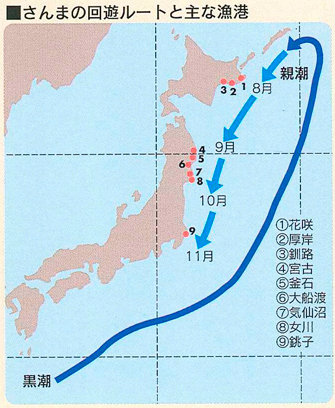
In spring and summer, one-year-old sanma move north into productive feeding areas and eat large amounts of plankton. Later, they begin moving south toward spawning areas.
Traditionally, fishing grounds begin forming around the Kuril Islands and eastern Hokkaido from late summer before shifting south toward Sanriku and farther down Japan’s Pacific coast later in the year.
That is why Hokkaido is one of the first parts of Japan to welcome the autumn sanma season.
Why Is Nemuro So Famous for Sanma?
Look at a map.
Nemuro sticks far out into the Pacific at the eastern edge of Hokkaido.
Historically, when major saury fishing grounds formed close to eastern Hokkaido, Hanasaki Port in Nemuro was one of the nearest major landing ports.
Nemuro City explains that during those conditions, fish caught at night could be landed the next morning. These especially fresh catches became known locally as “higaeri sanma,” or “day-trip sanma.”
That short time between sea and port mattered.
Sanma lose quality quickly, so freshness can make a major difference in flavor and texture.
This helped build Nemuro’s reputation as Japan’s sanma city.
Why Is Autumn Sanma So Fatty?
Before moving south, sanma spend the warmer months feeding in northern waters.
Research by Japan’s Fisheries Research and Education Agency shows that sanma grow rapidly when they reach productive northern feeding areas where plankton is abundant.
By the time many fish begin their southward migration, they have stored energy in their bodies.
Nemuro’s tourism organization describes sanma caught near the beginning of this southward migration as particularly rich and fatty. Some are even promoted locally as “toro sanma,” comparing their rich texture with fatty tuna.
That is why freshly landed autumn sanma can taste surprisingly rich for such a slender fish.
Why Is Grilled Sanma Such a Classic Japanese Autumn Dish?
There are many ways to eat sanma.
But the simplest may be the best.
Salt + whole fish + charcoal fire.
The strong heat crisps the skin while the fat inside melts through the flesh.
That smell is so closely connected with autumn in Japan that charcoal-grilled sanma has become a seasonal symbol in its own right.
Even its modern Japanese kanji look perfectly suited to the fish:
秋刀魚
- 秋 = autumn
- 刀 = sword or blade
- 魚 = fish
The long, silver body really does look a little like a blade.
Why Does Nemuro Hold a Sanma Festival?
Nemuro turned its fishing identity into one of Hokkaido’s most famous autumn food events.
At the Nemuro Sanma Festival, visitors gather beside the port and grill fresh sanma over charcoal.
The 2026 festival is scheduled for September 26 and 27 at Nemuro Port. Fresh sanma are distributed for the grill area, with visitors purchasing a tray and chopsticks for ¥300. Sanma-bushi ramen, sanma fish-ball soup, and sanma rice balls are also planned.
It is difficult to imagine a more direct Hokkaido food experience.
Fishing boats nearby.
Cold sea air.
Smoke rising from charcoal grills.
And rows of sanma cooking beside the harbor.
Is Nemuro Sanma Changing?
Yes—and this is an important part of the modern story.
Japan’s saury catch has fallen dramatically.
The Fisheries Research and Education Agency reports that Japan landed about 220,000 tons in 2014, compared with about 60,000 tons in 2025. Researchers point to both declining resources and changes in migration routes associated with climate and ocean conditions.
Fishing grounds have also moved farther offshore in recent years.
For the 2026 season, Japan’s Fisheries Agency forecast overall saury arrivals below 2025 levels, with August and September fishing grounds expected mainly far east of Hokkaido and Urup Island.
This means the old image of large schools arriving close to Hokkaido every year is no longer guaranteed.
The story of Hokkaido sanma is now also a story about a changing ocean.
Did You Know?
- Sanma are called Pacific saury in English.
- They migrate over a huge area of the North Pacific and move south along Japan during the fishing season.
- As of 2025, Nemuro had been Japan’s top saury landing port for 15 consecutive years.
- “Day-trip sanma” refers to exceptionally fresh catches landed the morning after being caught when fishing grounds form close to Nemuro.
- The kanji 秋刀魚 literally combine the characters for “autumn,” “blade,” and “fish.”
FAQ
When Is Sanma Season in Hokkaido?
The main season traditionally begins in late summer and continues through autumn.
In Nemuro, August through October has historically been the busiest period for saury landings, although the timing and location of fishing grounds now vary considerably from year to year.
Where Is the Best Place to Eat Sanma in Hokkaido?
Nemuro is the most famous destination.
During the season, local restaurants and seafood businesses offer fresh sanma in several forms, including grilled fish, sushi, and other local dishes. Availability depends on the catch.
Can You Eat Sanma as Sashimi?
Very fresh sanma can be eaten raw.
Because freshness and proper handling are essential, it is best to order it at a reputable restaurant when it is offered during the season.
Why Is Sanma Usually Grilled Whole?
The rich fat under the skin works especially well with high heat.
Grilling the whole fish also creates the crispy skin and smoky aroma strongly associated with autumn sanma in Japan.
Visit It Yourself
Location
For the strongest sanma experience, visit during the fishing season or the Nemuro Sanma Festival.
Best Season
Late August–October
Exact catches change every year, so fresh sanma availability depends on fishing conditions.
2026 Nemuro Sanma Festival
September 26, 2026: 12:00 p.m.–4:30 p.m.
September 27, 2026: 8:30 a.m.–2:30 p.m.
Location: Nemuro Port Special Venue, Honcho 5-chome, Nemuro.
How to Get to Nemuro
From Nakashibetsu Airport, the bus to Nemuro Station takes about 95 minutes.
From Kushiro Station, JR services to Nemuro take about 150 minutes.
A rental car is also useful if you plan to explore the Nemuro Peninsula.
Estimated Visit Time
1 day or overnight
Sanma alone is worth the meal, but Nemuro also offers Cape Nosappu, wildlife, coastal scenery, and other seafood.
Admission Fee
There is no admission fee to visit Nemuro.
For the 2026 Sanma Festival, access to the event itself is free; the tray and chopsticks required for the fresh-sanma distribution cost ¥300.
Please check the official website for the latest information.
Official Website
Nemuro City – Nemuro Sanma Festival
DEEP HOKKAIDO NEMURO – Official Tourism Website
Final Thoughts
Why is Hokkaido famous for sanma?
Because every autumn, this small silver fish connects Hokkaido with a much bigger story.
The cold northern Pacific.
Plankton-rich feeding grounds.
A long southward migration.
Fishing boats leaving Nemuro.
And fresh fish arriving at the port.
For decades, that journey made Nemuro one of the great places in Japan to eat sanma.
Today, the story is changing.
Fish stocks have declined.
Migration routes have moved farther offshore.
And fishermen must travel farther to find them.
That makes a fresh autumn sanma feel even more special.
So if you visit Nemuro and find freshly grilled sanma on the menu, do not see it as just another piece of seafood.
Take a bite and think about how far that fish traveled before reaching your plate.
That smoky, fatty flavor is one of Hokkaido’s true tastes of autumn.








コメント