

My name is MAKO
Based in Sapporo, Hokkaido | Born and raised in Obihiro, Hokkaido | Lover of Sapporo Classic beer and fresh sashimi | Passionate about road trips and camping | Always chasing beautiful scenery
Why Was Kita no Yatai Created in Obihiro?The Short Answer
Kita no Yatai was created to bring people and energy back to downtown Obihiro.
A group of local citizens spent about two and a half years studying food stalls and urban revitalization before opening the alley in 2001 with 16 stalls. Their idea was bigger than food: support new entrepreneurs, promote Tokachi ingredients, and make the city center a place where people wanted to gather again.

Why You Should Care
You could visit Kita no Yatai simply to eat and drink.
That would already be fun.
But once you know why it exists, the narrow alley feels very different.
Kita no Yatai was not created as a nostalgic tourist attraction. It was part of a citizen-led effort to bring life back to a downtown area that was losing activity.
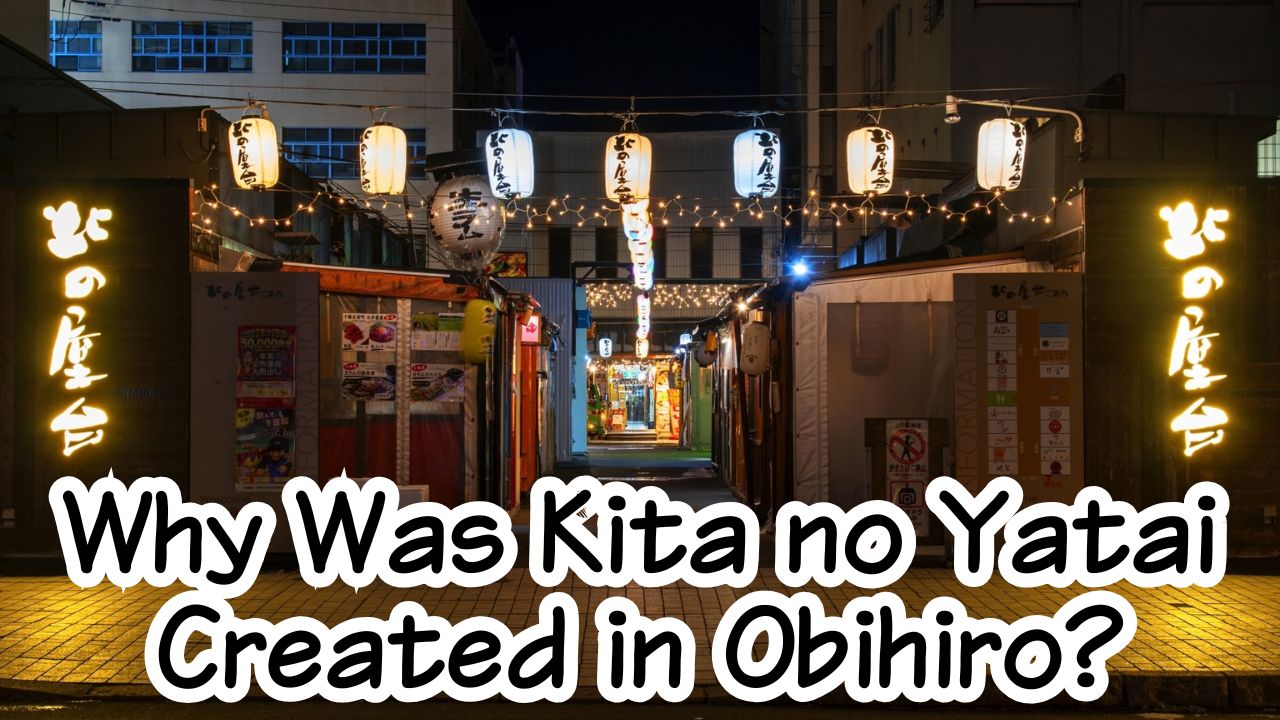
Today, around 20 tiny restaurants serve everything from Japanese dishes and grilled food to French, Italian, Mexican, and dishes made with Tokachi ingredients.
So when you sit at one of those small counters, you are experiencing more than dinner.
You are sitting inside one of Obihiro’s most famous community-revival projects.
The Story Behind It
What Was Here Before Kita no Yatai?
The location has a food-related history.
Obihiro once had a distinctive type of market called renbai ichiba, narrow shopping passages lined with small stores.
One of them, Ichijo Market, served as a local kitchen for downtown residents. But it was destroyed by fire in January 1998. The site later became a small parking lot.
The land was narrow and not especially useful as parking.
So people began imagining something different.
Could this empty space become a street again?
That idea would eventually lead to Kita no Yatai.
Why Did Obihiro Choose Food Stalls?
In 1999, local citizens who wanted to energize downtown Obihiro began studying ways to improve the city center.
Instead of simply asking the government to solve the problem, they wanted to participate using their own ideas, money, and effort.
They became interested in yatai—small food stalls.
The group studied food-stall cultures in Japan and overseas and developed what they called a Tokachi-style original yatai. After roughly two and a half years of research and preparation, Kita no Yatai opened on July 29, 2001.
It began with 16 stalls.
The goal was not to recreate an old Japanese street exactly as it once existed.
It was to give the idea of the yatai a new purpose.
Why Is Kita no Yatai More Than a Food Street?
From the beginning, Kita no Yatai had three major goals.
It aimed to:
- bring people back into central Obihiro
- create a low-cost place where new restaurant owners could gain experience
- promote local Tokachi products through food
That second goal is especially interesting.
Kita no Yatai was designed partly as a business incubator.
The official concept encourages owners to use the small stalls to learn what customers like, build a customer base, gain business skills, save money, and eventually move into their own independent restaurants.
In other words:
The yatai was meant to be a starting point, not always the final destination.
Some former stall owners have gone on to open independent restaurants after leaving Kita no Yatai.
Why Is Tokachi Food So Important Here?
Tokachi is one of Japan’s major agricultural regions.
But the founders of Kita no Yatai felt that high-quality local food was often shipped to large cities instead of being enjoyed locally.
Their answer was simple:
Serve more Tokachi food in Tokachi.
The official Kita no Yatai concept emphasizes chisan-chisho—local production for local consumption—and connections between stall owners and local farmers.
Today, the stalls offer a surprisingly wide range of food.
The 2026 lineup includes restaurants specializing in Tokachi cheese, local vegetables, Hokkaido chicken and pork, lamb and horse dishes, French food, pasta, tempura, Mexican-inspired food, and more.
Why Are the Stalls So Small?
That small size is part of the experience.
You sit close to the cook.
You sit close to other guests.
And conversation happens naturally.
The Hokkaido Tourism Organization describes Kita no Yatai as a place where locals and travelers often interact in its compact, friendly atmosphere.
There is another unusual feature.
You can sometimes order food from another stall while staying seated at your current one. The official guide says delivery between stalls is generally possible, although availability depends on the menu and timing.
So you could be sitting in one tiny restaurant while trying a dish made a few doors away.
That is a very Kita no Yatai way to eat.
What Is Kita no Yatai Like in Winter?
This is Hokkaido.
So there is an obvious question:
Isn’t a food stall freezing in winter?
The stalls have electricity, gas, water, and heating arrangements. The official visitor guide says each owner handles winter warmth differently, but the stalls remain warm enough for dining.
That makes winter especially atmospheric.
Outside, Obihiro may be covered in snow.
Inside, a tiny stall is filled with warm food, conversation, and steam.
For many travelers, that contrast may be more memorable than a large restaurant.
Why Does Kita no Yatai Keep Changing?
Kita no Yatai was designed to give new people opportunities.
That means the lineup does not stay exactly the same forever.
On April 23, 2026, Kita no Yatai began its ninth generation, with nine new stall owners joining the current lineup. There are now 20 stalls.
And 2026 is another important year.
Kita no Yatai celebrated its 25th anniversary, exactly 25 years after opening on July 29, 2001.
That may be the best proof that the idea worked.
A project created to bring people back downtown became one of Obihiro’s best-known evening destinations.
Did You Know?
- Kita no Yatai opened on July 29, 2001, with 16 stalls.
- It grew from a citizen-led downtown revitalization project, not a tourism project alone.
- The site was once home to Ichijo Market, which burned down in 1998.
- Kita no Yatai now has 20 stalls, and its ninth generation started in April 2026.
- You can sometimes order food from another stall without leaving your seat.
FAQ
Is Kita no Yatai Only for Drinking?
No.
Many stalls serve full meals or substantial dishes, including meat, fish, vegetables, pasta, tempura, and international-style food.
Is Kita no Yatai Good for Solo Travelers?
Yes.
Because the stalls are tiny and counter-focused, solo travelers can fit naturally into the atmosphere. The small space also makes it easier to talk with stall owners or other customers.
Do I Need a Reservation?
Policies differ by stall.
Because seating is limited, popular stalls may fill quickly. Check individual stall information if there is somewhere you especially want to visit.
Can I Visit in Winter?
Yes.
Kita no Yatai operates throughout the year, and stalls use various methods to keep dining spaces warm during Obihiro’s cold winter.
Visit It Yourself
Location
Kita no Yatai
Nishi 1-jo Minami 10-chome 7, Obihiro, Hokkaido.
Best Season
Year-round
Summer has a lively outdoor atmosphere, while winter offers a very Hokkaido-style experience: snow outside and warm food inside.
How to Get There
Kita no Yatai is about a 5-minute walk from JR Obihiro Station.
From Tokachi-Obihiro Airport, the drive is approximately 40 minutes.
Estimated Visit Time
1–2 hours
But if you enjoy moving between several stalls, you could easily spend the whole evening here.
Admission Fee
No admission fee
You simply pay for the food and drinks you order.
Opening Hours
Most current stalls list hours of approximately:
5:00 p.m.–midnight
Closing days vary by stall.
Please check the official website for the latest information.
Official Website
Kita no Yatai Official Website
Final Thoughts
Kita no Yatai looks simple.
A narrow alley.
Tiny restaurants.
Lanterns.
Food and drinks.
But the reason it exists is much bigger.
People in Obihiro saw a downtown that was losing energy and asked:
“What can we do ourselves?”
Their answer was food stalls.
Those stalls gave new restaurant owners a place to begin.
They gave Tokachi farmers another way to connect their food with local people.
And they gave residents and travelers a reason to gather downtown.
Twenty-five years later, the lights are still on.
So when you visit Kita no Yatai, do not think of it only as a place to eat.
It is a small street created to bring a city back to life.
And that story makes every seat at the counter a little more special.









コメント