
My name is MAKO
Based in Sapporo, Hokkaido | Born and raised in Obihiro, Hokkaido | Lover of Sapporo Classic beer and fresh sashimi | Passionate about road trips and camping | Always chasing beautiful scenery
Why Is Naitai Highland Ranch So Huge?The Short Answer
Naitai Highland Ranch covers about 1,700 hectares, making it Japan’s largest public ranch. But all that land was not created for sightseeing—it is a working ranch built to raise young dairy cattle for farmers before returning them when they are close to calving.
Its enormous pastures also create one of the best places in Tokachi to understand the true scale of Hokkaido.

Why You Should Care
If you want to understand why Hokkaido feels so different from much of Japan, drive up Naitai Highland Ranch.
The road climbs through rolling grasslands where cattle look tiny against the landscape. At the top, the Tokachi Plain seems to stretch almost endlessly below you.
But this scenery was not designed as a viewpoint.
It is a working agricultural landscape.
Knowing why such a giant ranch exists turns the view from “beautiful Hokkaido countryside” into a story about the dairy industry that helped shape Tokachi.
The Story Behind It
Why Is Naitai Highland Ranch So Huge?
The numbers are difficult to imagine.
Naitai Highland Ranch covers about 1,700 hectares—roughly 358 Tokyo Domes. It was completed in 1972 as a national government project and is now managed by JA Kamishihoro under a designated management system.
But the size makes sense once you understand its job.
Naitai is a public ranch for raising young dairy cattle.
Farmers send young cows here when they are at least around six months old. The ranch raises them, breeds them, and eventually returns the pregnant cows to their owners as they approach calving.
That requires a lot of grass.
And a lot of space.
Why Do Farmers Send Their Cows to a Public Ranch?
Dairy farming is not only about milking adult cows.
Young cattle must also be fed, managed, and raised for many months before they produce milk.
Naitai Highland Ranch specializes in that stage.
During summer, the cattle graze across the huge grasslands. In winter, they are kept in seven barns. In summer, the official tourism association says the cattle can be divided into around 11 groups of about 250 animals each.
So those cows you see scattered across the hills are not there for tourists.
They are future dairy cows.
This is one reason the ranch tells a much bigger story about Tokachi agriculture.
Why Was Naitai Built in Tokachi?
Tokachi is one of Hokkaido’s great farming and dairy regions.
Wide open land and large-scale agriculture have allowed livestock farming to develop on a scale that is unusual in much of Japan.
Naitai Highland Ranch became part of that system when it was completed in 1972. Rather than each farmer raising every young cow entirely on their own farm, a specialized public ranch could take responsibility for large numbers of young cattle.
That is why the ranch feels so different from a small tourist farm.
Its size exists because it serves agriculture first.
The incredible scenery came later.
What Does “Naitai” Mean?
Even the name has a Hokkaido story.
The local tourism association explains that the Naitai River name comes from the Ainu expression “Nay-etaye-pet,” interpreted as meaning a deep or far-reaching stream.
That name fits the landscape well.
The ranch sits high above the Tokachi Plain, surrounded by long valleys, grasslands, forests, and distant mountains.
How Did a Working Ranch Become a Famous Viewpoint?
The answer is simple.
The view was too good to keep secret.
The road from the entrance gate climbs for roughly 6–7 kilometers through the ranch before reaching the upper area. From there, visitors can look across the ranch and the enormous Tokachi Plain.
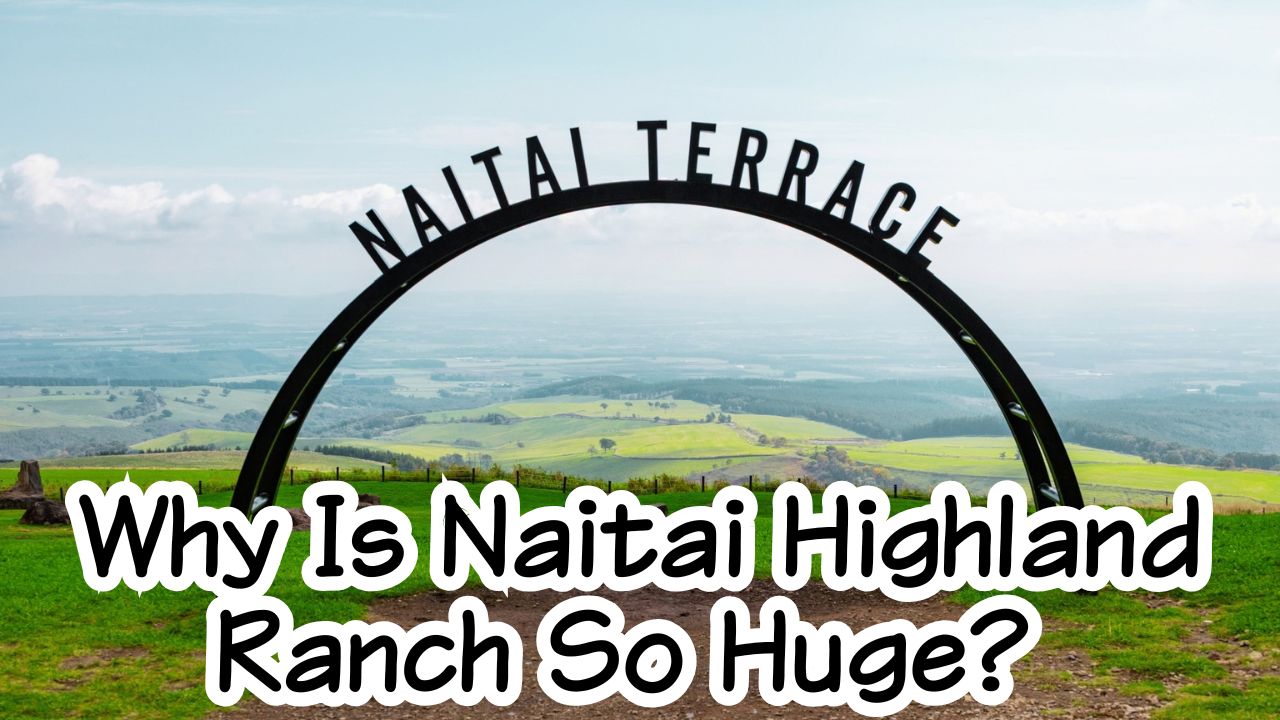
In 2019, Naitai Terrace opened near the top of the ranch.
The observation facility sits at an elevation of about 800 meters. Its huge glass windows offer views over the pasture, Tokachi farmland, and distant mountains.
This is one of those rare places where the journey is as good as the destination.
Do not rush to the terrace.
The drive itself is part of the experience.
What Should You Do at Naitai Terrace?
First, look outside.
That sounds obvious, but the scale is the main attraction.
On a clear day, the landscape changes from the green ranch in the foreground to the patchwork fields of Tokachi far below.
Then stop at the café.
Naitai Terrace includes a café and shop, with seating designed so visitors can enjoy the scenery through large floor-to-ceiling windows.
If the weather suddenly turns cloudy or foggy, do not be too disappointed either.
Fog is a well-known feature of the highland, and the scenery can change dramatically within a short time.
That unpredictability is part of visiting a real mountain ranch.
When Is Naitai Highland Ranch Most Beautiful?
Each part of the season feels different.
June brings especially fresh green grass.
From summer into early autumn, cattle graze across the highland.
By September, autumn colors begin appearing higher in the mountains, signaling that the grazing season is approaching its end.
For first-time visitors, I would choose June through September.
You have the best chance of seeing the classic scene:
green grass + grazing cattle + blue sky + endless Tokachi Plain.
Did You Know?
- Naitai Highland Ranch covers about 1,700 hectares, or roughly 358 Tokyo Domes.
- It was completed in 1972 as a national government project.
- It is not simply a sightseeing ranch—it specializes in raising young dairy cattle for farmers.
- Naitai Terrace stands at an elevation of about 800 meters.
- The drive from the ranch entrance toward the upper area is around 6–7 kilometers.
FAQ
Can I Walk Around With the Cows?
No.
This is a working ranch, not a petting zoo. Visitors should stay on permitted roads and visitor areas and avoid entering grazing fields.
Is Naitai Highland Ranch Free?
Yes.
Admission to the ranch and Naitai Terrace is free, and parking is also free.
When Can I See Cows?
The main grazing season is during the warmer months.
Summer is the best time to enjoy the classic view of cattle spread across the green hills.
Is Naitai Highland Ranch Open in Winter?
No.
The ranch entrance closes outside the warmer season because the highland is covered by snow for much of winter. For 2026, Naitai Terrace is scheduled to operate from April 25 to October 31.
Visit It Yourself
Location
Naitai Highland Ranch / Naitai Terrace
128-5 Kaminotobetsu, Kamishihoro, Hokkaido.
Best Season
June–September
June is especially beautiful for fresh green scenery, while early autumn brings changing colors in the surrounding mountains.
How to Get There
A rental car is strongly recommended.
From JR Obihiro Station, the official Hokkaido tourism site gives a driving time of about 60 minutes.
Kamishihoro town center is about 16 kilometers from Naitai Terrace, including roughly 6 kilometers from the ranch gate to the upper area.
Estimated Visit Time
1–2 hours
Allow longer if you want to stop frequently for photographs or spend time at the café.
Admission Fee
Free
Parking is also free.
2026 Opening Information
Naitai Terrace: April 25–October 31, 2026
Hours: 9:00 a.m.–5:00 p.m.
Ranch gate hours vary by month:
- Late April–May: 7:00 a.m.–6:00 p.m.
- June–September: 7:00 a.m.–7:00 p.m.
- October: 7:00 a.m.–6:00 p.m.
Please check the official website for the latest information.
Official Website
Naitai Highland Ranch – Kamishihoro Tourism Association
Final Thoughts
Naitai Highland Ranch feels huge because it really is huge.
But the more interesting question is:
Why does it need to be?
The answer is not tourism.
It is cows.
Young dairy cattle from local farms need time, grass, and space before they become milk-producing cows.
That agricultural job created a 1,700-hectare landscape.
And that landscape eventually became one of Tokachi’s great viewpoints.
So when you reach Naitai Terrace and look down across the endless green hills, remember:
You are not looking at scenery created for travelers.
You are looking at a working part of Hokkaido’s dairy industry.
That is what makes the view even better.




コメント