

My name is MAKO
Based in Sapporo, Hokkaido | Born and raised in Obihiro, Hokkaido | Lover of Sapporo Classic beer and fresh sashimi | Passionate about road trips and camping | Always chasing beautiful scenery
Why Is Hakodate Famous for Squid?The Short Answer
Hakodate became famous for squid because the Tsugaru Strait lies along important migration routes for Japanese flying squid, giving local fishermen access to fresh catches for generations.
Squid fishing developed strongly here from the early Meiji period, and fresh squid became so deeply connected with everyday life that Japanese flying squid was officially named Hakodate’s city fish in 1989.

Why You Should Care
When travelers think of Hakodate, they often imagine the famous night view, Goryokaku, or the Morning Market.
But for local people, another symbol has been swimming just offshore:
squid.
For generations, squid has appeared at breakfast tables, seafood markets, restaurants, festivals, and even in Hakodate’s night scenery.
There is even a local “Ika Odori,” or Squid Dance, performed during the Hakodate Port Festival.
Once you know this story, eating squid in Hakodate becomes much more than ordering seafood.
You are tasting a part of the city’s identity.
The Story Behind It
How Did Squid Fishing Begin in Hakodate?
Hakodate’s modern squid-fishing story goes back to the early Meiji period in the late 19th century.
According to Hakodate’s official tourism site, fishermen from Sado Island, an area with an established squid-fishing tradition, came to Hakodate for seasonal work.
They brought fishing tools and techniques with them and passed those methods on to local fishermen.
Over time, squid fishing became an important part of Hakodate’s coastal economy.
What began as fishing knowledge brought from elsewhere eventually became one of the strongest symbols of the city.
Why Is the Tsugaru Strait So Important for Hakodate Squid?
Location is a major reason Hakodate became an “ika city.”
Hakodate sits beside the Tsugaru Strait, the narrow sea between Hokkaido and Honshu.
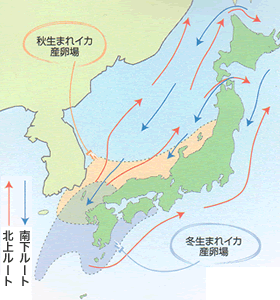
Japanese flying squid—called surume-ika or ma-ika locally—migrate through waters around Japan as they search for suitable temperatures and food.
Different groups approach the Tsugaru Strait from both the Japan Sea and Pacific sides. Historically, this made the waters around Hakodate an important fishing area during their long seasonal migrations.
The classic surume-ika season is generally June through December, while yari-ika, or spear squid, is common from January through May.
That means the squid on your plate can actually change depending on when you visit Hakodate.
Why Is Fresh Hakodate Squid So Transparent?
Visitors are often surprised when fresh squid sashimi arrives.
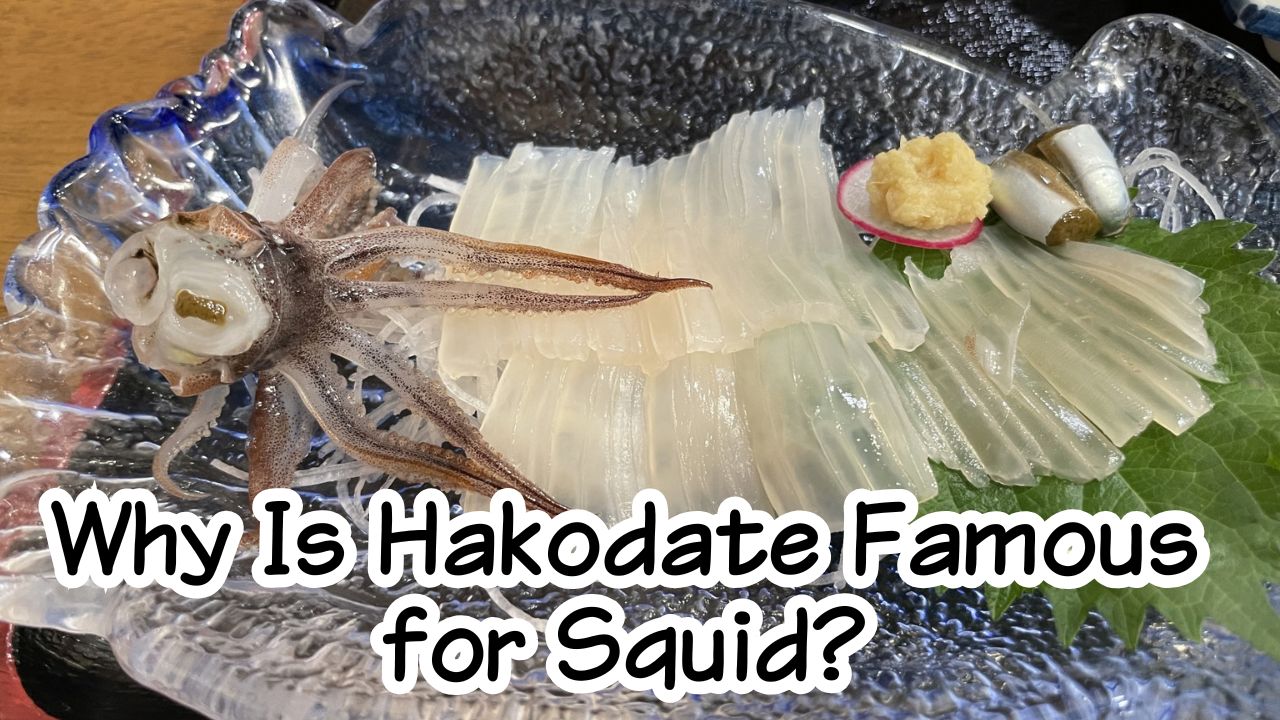
Instead of the milky white squid they may know from sushi restaurants, very fresh Hakodate squid can look almost transparent.
It also has a firm, crisp texture.
One reason Hakodate has traditionally been able to serve squid this fresh is the use of live wells on fishing boats.
Some squid are kept alive in seawater on the way back to port and distributed as katsu-ika, or live squid. This helps preserve the clear appearance and distinctive texture associated with extremely fresh squid.
In Hakodate, a classic way to eat it is with ginger and soy sauce, rather than only wasabi.
Why Do Squid-Fishing Boats Light Up the Sea at Night?
If you look out over the sea from Mt. Hakodate on a summer night, you may notice lights floating beyond the city.
These are isaribi—squid-fishing lights.
Hakodate’s official tourism information explains that fishermen once used open fires on their boats. Fishing lights later evolved through different types of lamps and modern electric systems.
During squid season, the glowing boats have become part of Hakodate’s summer night scenery.
From Mt. Hakodate or other viewpoints facing the Tsugaru Strait, the lights can appear like another small city floating on the sea.
This is one of those rare moments when an industry becomes part of a tourist landscape.
The fishermen are working—but they are also creating one of Hakodate’s most beautiful seasonal views.
Why Was Squid Chosen as Hakodate’s City Fish?
By the late 20th century, squid was already far more than a commercial catch.
It was part of daily life.
In August 1989, Japanese flying squid was officially designated as Hakodate’s city fish.
Historically, fresh squid was even sold from trucks traveling through local neighborhoods, with sellers calling out “Iga! Iga!”—a local pronunciation of ika.
Families ate squid sashimi for breakfast.
People made shiokara, a salty fermented squid dish.
Squid appeared in dried snacks, rice dishes, restaurants, and markets.
Then there is the Ika Odori.
During the Hakodate Port Festival, residents dance to a playful squid-themed song with simple movements that visitors can join too.
Few cities turn their favorite seafood into a dance.
Hakodate did.
Why Is Squid Fishing at Hakodate Morning Market So Popular?
Today, one of the easiest ways for a traveler to experience Hakodate’s squid culture is at Hakodate Morning Market.
Inside Ekini Market is a live squid fishing pond.
You use a small fishing rod to hook a squid swimming in the tank.
Then the staff prepares your catch as sashimi almost immediately.
It does not get much fresher than that.
And there is one warning:
the squid may spray water at you when you lift it from the tank.
That surprise is part of the fun.
Is Hakodate Still Catching as Much Squid as Before?
No.
This is an important part of the story today.
Hakodate’s squid landings have fallen sharply compared with past decades. Hakodate City statistics show a major decline in Japanese flying squid catches during the decade through 2023, while national fisheries researchers continue to monitor both major Japanese flying squid stocks.
The reasons are complex.
Ocean conditions, water temperature, migration patterns, reproduction, and overall resource levels can all affect how many squid reach fishing grounds.
Because of this, fresh local squid is not guaranteed every day, even in Hakodate.
The Morning Market’s squid-fishing experience can also be canceled when fishing is impossible or squid are unavailable.
That makes Hakodate’s squid story different from the past.
It is no longer only the story of abundance.
It is also a story about a changing ocean—and about a city trying to preserve a food culture deeply connected to the sea.
Enjoy Fresh Squid for Breakfast at a Hakodate Hotel
If you’re staying at a hot spring hotel in Hakodate, don’t miss the chance to enjoy squid sashimi for breakfast!
Some hotels, especially in the Yunokawa Onsen area, serve squid sashimi as part of their traditional Japanese breakfast or buffet.
And here’s another delicious surprise! At certain accommodations, squid may also be served as tempura, offering a completely different taste and texture.
Imagine relaxing in a hot spring at night and waking up to delicious Hokkaido seafood the next morning.
Did You Know?
- Modern squid fishing in Hakodate developed in the early Meiji period, with techniques introduced by fishermen from Sado Island.
- Japanese flying squid became Hakodate’s official city fish in 1989.
- The classic surume-ika season is roughly June–December, while yari-ika is common January–May.
- Very fresh Hakodate squid is traditionally eaten with ginger and soy sauce.
- Hakodate even has an Ika Odori—Squid Dance—performed during the summer Hakodate Port Festival.
FAQ
When Is the Best Time to Eat Squid in Hakodate?
If you want the classic Hakodate surume-ika, visit from around June to December.
From winter through spring, yari-ika is commonly served instead. Availability varies with fishing conditions.
Why Is Hakodate Squid Sometimes Transparent?
Extremely fresh live squid can retain a translucent appearance and firm texture.
Hakodate fishermen have traditionally used onboard live wells to bring some squid back to port alive.
How Do People in Hakodate Eat Fresh Squid?
One classic local style is sliced raw squid with ginger and soy sauce.
Restaurants may also serve the liver, legs, grilled squid, shiokara, and many other squid dishes.
Can I Really Catch My Own Squid at Hakodate Morning Market?
Yes.
At the live squid fishing pond inside Ekini Market, visitors can catch a squid from a tank and have it prepared immediately as sashimi.
Is Squid Available Every Day?
No.
Catch volumes depend on the season, weather, ocean conditions, and resource levels.
Even the Morning Market experience can end early or be canceled when squid are unavailable.
Visit It Yourself
Location
Live Squid Fishing – Hakodate Morning Market, Ekini Market
9-19 Wakamatsu-cho, Hakodate, Hokkaido.
Best Season
June–December is the classic season for Hakodate’s Japanese flying squid.
However, yari-ika can also be enjoyed during winter and spring, so squid culture can be experienced at other times of year as well.
For the added experience of seeing squid-fishing lights offshore, summer is especially attractive.
How to Get There
The squid fishing pond is about a 5-minute walk from JR Hakodate Station.
Estimated Visit Time
30–60 minutes
Allow extra time if you plan to explore the rest of Hakodate Morning Market or eat breakfast there.
Admission Fee
There is no general admission fee for the market.
The squid fishing price varies depending on the season and market conditions.
Opening Hours
The official English tourism site currently lists:
6:30 a.m.–1:30 p.m.
The activity may finish earlier when squid sell out, and times can change by season. It may also be canceled because of bad weather or poor catches.
Please check the official website for the latest information.
Official Website
Travel Hakodate – Fishing for Fresh Squid at Hakodate Morning Market
Final Thoughts
Why is Hakodate famous for squid?
Because the story is bigger than one delicious plate of sashimi.
It begins with fishermen arriving from Sado during the early Meiji period.
It continues with squid migrating through the Tsugaru Strait.
Fishing boats head out at night.
Lights glow across the sea.
Fresh squid arrives at the port.
Local families eat it for breakfast.
A city chooses it as its official fish.
And then people even create a dance about it.
That is how seafood becomes part of a city’s identity.
Today, squid catches are no longer as predictable as they once were.
That makes the tradition more fragile—but perhaps also more meaningful.
So if you visit Hakodate and a plate of fresh, translucent squid arrives in front of you, take a moment before you eat.
Look at the sea outside the city.
Think about the lights of the fishing boats.
And remember:
that squid is not simply one of Hakodate’s famous foods.
It is part of the story of Hakodate itself.






コメント