
My name is MAKO
Based in Sapporo, Hokkaido | Born and raised in Obihiro, Hokkaido | Lover of Sapporo Classic beer and fresh sashimi | Passionate about road trips and camping | Always chasing beautiful scenery
Why Was Hokkaido Shrine Built in Sapporo?The Short Answer
Hokkaido Shrine began in 1869, when three Shinto deities were enshrined as guardians of Hokkaido’s development under the Meiji government.
Their sacred symbols were later brought to Sapporo, and in 1871, a shrine was established at its present location in Maruyama. It was first called Sapporo Shrine, before becoming Hokkaido Shrine in 1964.

Why You Should Care
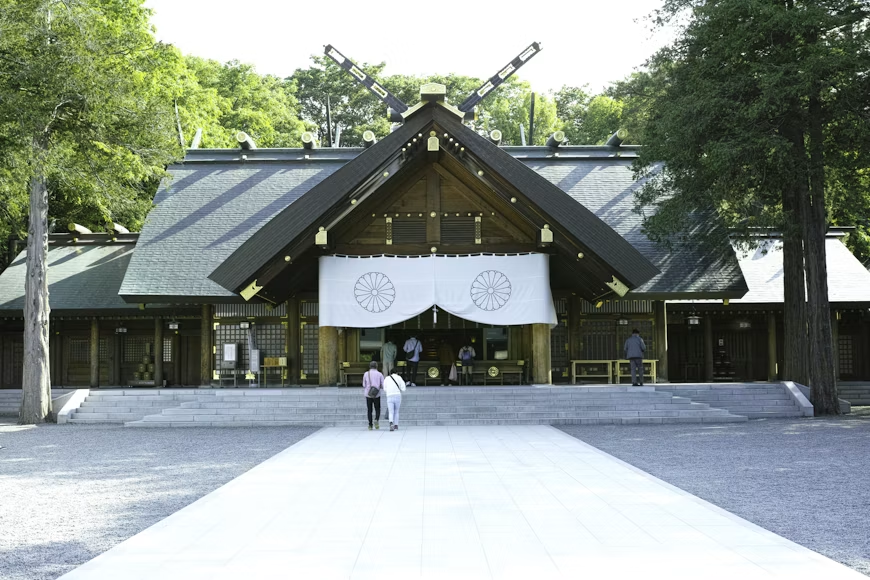
Today, Hokkaido Shrine feels surprisingly peaceful.
Walk through the torii gate and the sounds of central Sapporo quickly fade.
Tall trees surround the path.
Birds move through the forest.
In winter, snow covers the grounds.
In spring, cherry and plum blossoms appear almost at the same time.
But this is not simply a beautiful shrine hidden beside Maruyama Park.
Its history is closely connected with one of the biggest questions in Sapporo:
Why did this city grow here?
To understand the shrine is to understand part of the story of modern Sapporo itself.
The Story Behind It
Why Was Hokkaido Shrine Created in 1869?
The story begins in 1869, the same year the Meiji government renamed the region from Ezochi to Hokkaido.
On September 1, a ceremony called the Hokkaido Chinzashin-sai was held in Tokyo.
Three deities, later known as the Kaitaku Sanshin — the Three Deities of Development, were enshrined as protectors of Hokkaido’s development. This ceremony is regarded by Hokkaido Shrine as its founding.
The three deities are:
- Okunitama-no-Kami — associated with the land of Hokkaido
- Onamuchi-no-Kami — associated with land development and cultivation
- Sukunahikona-no-Kami — associated with development, medicine, and brewing
Today, these three deities are still enshrined at Hokkaido Shrine.
How Did the Deities Travel From Tokyo to Sapporo?
Here is the surprising part:
Hokkaido Shrine did not begin in Sapporo.
The sacred symbols of the three deities were first carried from Tokyo to Hakodate.
Development official Yoshitake Shima then took responsibility for bringing them north, temporarily placing them at Zenibako before carrying them to Sapporo in December 1869.
In May 1870, they were moved to a temporary shrine near what is now Kita 2-jo Higashi 1-chome in central Sapporo.
Only later would they reach Maruyama.
So the story of Hokkaido Shrine is also a journey:
Tokyo → Hakodate → Zenibako → central Sapporo → Maruyama
Why Was Maruyama Chosen for Hokkaido Shrine?
Yoshitake Shima was one of the officials involved in planning the new city of Sapporo.
According to Sapporo’s official tourism information, he chose the Maruyama area because it was surrounded by mountains on three sides while opening toward the broad plain on the other.
In 1869, Shima climbed the hill behind the present shrine and looked over the Ishikari Plain.
He even wrote a poem imagining that a great city might one day grow across the land below. The location is identified by Hokkaido Shrine with the hill behind today’s shrine grounds.
The shrine building at Maruyama was completed in 1871, and the deities were formally transferred there on September 14.
Earlier that year, the shrine had received its first official name:
Sapporo Shrine.
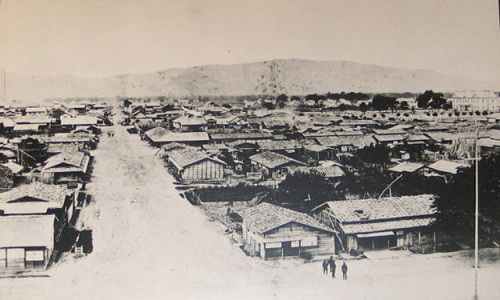
Imagine standing there in the 1870s.
The modern city around you did not yet exist.
The shrine and Sapporo were growing almost side by side.
What Does “Development of Hokkaido” Mean in This History?
There is another part of this story that travelers should understand.
The Meiji government’s large-scale development and settlement of Hokkaido did not take place on empty land.
Hokkaido was, and remains, the homeland of the Ainu, an Indigenous people of the northern Japanese archipelago. The National Ainu Museum explains that the Meiji-era development of Hokkaido brought major changes to Ainu life, including assimilation policies that severely affected Ainu culture.
So when historical sources use the word kaitaku, often translated as “development” or “pioneering,” it describes an important chapter in the creation of modern Hokkaido—but also one that had serious consequences for the Indigenous people already living here.
Knowing both sides of this history gives travelers a fuller picture of Hokkaido’s past.
Why Was It Originally Called Sapporo Shrine?
For most of its history, the shrine was not called Hokkaido Shrine.
From 1871, its official name was:
Sapporo Shrine.
That name continued for more than 90 years.
Then, in 1964, Emperor Meiji was added as a fourth enshrined figure. At the same time, the shrine was renamed Hokkaido Jingu — Hokkaido Shrine.
Today, four deities are enshrined here:
- Okunitama-no-Kami
- Onamuchi-no-Kami
- Sukunahikona-no-Kami
- Emperor Meiji
That name change reflected the shrine’s identity not simply as a shrine for Sapporo, but as a shrine closely associated with Hokkaido as a whole.
Is the Shrine Building Today the Original One?
No.
The buildings have changed several times during the shrine’s history.
A major shrine complex completed in the Taisho period even reused timber from an earlier rebuilding of Ise Jingu, one of Japan’s most important Shinto shrines.
The shrine buildings were reconstructed again in 1964.
Then, in 1974, they were destroyed by arson.
The shrine was rebuilt in 1978, and the worship hall was renovated again in 1988, creating much of the appearance visitors see today.
So while the history here goes back to 1869, the building in front of you tells several different chapters of that history.
Why Is Hokkaido Shrine Surrounded by So Much Nature?
Hokkaido Shrine sits beside the large green space of Maruyama Park.
Even though central Sapporo is only a short subway ride away, the shrine grounds feel like a forest.
You may hear birds or even see squirrels among the trees.
Spring is especially beautiful.
More than a thousand cherry trees grow around the shrine and Maruyama area, and Sapporo’s cooler climate means cherry and plum blossoms can bloom at almost the same time around late April and early May.
Autumn brings colorful leaves.
Winter turns the shrine almost completely white.
This is one of those rare Sapporo attractions that can feel completely different every time you return.
Why Is the Sapporo Festival Connected to Hokkaido Shrine?
Every year on June 14, 15, and 16, Hokkaido Shrine holds its annual festival.
Most people simply call it:
Sapporo Matsuri — the Sapporo Festival.
The shrine festival began in 1872. A mikoshi procession through the city followed from 1878.
The biggest spectacle takes place on June 16.
More than 1,000 participants wearing historical costumes join a procession through central Sapporo with portable shrines, music, and festival floats.
The festival is not only something that happens inside the shrine.
It moves out into the city.
That is important.
More than 150 years after Hokkaido Shrine became connected with the growth of Sapporo, the shrine still physically enters the streets of the city every summer.
How Should a First-Time Visitor Pray at Hokkaido Shrine?
You do not need to be Shinto to visit.
But knowing a few customs makes the experience more meaningful.
At a Japanese shrine, visitors commonly:
- Bow once before passing through the torii gate.
- Purify their hands at the water basin if it is in use.
- Place a small offering in the box.
- Bow twice.
- Clap twice.
- Make a silent prayer.
- Bow once more.
This “two bows, two claps, one bow” pattern is the standard form of worship at many Shinto shrines.
You can also receive a goshuin, a special shrine seal commemorating your visit.
Hokkaido Shrine: A Spiritual Power Spot in Sapporo
Hokkaido Shrine is not only a historic landmark but also one of Sapporo’s most beloved spiritual power spots.
Many visitors come to pray for good fortune, health, and happiness. The shrine also offers beautiful Japanese charms called omamori, which are traditionally believed to bring protection and blessings.
Here are two unique souvenirs worth looking for.
Sakura Suzu Mamori – A Beautiful Cherry Blossom Bell Charm
One of the shrine’s charming souvenirs is the Sakura Suzu Mamori, a protective charm featuring a delicate cherry blossom design and a small bell.
Cherry blossoms symbolize renewal and new beginnings in Japan, while bells are traditionally associated with purification and protection from misfortune.
It’s a lovely keepsake to remember your visit to Hokkaido Shrine.
Ezo Squirrel Omikuji and Charms – A Cute Hokkaido Souvenir
Another delightful discovery is the Ezo squirrel-themed omikuji and charms.
The Ezo squirrel is one of Hokkaido’s beloved native animals, making these items especially memorable for travelers.
An omikuji is a traditional Japanese fortune slip that offers predictions and guidance about your future.
These adorable squirrel-themed items combine Japanese shrine traditions with Hokkaido’s unique wildlife.
Did You Know?
- Hokkaido Shrine traces its founding to 1869, the same year the region received the name “Hokkaido.”
- Its sacred symbols traveled from Tokyo to Hakodate, Zenibako, Sapporo, and finally Maruyama.
- The shrine was called Sapporo Shrine until 1964.
- The present shrine was rebuilt after the previous buildings were destroyed by fire in 1974.
- The annual Sapporo Festival traces its history to 1872.
FAQ
Is Hokkaido Shrine the Same as Sapporo Shrine?
Yes, historically.
The shrine was officially called Sapporo Shrine from 1871 until 1964, when Emperor Meiji was added as a fourth enshrined figure and the name was changed to Hokkaido Shrine.
Do I Have to Be Religious to Visit Hokkaido Shrine?
No.
Visitors of any background can walk through the grounds, appreciate the architecture and nature, and respectfully observe shrine customs.
When Is the Best Time to Visit Hokkaido Shrine?
It depends on what you want to see.
- Late April–early May: cherry and plum blossoms
- June 14–16: Sapporo Festival
- October: autumn colors
- Winter: snow-covered shrine scenery
Hokkaido Shrine is worth visiting year-round.
Is Hokkaido Shrine Free?
Yes.
General entry to the shrine grounds is free.
Can I Get a Goshuin at Hokkaido Shrine?
Yes.
Goshuin shrine seals are available during designated reception hours. Fees and reception times can change, so check the official information before visiting.
Visit It Yourself
Location
Hokkaido Shrine
Miyagaoka 474, Chuo-ku, Sapporo, Hokkaido
Best Season
Year-round
For blossoms, visit from late April to early May.
For the Sapporo Festival, visit June 14–16.
For snow scenery, winter is especially atmospheric.
How to Get There
Take the Sapporo Municipal Subway Tozai Line to Maruyama Koen Station.
From there, Hokkaido Shrine is about a 15-minute walk.
Estimated Visit Time
45–90 minutes
Allow longer if you also plan to walk through Maruyama Park or visit nearby attractions.
Admission Fee
Free
Some special services or shrine items require separate fees.
Opening Hours
Current general gate hours vary by season.
- February: 7:00 a.m.–4:00 p.m.
- March: 7:00 a.m.–5:00 p.m.
- April–October: 6:00 a.m.–5:00 p.m.
- November–December 30: 7:00 a.m.–4:00 p.m.
- New Year period: special hours apply
Goshuin and amulet reception generally begins later than the shrine gates open.
Please check the official website for the latest information.
Official Website
Hokkaido Shrine Official Website
Final Thoughts
Why was Hokkaido Shrine built in Sapporo?
The answer begins in 1869.
Three deities were enshrined as guardians of Hokkaido’s development.
Their sacred symbols traveled hundreds of kilometers.
An official named Yoshitake Shima looked across a wide plain and imagined a future city.
A shrine was built beside the forest of Maruyama.
That shrine became Sapporo Shrine.
Sapporo grew around it.
More than 150 years later, the city looks completely different.
Subways run beneath the streets.
Buildings fill the plain that Shima once looked across.
Yet enter the forest of Hokkaido Shrine, and the story of early modern Sapporo suddenly feels much closer.
The shrine also reminds us that Hokkaido’s modern development was a complex historical process, one that transformed the land and deeply affected the Indigenous Ainu people who had long lived here.
That is why Hokkaido Shrine is more than a place to take beautiful photographs.
It is a place where you can think about how modern Sapporo began—
and how Hokkaido’s history continues to shape the city today.






コメント