

My name is MAKO
Based in Sapporo, Hokkaido | Born and raised in Obihiro, Hokkaido | Lover of Sapporo Classic beer and fresh sashimi | Passionate about road trips and camping | Always chasing beautiful scenery
Why Does Taushubetsu River Bridge Disappear?The Short Answer
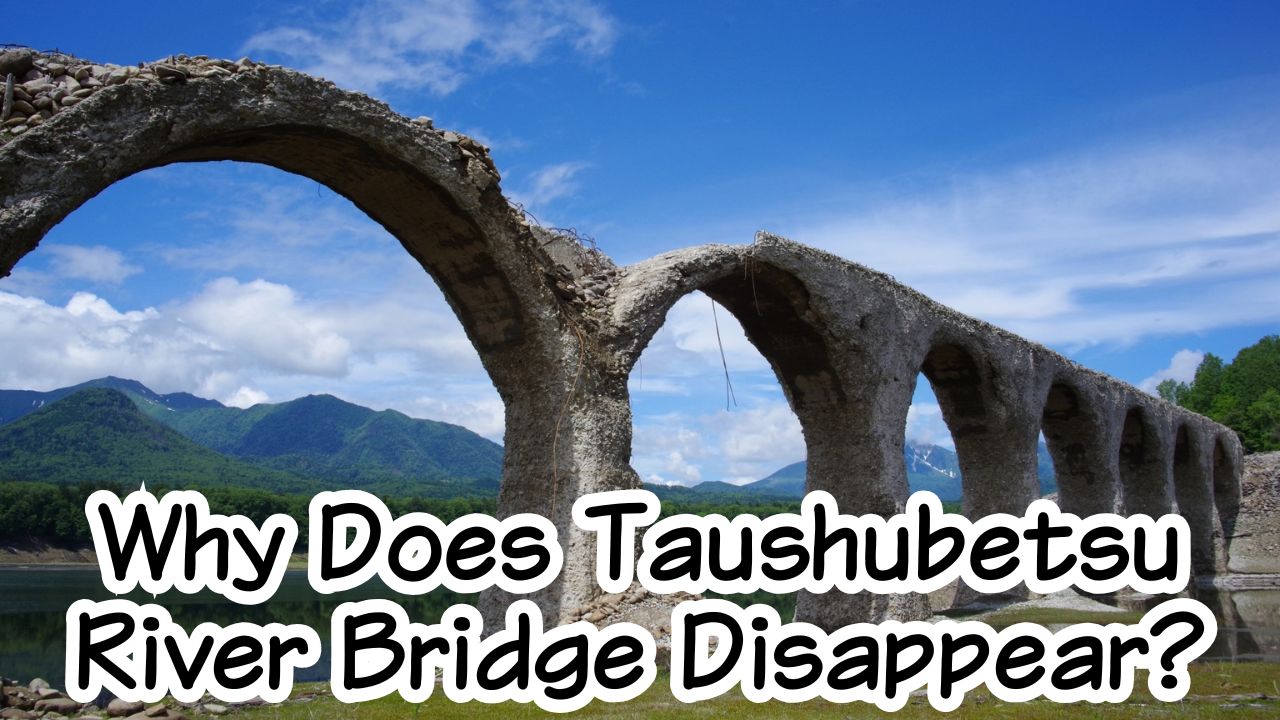
Taushubetsu River Bridge disappears because it now stands inside Lake Nukabira, a reservoir created by a dam.
When the lake level drops, the old railway bridge appears. As snowmelt and seasonal water raise the lake, the arches slowly sink again—earning it the nickname “Phantom Bridge.”

Why You Should Care
Imagine traveling deep into Hokkaido and finding an old railway bridge standing alone in a lake.
There are no trains.
There are no tracks crossing it.
Sometimes there is not even a bridge to see.
Depending on the season and the water level, Taushubetsu River Bridge may stand completely exposed, appear half underwater, or disappear beneath Lake Nukabira.
That already sounds mysterious.
But the real story is even better.
This bridge once carried trains through a forest.
Then a dam changed the landscape.
The railway moved.
The bridge was left behind.
And today, nature is slowly taking it back.
The Story Behind It
Why Was Taushubetsu River Bridge Built?
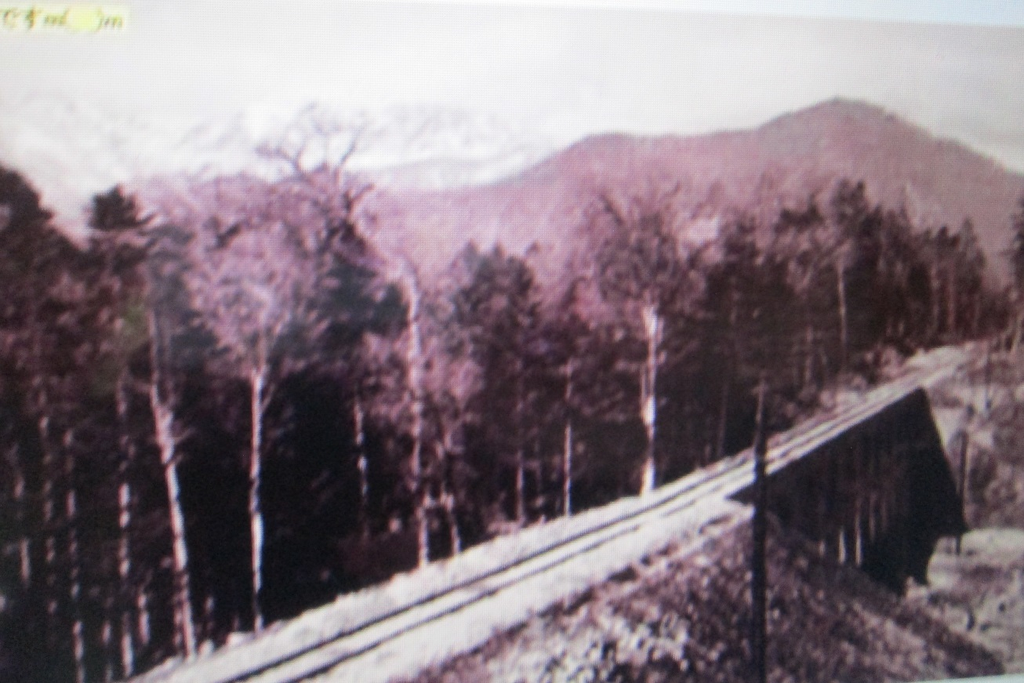
Taushubetsu River Bridge was completed in 1937 as part of the former Japanese National Railways Shihoro Line.
It is a concrete structure about 130 meters long, made up of a series of 11 arches. The railway extension through this mountain area opened to traffic in 1939.
The Shihoro Line was important for the development of northern Tokachi.
One of its major roles was carrying timber from the rich forests around Tokachi-Mitsumata and the Higashi-Daisetsu area. Today, the old concrete arch bridges are recognized as reminders of that railway and forestry history.
Back then, Taushubetsu River Bridge was not a ruin.
Trains actually crossed it.
Why Is an Old Railway Bridge Standing Inside a Lake?
This is where the story changes.
In the 1950s, the Nukabira Dam was built.
The reservoir created behind the dam would flood part of the original Shihoro Line route. Because of this, the railway was moved to a new route in 1955.
Taushubetsu River Bridge was no longer needed.
Instead of being demolished, it was simply left behind.
The former railway line disappeared beneath the new reservoir.
And the bridge that once stood in a forest became a bridge standing in a lake.
That is why Taushubetsu looks so strange today.
The bridge did not move into the lake.
The lake came to the bridge.
Why Does Taushubetsu River Bridge Disappear Every Year?
Lake Nukabira does not stay at the same water level throughout the year.
Around winter, when the reservoir level is low, Taushubetsu River Bridge begins to appear again.
From spring, snowmelt flows into the lake and the water level generally rises.
The bridge gradually sinks.
In many years, much of it is underwater by late summer or autumn. However, the exact timing changes each year because rainfall and other conditions affect the lake level.
This yearly cycle gave the structure its famous nickname:
The Phantom Bridge.
You can visit the same place twice and see a completely different landscape.
Why Is It Also Called the “Spectacles Bridge”?
There is another nickname:
Megane-bashi — the Spectacles Bridge.
When the water reaches the lower part of the bridge and the lake surface becomes calm, the arches are reflected in the water.
The real arch above the surface and its reflection below form a circle.
Several circles lined up together look like pairs of eyeglasses.
Early morning can be especially beautiful because winds are often weaker and the lake may be calmer.
For photographers, this is one of Taushubetsu’s most famous scenes.
Why Were So Many Concrete Arch Bridges Built Here?
Taushubetsu is not alone.
Many concrete arch bridges from the former Shihoro Line still remain around Lake Nukabira and the Higashi-Daisetsu area.
The railway crossed valleys, rivers, and steep forest terrain on its way north.
Concrete arch construction created strong bridges that also fit naturally into the mountain landscape.
Today, the surviving structures are known collectively as the Former JNR Shihoro Line Concrete Arch Bridges and have been selected as part of Hokkaido Heritage.
Some look almost like ancient Roman aqueducts hidden in a Hokkaido forest.
But they are actually reminders of a railway age less than a century old.
Did the Shihoro Line Eventually Disappear Too?
Yes.
The story did not end when Taushubetsu Bridge stopped carrying trains.
In 1978, railway service between Nukabira and Tokachi-Mitsumata was replaced by buses.
Then, on March 22, 1987, the entire Shihoro Line closed.
The trains disappeared.
Stations closed.
Much of the railway infrastructure vanished.
But the concrete bridges remained.
Today, places such as Taushubetsu are among the strongest physical reminders that trains once traveled deep into these forests.
Why Is Taushubetsu River Bridge Slowly Falling Apart?
There is another meaning to the word “disappear.”
Taushubetsu does not only disappear underwater.
The bridge itself is slowly disappearing.
For decades, the concrete has faced extreme conditions:
winter freezing,
spring thawing,
lake water,
ice,
wind,
and repeated submersion.
In June 2024, a large section of the upper side wall around the sixth arch collapsed. The Kamishihoro Tourism Association reported that the structure was only just retaining the appearance of an arch bridge.
No one can say exactly when another major section will collapse.
That uncertainty has become part of Taushubetsu’s story.
It is not a carefully restored monument frozen in time.
It is a ruin continuing to change.
Why Has the Bridge Not Been Restored?
Taushubetsu is unusual because its weathered appearance is part of what visitors come to see.
It stands in a harsh natural environment and continues to deteriorate.
The wider Shihoro Line arch bridge heritage has benefited from local preservation activities, and residents and organizations have worked for years to keep the history of the railway alive. The bridge group is now recognized as Hokkaido Heritage.
But Taushubetsu itself remains a fragile ruin in a reservoir.
That creates an unusual feeling when you visit.
You are not simply looking at history.
You are watching history slowly change in front of you.
Can You Walk Straight to Taushubetsu River Bridge?
Not freely.
The road leading close to the bridge passes through a restricted forest road.
For the 2026 season, independent visitors using a vehicle need to reserve a forest-road gate key. The official lending period is April 25 to November 1, 2026, with reservations opening 30 days before the visit. A cooperation fee of ¥2,000 per person is requested.
The area is also brown bear habitat.
The official access information asks visitors not to enter the forest road on foot or by bicycle because of wildlife risk. Guided tours are recommended for travelers who want to see the bridge up close.
There is, however, an easier option.
Can You See the Bridge Without a Special Permit?
Yes.
The Taushubetsu Observation Deck lets you view the bridge from about 750 meters away.
From a parking area along National Route 273, walk about 200 meters through the forest to the viewpoint.
You will not get the dramatic close-up experience.
But it is much easier and requires no forest-road gate key.
Remember that if the bridge is underwater, even the observation deck cannot make it appear.
At Taushubetsu, the lake decides what you see.
Don’t Miss Naitai Highland Ranch When Visiting Taushubetsu Bridge!
If you’re planning to visit Taushubetsu River Bridge, I highly recommend adding Naitai Highland Ranch to your itinerary!
Located in the same town of Kamishihoro, Naitai Highland Ranch is known as Japan’s largest public ranch.
Here, you can enjoy breathtaking views of rolling green hills, grazing cattle, and the vast Tokachi countryside.
It’s a wonderful place to experience Hokkaido’s wide-open landscapes after exploring the mysterious Phantom Bridge.
Why Is Naitai Highland Ranch So Huge?
Have you ever wondered why this ranch is so enormous?
Discover the fascinating story behind Japan’s largest public ranch and what makes it one of Hokkaido’s most spectacular scenic destinations.
Read next: Why Is Naitai Highland Ranch So Huge? The Story Behind Japan’s Largest Public Ranch

Did You Know?
- Taushubetsu River Bridge was completed in 1937.
- The bridge is about 130 meters long and has 11 concrete arches.
- It became abandoned after the Shihoro Line was rerouted for the construction of Nukabira Dam in 1955.
- When its arches reflect in calm water, it is nicknamed the “Spectacles Bridge.”
- A major section near the sixth arch collapsed in 2024, showing how rapidly the structure is aging.
FAQ
When Can I See Taushubetsu River Bridge?
There is no guaranteed date.
The bridge normally becomes more visible as the water level falls in winter and early spring.
As the lake rises from spring into summer, the bridge gradually disappears. The timing changes every year.
What Is the Best Season to Visit?
For seeing much of the bridge exposed, late winter through spring is often attractive.
For the famous reflection, late spring or early summer can be beautiful if the water level and weather are right.
Always check the latest lake and access conditions before traveling.
Can I Visit Taushubetsu River Bridge in Winter?
Potentially, but winter access is different.
The forest road is not cleared of snow. Close-up winter visits are generally handled through guided programs when the frozen lake is considered safe. Access may be stopped early if ice conditions become dangerous. In 2026, lake access was restricted from February 25.
Can I Drive Directly to the Bridge?
During the official forest-road season, independent visitors can drive closer only with a reserved gate key and must follow the access rules.
For 2026, the key season runs from April 25 through November 1.
Will Taushubetsu River Bridge Eventually Collapse?
The bridge is clearly deteriorating, and parts have already collapsed.
However, there is no reliable date for when the remaining arches might fail, so claims that it will disappear in a specific year should be treated cautiously.
Visit It Yourself
Location
Taushubetsu River Bridge
Nukabira Gensenkyo, Kamishihoro, Tokachi, Hokkaido.
Best Season
Spring to early summer is generally a good period for seeing the bridge and, depending on water levels, its reflection.
Winter can offer a spectacular snow-and-ice landscape, but access rules and ice safety change every year.
How to Get There
For the easy viewpoint:
Drive along National Route 273 about 8 km north of Nukabira Gensenkyo.
From the roadside parking area, walk approximately 200 meters through the forest to Taushubetsu Observation Deck. The bridge is about 750 meters away.
For close access:
A guided tour is the easiest option.
Independent vehicle access requires a reserved forest-road gate key during the official season. In 2026, the key pickup point is Michi-no-Eki Kamishihoro, roughly 60 minutes by car from JR Obihiro Station; from the roadside station to the bridge area takes about another 60 minutes.
Estimated Visit Time
Observation deck: 30–60 minutes
Close-up visit: allow at least half a day, especially when collecting and returning a forest-road key.
Admission Fee
Observation Deck: No admission fee is listed.
Close independent access in 2026: A ¥2,000 per-person cooperation fee is requested when receiving the forest-road gate key.
Guided tours have separate fees.
Important Safety Note
This is brown bear habitat.
Do not enter restricted forest roads on foot or bicycle, and always follow current local access and wildlife guidance.
Please check the official website for the latest information.
Official Website
Kamishihoro Tourism Association – Taushubetsu River Bridge
Final Thoughts
Why does Taushubetsu River Bridge disappear?
At first, the answer seems simple.
Because the water rises.
But that is only the beginning.
The bridge was built for a railway carrying people and timber through the forests of northern Tokachi.
Then humans built a dam.
The railway moved.
A lake covered the old route.
The bridge was left behind.
Every year, the water reveals it.
Then hides it again.
And while this cycle continues, freezing, thawing, water, and time are slowly breaking the structure apart.
That is what makes Taushubetsu different from a normal historic landmark.
You cannot assume it will look the same next year.
You cannot even assume it will look the same next month.
When you stand beside Lake Nukabira and look at those weathered arches, remember:
you are not looking at a bridge that has simply survived history.
You are watching a bridge slowly become history.






コメント