My name is MAKO
Based in Sapporo, Hokkaido | Born and raised in Obihiro, Hokkaido | Lover of Sapporo Classic beer and fresh sashimi | Passionate about road trips and camping | Always chasing beautiful scenery
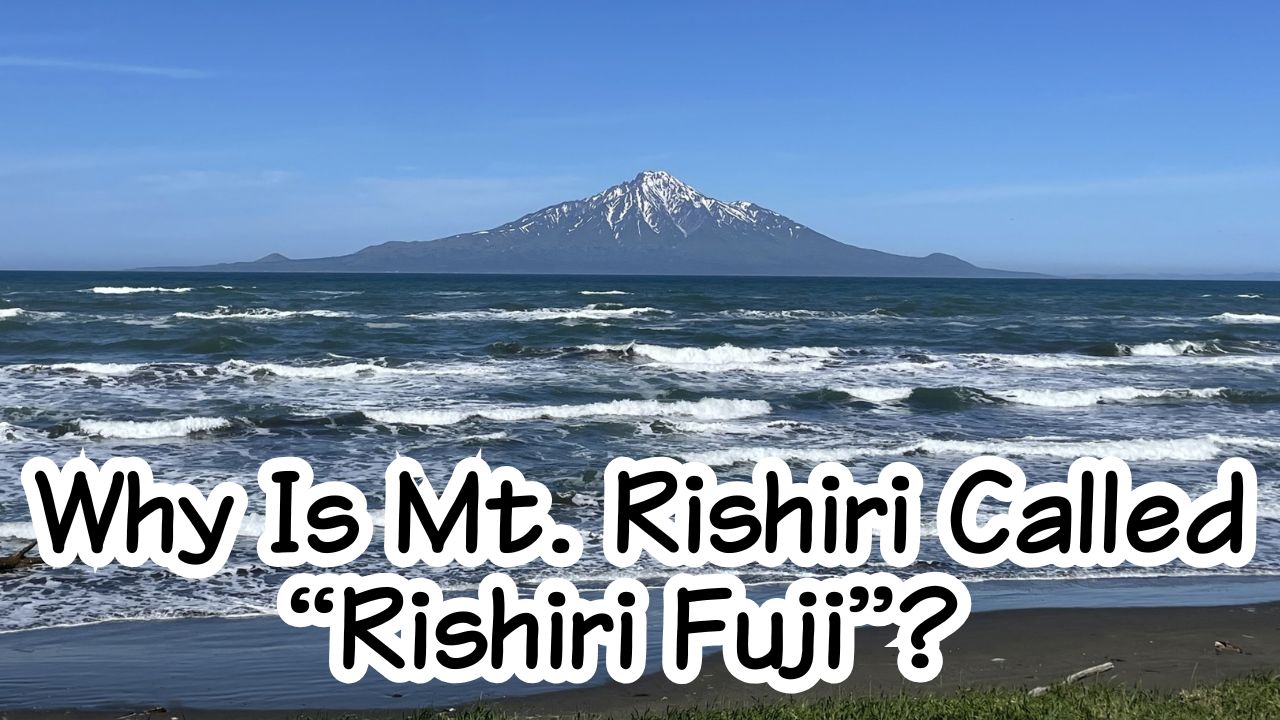
Why Is Mt. Rishiri Called “Rishiri Fuji”?The Short Answer
Its official name is Mt. Rishiri, but its graceful, almost symmetrical slopes resemble Japan’s famous Mt. Fuji. That is why people affectionately call the 1,721-meter mountain “Rishiri Fuji.”
Unlike Mt. Fuji, however, this mountain rises from a small island surrounded completely by the sea.

Why You Should Care
Rishiri Island is unusual.
There is no long mountain range here.
Instead, one enormous mountain dominates the entire island.
Its slopes stretch almost all the way to the coast, so when you approach Rishiri by ferry, it can look as if the whole island is one giant mountain.
That is what makes Rishiri Fuji so memorable.
You do not simply visit the mountain.
You travel around it, sleep beside it, drink water from it, and see it from almost everywhere on the island.
The Story Behind It
Is Rishiri Fuji Really Mt. Fuji?
No.
The mountain’s official name is Mt. Rishiri, or Rishiri-zan in Japanese.
“Rishiri Fuji” is a nickname inspired by its elegant shape.
Like Mt. Fuji, Mt. Rishiri is an isolated volcanic peak with broad slopes and a strong, recognizable silhouette. Hokkaido’s official tourism site specifically describes its gentle, balanced shape as reminiscent of Mt. Fuji.
But there is one big difference.
Mt. Fuji rises from the Japanese mainland.
Rishiri Fuji rises from an island in the sea.
That gives it a completely different feeling.
Why Does Rishiri Island Look Like One Giant Mountain?
Mt. Rishiri reaches 1,721 meters, but its slopes continue almost all the way to sea level.
The mountain forms most of Rishiri Island itself. Japan’s Meteorological Agency describes Mt. Rishiri as a volcanic body that makes up the majority of the island.
That is why its shape looks so dramatic from a ferry or from neighboring Rebun Island.
There is almost no visual separation between:
mountain → land → sea
They seem to flow into one another.
How Was Rishiri Fuji Created?
Rishiri Fuji is a volcanic mountain.
According to the Japan Meteorological Agency, volcanic activity began about 200,000 years ago. The main volcanic body had largely formed by around 40,000 years ago.
Later eruptions created smaller volcanic landforms around the island, including lava flows, craters, and cones.
The JMA says there are no recorded eruptions in historical times, and no current signs of volcanic activity such as fumaroles have been observed.
Those ancient eruptions did more than create a mountain.
They created much of the island travelers explore today.
At Senhoshi Misaki Park, for example, black lava rocks along the coast still reveal Rishiri’s volcanic origins.
What Does the Name “Rishiri” Mean?
Even the island’s name tells a story.
Rishirifuji Town explains that “Rishiri” comes from the Ainu name Riishiri, meaning “high island.”
It is an unusually fitting name.
From the sea, the mountain makes the island appear very tall long before you reach the shore.
So centuries before travelers began calling it “Rishiri Fuji,” the Ainu place-name was already describing one of the island’s most obvious characteristics:
an island that rises high above the sea.
Why Is Mt. Rishiri So Important to the Island’s Water?
The mountain is not only beautiful.
It also helps provide the island with water.
Rain and melting snow seep underground through the mountain’s volcanic layers and emerge again as springs.
One famous example is Kanro Sensui, located near the Oshidomari hiking route. The Ministry of the Environment lists it among Japan’s 100 celebrated waters and describes it as the northernmost spring in that group.
The surrounding spring water is so important that groundwater from the mountain is used as drinking water for island residents.
So Rishiri Fuji shapes more than the skyline.
It is connected to everyday life on the island.
Why Are There Rare Flowers on Rishiri Fuji?
Mt. Rishiri is also famous for alpine plants.
Because the mountain rises so far north and reaches high above the surrounding sea, its upper slopes have a harsh alpine environment.
One of its best-known flowers is the Rishiri poppy, or Rishiri-hinageshi. Hokkaido’s official tourism site highlights it as one of the rare plants associated with the mountain.
The mountain and island became part of Rishiri-Rebun-Sarobetsu National Park in 1974, protecting a wider landscape that includes Rishiri’s mountain ecosystems, Rebun’s flower-rich landscapes, and the Sarobetsu wetlands.
Why Is Rishiri Fuji One of Japan’s Famous Mountains?
Mt. Rishiri is included among Japan’s celebrated 100 Famous Mountains.
And among those 100, it is the northernmost.
Reaching the summit is a serious full-day mountain experience, not a casual sightseeing walk.
But you do not have to climb it to appreciate it.
In fact, some of the most beautiful views are from the bottom.
Where Can You See “Upside-Down Rishiri Fuji”?
One of the best places is Himenuma Pond.
When the air is still and the water is calm, Mt. Rishiri is reflected on the pond like a mirror.
This view is known as “Upside-Down Rishiri Fuji.”
Another famous viewpoint is Otatomari Pond, the largest pond on the island.
From there, the mountain rises behind forest and water, creating one of Rishiri’s classic landscapes.
What Does Rishiri Fuji Have to Do With “Shiroi Koibito”?
If you have traveled around Hokkaido, you probably know Shiroi Koibito, the famous white chocolate sandwich cookies.
Look at the package.
That snowy mountain has a connection to Rishiri.
Hokkaido’s official tourism site identifies Mt. Rishiri as the mountain depicted on the iconic Shiroi Koibito packaging.
There is even a viewpoint called Shiroi Koibito no Oka — Shiroi Koibito Hill.
From the hill, travelers can see Mt. Rishiri rising above the Otatomari area, creating a landscape remarkably similar to the famous package image.
It is a fun connection:
one of Hokkaido’s most famous mountains appears on one of Hokkaido’s most famous souvenirs.
You Don’t Have to Visit Rishiri Island to See Mt. Rishiri
Many people think you need to visit Rishiri Island to enjoy its famous mountain—but that’s not always true.
On a clear day, Mt. Rishiri can be seen from several places on Hokkaido’s northern mainland, making it one of the most recognizable landmarks in the region.
Great Views from Wakkanai and Sarobetsu
Two of the best places to admire Mt. Rishiri are Wakkanai City and Sarobetsu Wetland.
From Wakkanai’s coastline, the mountain often appears to rise directly from the Sea of Japan. At Sarobetsu Wetland, you can enjoy a spectacular view of Mt. Rishiri standing beyond vast marshes and colorful wildflowers, creating one of northern Hokkaido’s most iconic landscapes.
If the weather is clear, keep an eye on the horizon—you may be rewarded with an unforgettable view of “Rishiri Fuji.”
Why Do People Love Cape Soya?
If you’re visiting Wakkanai to admire Mt. Rishiri from the mainland, I also recommend exploring Cape Soya, Japan’s northernmost point on its main islands!
On a clear day, you may even see Russia’s Sakhalin Island across the sea.Discover what makes this remote cape one of Hokkaido’s most memorable destinations.
Read next: Why Do People Love Cape Soya? The Story Behind Japan’s Northernmost Point

Did You Know?
- Mt. Rishiri is 1,721 meters high.
- It is the northernmost of Japan’s 100 Famous Mountains.
- Volcanic activity that created the mountain began about 200,000 years ago.
- “Rishiri” comes from an Ainu name meaning “high island.”
- Mt. Rishiri is depicted on the famous Shiroi Koibito package.
FAQ
Is Rishiri Fuji the Same Mountain as Mt. Fuji?
No.
Its official name is Mt. Rishiri.
“Rishiri Fuji” is a nickname inspired by its Fuji-like shape.
Can I See Mt. Rishiri Without Climbing It?
Absolutely.
Excellent viewpoints include Himenuma Pond, Otatomari Pond, Shiroi Koibito Hill, Senhoshi Misaki, and even the ferry approaching the island.
Can You Climb Rishiri Fuji?
Yes, but it is a serious mountain hike.
Travelers should check current trail conditions, weather, equipment requirements, and local hiking rules before attempting the summit.
When Is the Best Time to See Rishiri Fuji?
For general sightseeing, June through September offers the most comfortable conditions.
Mountain visibility depends heavily on weather, so allowing more than one day on the island gives you a better chance of seeing the summit clearly.
Visit It Yourself
Location
Rishiri Island, Northern Hokkaido
For an easy scenic experience, one of the best choices is:
Otatomari Pond
Oniwaki, Rishirifuji Town, Hokkaido.
Best Season
June–September
Summer offers green scenery, flowers, easier island travel, and generally the best conditions for outdoor sightseeing.
How to Get There
Rishiri Island can be reached by ferry from Wakkanai, with the crossing taking about 1 hour 40 minutes.
Flights from the Sapporo area also connect with Rishiri Airport, with flying time around 50 minutes.
A rental car, sightseeing bus, or bicycle is useful for exploring viewpoints around the island.
Estimated Visit Time
For Mt. Rishiri viewpoints:
Half day to 1 full day
For Rishiri Island overall:
At least 1 night is recommended.
Admission Fee
Most outdoor viewpoints, including Himenuma and Otatomari Pond, do not require a general sightseeing admission fee.
Transport and some facilities may have separate charges.
Please check the official website for the latest information.
Official Website
Final Thoughts
Why is Mt. Rishiri called “Rishiri Fuji”?
Because its beautiful slopes remind people of Japan’s most famous mountain.
But that nickname tells only part of the story.
Rishiri Fuji is not simply a smaller northern version of Mt. Fuji.
It is the mountain that helped create an island.
Its ancient eruptions shaped the land.
Rain and snow pass through its volcanic layers and return as clear spring water.
Rare flowers grow high on its slopes.
Its silhouette appears in ponds, across the sea, and even on a famous Hokkaido souvenir.
And the old Ainu name for Rishiri already captured its most striking feature:
“high island.”
When your ferry approaches Rishiri, look at the mountain before you look at anything else.
You may understand immediately.
Rishiri Island does not simply have a mountain.
The island and the mountain feel like one.



コメント