

My name is MAKO
Based in Sapporo, Hokkaido | Born and raised in Obihiro, Hokkaido | Lover of Sapporo Classic beer and fresh sashimi | Passionate about road trips and camping | Always chasing beautiful scenery
Why Is the Toyohira River So Important to Sapporo?The Short Answer
The Toyohira River did more than flow through Sapporo.
Over thousands of years, it carried rocks and sediment from the mountains and created the broad alluvial fan on which much of central Sapporo developed. Today, the river also supplies most of the city’s drinking-water source, supports returning salmon, and remains part of everyday life.

Why You Should Care
Visitors often see Sapporo as a carefully planned city.
Straight streets.
A grid layout.
Modern buildings.
Wide avenues.
But underneath that orderly city is a landscape created by a much less orderly force:
the Toyohira River.
The river once split into many channels, flooded across the plain, moved sediment, and repeatedly changed its course. Those processes helped create the ground on which modern Sapporo stands.
Once you know that story, the river stops looking like a line dividing the city.
It becomes one of the reasons the city exists in its present form.
The Story Behind It
Where Does the Toyohira River Come From?
The Toyohira River begins near Mt. Koiriyama, on the border between Sapporo and Chitose.
From the mountains, it flows through valleys near Toyohira Gorge and Jozankei, then enters the urban area of Sapporo before finally joining the Ishikari River. The river is about 72.5 kilometers long.
This journey explains why the river can look so different.
Upstream, it flows through steep forests and valleys.
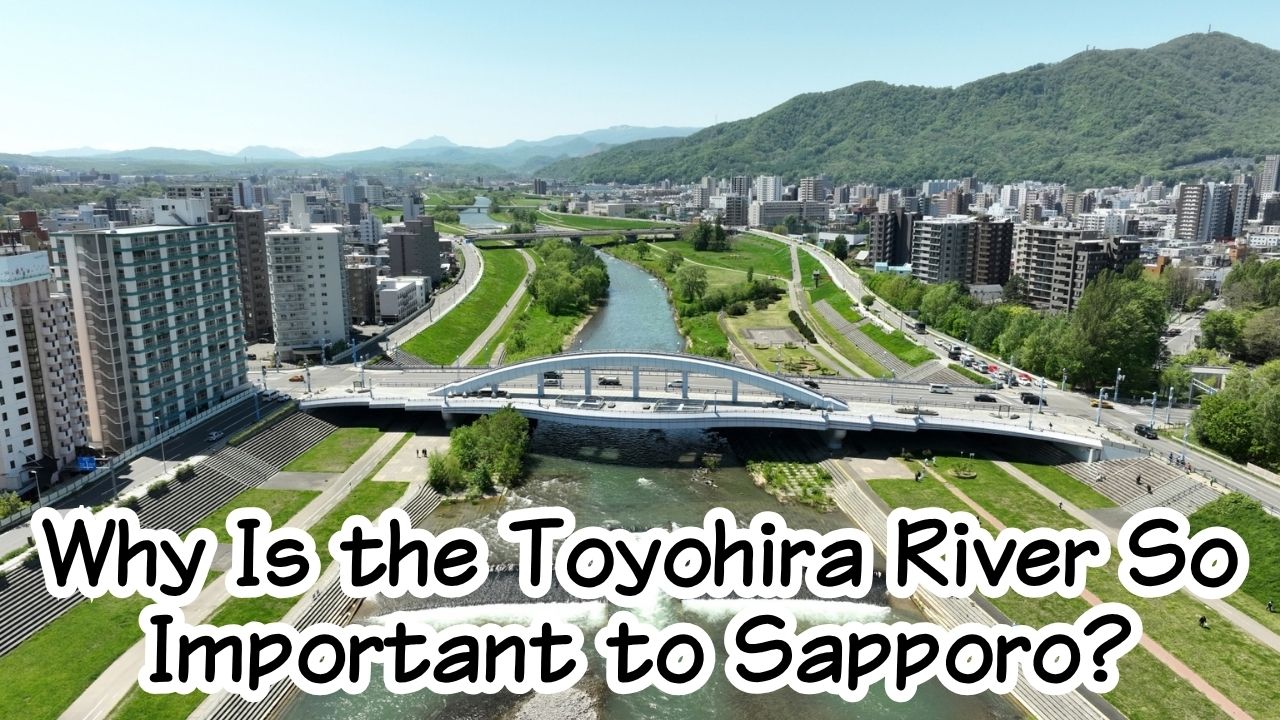
Downstream, it passes apartment buildings, bridges, parks, walking paths, and the center of a major city.
How Did the Toyohira River Create the Ground Beneath Sapporo?
This is one of the most important parts of the story.
When a fast mountain river reaches flatter land, it slows down.
Rocks, gravel, and sand carried from the mountains begin to settle.
Over a very long period, these deposits spread outward in a fan shape.
That landform is called an alluvial fan.
The Toyohira River created a large fan covering much of central Sapporo. The city itself officially describes central Sapporo as having developed on this Toyohira River fan.
In other words:
Before people designed Sapporo’s streets, the river designed the land.
Was the Toyohira River Always This Narrow?
Not at all.
Today, the river appears neatly contained between embankments.
Historically, it was far more complicated.
The river divided into multiple channels across the fan and frequently changed course after floods. Some old channels survive in Sapporo’s geography even today.
One fascinating example is the area around Nakajima Park and Nakanoshima.
Sapporo City explains that both areas were once connected with channels and sandbars of the old Toyohira River. If those old waterways are included, the natural river zone may once have been around 700 meters wide in that area.
Near Toyohira Bridge today, it is only around 70 meters wide.
The calm urban river you see now is very different from the river early residents knew.
Why Is It Called the Toyohira River?
The name also carries an Ainu story.
Sapporo City explains that Toyohira comes from the Ainu expression Toye-pira, meaning roughly “a crumbling cliff.”
The name originally referred to a cliff along part of the river near the Toyohira area.
But there is another surprising detail.
Before the modern name became established, official Sapporo materials note that the river was called Sapporo-pet, interpreted as “dry, large river.”
The origin of the city name “Sapporo” has more than one theory, so it should not be presented as completely settled.
Still, one of the main official explanations connects the name Sapporo itself with this river.
So the river did not only shape the city’s land.
It may also be connected to the city’s name.
Why Was the Toyohira River Once Feared?
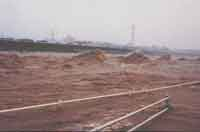
The same river that created good land could also destroy what people built on it.
Because the Toyohira is relatively steep for a river flowing through a large city, heavy rain can send water and sediment downstream quickly.
Early Sapporo repeatedly suffered from flooding.
One of the first river-management projects began in 1871, when obstacles such as fallen timber were removed from about 12 kilometers of river.
Embankments were later built, but a major flood in 1882 destroyed some of them and sent muddy water into the city.
For decades, controlling the Toyohira River was one of the challenges of building modern Sapporo.
Did People Actually Change the Course of the River?
Yes.
And this is one of the biggest engineering stories along the river.
The lower Toyohira River once followed a longer, winding route toward the Ishikari River.
To help move floodwater more safely, engineers created a 6.42-kilometer artificial shortcut channel from the Higashi-Karikibi area toward the Ishikari River.
The plan was approved in 1931, construction began in 1932, and water was sent through the new channel in 1941.
So part of the Toyohira River you see today is not entirely natural.
Humans reshaped it to protect the growing city.
Sapporo developed not by defeating the river—
but by learning how to live beside it.
Does the Toyohira River Really Supply Sapporo’s Drinking Water?
Yes.
And this may be the strongest reason the Toyohira River is still essential today.
According to the Sapporo Waterworks Bureau, the Toyohira River currently provides about 90% of the city’s water-supply source.
Upstream are two major reservoirs:
- Hoheikyo Dam
- Jozankei Dam
These help secure water, control floods, and support the city.
So when you turn on a tap in a Sapporo hotel, there is a good chance the water began its journey in the Toyohira River system.
The river is not simply part of Sapporo’s scenery.
It helps keep the city alive every day.
Why Did Salmon Disappear From the Toyohira River?
The river once supported large numbers of salmon.
But as Sapporo grew rapidly after World War II, water quality deteriorated.
By the 1950s, salmon had nearly disappeared from the Toyohira River.
Then things began to change.
During the 1960s, Sapporo developed its sewer system and river water quality gradually improved.
In 1978, local citizens started the Come Back Salmon Movement.
In spring 1979, salmon fry were released into the Toyohira River for the first time in about 30 years.
Then, in autumn 1981, adult salmon returned.
For many Sapporo residents, it was proof that an urban river could recover.
Do Salmon Still Return to the Toyohira River Today?
Yes.
According to the Sapporo Salmon Museum, around 1,000 salmon now return to the Toyohira River each year and spawn naturally.
Recent research has also shown that a large proportion of spawning salmon are now wild fish born naturally in the river rather than hatchery-released fish.
That led to the creation of the Sapporo Wild Salmon Project in 2014, which works to support a river where wild salmon can reproduce naturally.
Wild salmon returning to a river running through a city of around two million people is an unusual sight.
And you can sometimes see it yourself.
From early October through late November, salmon may be visible from bridges and riverbanks.
Toyohira Bridge is one of the observation areas recommended by Sapporo’s official tourism site.
Why Is Ishikari Nabe Made with Salmon and Miso?
Salmon isn’t just an important part of Hokkaido’s rivers and wildlife—it’s also a key ingredient in the region’s food culture!
One delicious example is Ishikari Nabe, a traditional Hokkaido hot pot made with salmon, vegetables, and miso.
Read next: Why Is Ishikari Nabe Made with Salmon and Miso? The Story Behind Hokkaido’s Fishermen’s Hot Pot

What Does the Toyohira River Mean in Ainu Culture Today?
Salmon have also long held great importance in Ainu life and culture.
In Sapporo, the Asir Cep Nomi, a ceremony welcoming the new salmon, was revived in 1982 after having disappeared for roughly a century.
Today, it is held along the Toyohira River and helps preserve and share Ainu cultural traditions.
This adds another layer to the river’s story.
The Toyohira is not only connected with city planning, flood control, and environmental restoration.
It is also a place where older cultural relationships between people and salmon continue to be remembered.
What Is the Toyohira River Like for Local People Today?
Today, the river has another role:
a huge open space inside the city.
People walk, run, and cycle along the riverbanks. Sapporo City even promotes a walking route following the river from Munich Bridge to Toyohira Bridge.
In summer, families can visit the Toyohira River Water Garden.
Large events also take place on the riverbank. In 2026, for example, the Doshin-UHB Fireworks Festival launched about 4,000 fireworks from the Toyohira River area between Minami Ohashi and Horohira Bridge.
The river that was once feared for flooding is now also a place where Sapporo residents relax.
That transformation may be one of the best ways to understand modern Sapporo.
Horohira Bridge: Enjoy a Unique View Above the Toyohira River!
If you’re exploring the Toyohira River, don’t miss Horohira Bridge, one of Sapporo’s most unusual bridges!
What makes this bridge special is its distinctive arch-shaped structure above the roadway.
Surprisingly, you can actually walk up onto the arch!
From the elevated walkway, you can enjoy beautiful views of the Toyohira River, its green riverbanks, and the surrounding mountains.
It’s a unique sightseeing spot where you can experience the beauty of the Toyohira River from a different perspective.
Did You Know?
- The Toyohira River is about 72.5 km long and begins in the mountains southwest of Sapporo.
- Much of central Sapporo stands on the Toyohira River alluvial fan.
- “Toyohira” comes from the Ainu expression Toye-pira, meaning “crumbling cliff.”
- About 90% of Sapporo’s water-supply source comes from the Toyohira River.
- Around 1,000 salmon return to the river each year and spawn naturally.
FAQ
Can You See Salmon in the Toyohira River?
Yes.
The best season is generally early October through late November.
Toyohira Bridge, Mizuho Ohashi Bridge, and Higashi Bridge are among the locations suggested by Sapporo’s official tourism information, although salmon can move from year to year.
Is the Toyohira River Natural?
Yes, but humans have greatly changed its modern course.
The lower river includes a 6.42-kilometer artificial channel built for flood control in the 20th century.
Is the Toyohira River Safe to Walk Along?
There are developed riverside paths used for walking, running, and cycling.
However, this is still a real river. Visitors should avoid entering the water during high flows and follow warning signs, especially during heavy rain.
Does the Toyohira River Provide Sapporo’s Tap Water?
Yes.
It is by far Sapporo’s most important water source and currently accounts for about 90% of the city’s water-supply sources.
Is There a Museum About the River and Its Salmon?
Yes.
The Sapporo Salmon Museum in Makomanai Park explains the history of salmon returning to the Toyohira River and displays salmon and other freshwater species.
Admission is free.
Visit It Yourself
Location





コメント