

My name is MAKO
Based in Sapporo, Hokkaido | Born and raised in Obihiro, Hokkaido | Lover of Sapporo Classic beer and fresh sashimi | Passionate about road trips and camping | Always chasing beautiful scenery
The Short Answer
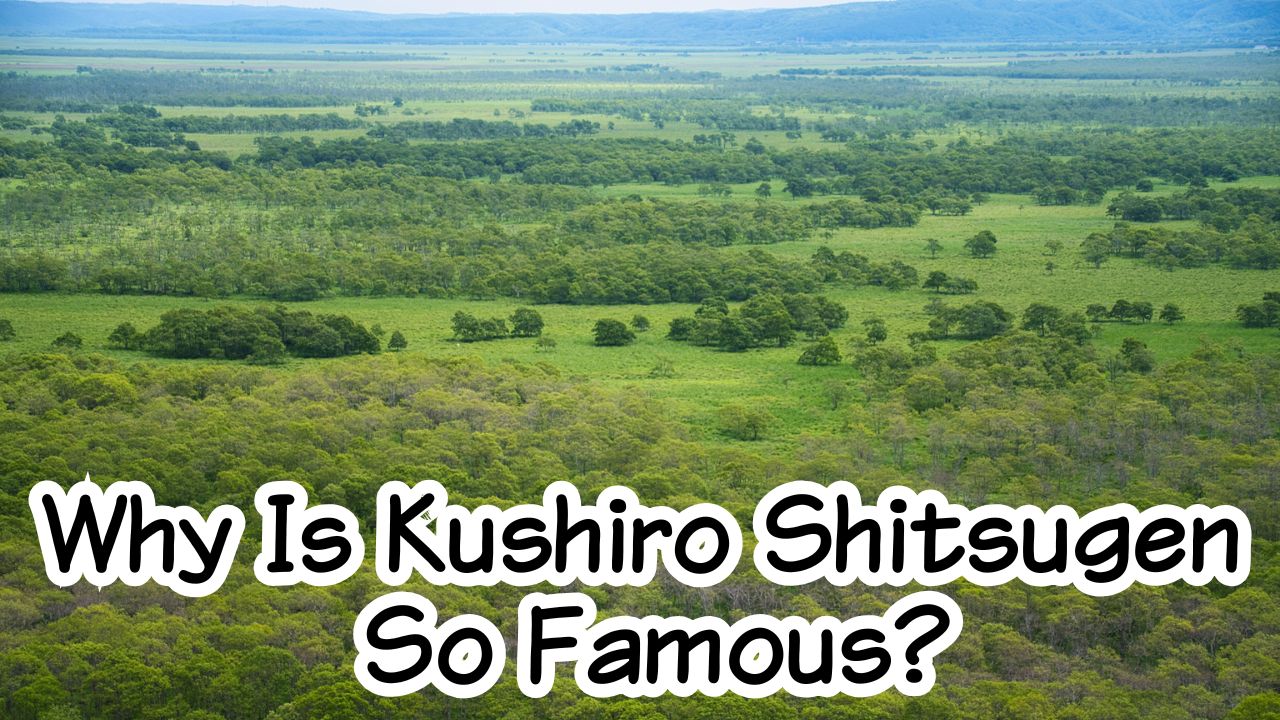
Kushiro Shitsugen is famous because it is Japan’s largest wetland, covering about 220 square kilometers, with a dramatic meandering river and important habitats for wildlife such as the red-crowned crane.
It is also historically important: in 1980, Kushiro Shitsugen became Japan’s first Ramsar-listed wetland, and in 1987 it became Japan’s first national park centered on a wetland.

Why You Should Care
Kushiro Shitsugen is not the kind of place that impresses you with one giant mountain or waterfall.
Its beauty is quieter.
You stand at an observatory and realize that the landscape seems to continue forever. The Kushiro River curves slowly across the marsh, red-crowned cranes may appear in the distance, and there are almost no buildings in sight.
Knowing the story makes that view more powerful.
This vast wetland survived partly because people eventually realized that a place once dismissed as useless was actually one of Japan’s most valuable natural environments.
That is the real reason Kushiro Shitsugen is special.
The Story Behind It
How Did an Ancient Sea Become Kushiro Shitsugen?
Here is the first surprising fact:
Kushiro Shitsugen used to be the sea.
Between about 10,000 and 6,000 years ago, warmer temperatures caused sea levels to rise. Around 6,000 years ago, seawater covered much of the area that is now the wetland.
Then the sea gradually retreated.
Sand barriers formed near the coast, separating the area from the ocean. Lakes and shallow wetlands remained behind.
Plants began growing in the wet ground. Because decomposition is slow in the cool, wet environment, dead plant material gradually accumulated as peat.
Over thousands of years, the former sea became the enormous wetland we see today. Peat accumulation began around 3,000 years ago.
There are even clues hidden in local place names.
Places such as Kirakotan Cape and Miyajima Cape are now far inland, but their names preserve memories of the time when the landscape was connected to the sea.
Why Was Kushiro Shitsugen Once Considered “Useless Land”?
Today, people travel across the world to see Kushiro Shitsugen.
But that was not always how the wetland was viewed.
Because the land was extremely wet and difficult to develop, it was once regarded as unproductive or useless land.
After World War II, pressure increased to turn parts of the surrounding region into farmland, expand urban areas, and use nearby forests. As development continued, parts of the wetland began drying out and shrinking.
Local researchers and conservation groups began working to change the way people saw the marsh.
Their message was simple but important:
A wetland does not have to become farmland or a city to have value.
Its water, plants, wildlife, and landscape have value of their own.
That idea eventually changed the future of Kushiro Shitsugen.
How Did Kushiro Shitsugen Become Japan’s First Ramsar Site?
In 1980, Kushiro Shitsugen became the first wetland in Japan to be registered under the Ramsar Convention, an international agreement for protecting important wetlands.
Seven years later, on July 31, 1987, Kushiro Shitsugen National Park was established. It became Japan’s first national park centered on a wetland landscape.
That change is remarkable.
A place once seen as land that could not be used became land that Japan decided should not be changed.
Today, conservation work continues.
Since 2003, local residents, conservation groups, researchers, and government agencies have worked together on nature restoration projects, including restoring forests, returning abandoned farmland to wetland, and repairing damaged river environments.
Why Does the Kushiro River Curve Through the Wetland?
One of the most beautiful features of Kushiro Shitsugen is the Kushiro River.
From Hosooka Observatory, it looks like a dark blue ribbon making huge curves across the green marsh.
Why does it bend so much?
The landscape is extremely flat, and the river flows slowly through the wetland. The Kushiro River has a very gentle average gradient, helping create its calm flow through the marsh.
In the past, parts of the river were straightened to improve flood control and make surrounding land easier to use.
But straightening the river also affected wetland habitats and contributed to drying in surrounding areas.
In the Kayanuma area, part of the straightened river was later restored to its former winding channel.
After the restoration, wetland vegetation increased and more varied habitats for fish returned.
So the famous curves of the Kushiro River are not only beautiful.
They are part of the way a healthy wetland works.
Why Is Kushiro Shitsugen So Important for Wildlife?
A wetland that looks empty from a distance is actually full of life.
More than 700 plant species have been recorded in and around Kushiro Shitsugen. The area also supports around 200 bird species, 39 mammals, 38 fish species, and roughly 1,100 insect species.
Its most famous resident is the red-crowned crane, or tancho.
These elegant birds once declined so severely in Japan that they were thought to have disappeared. Conservation efforts helped their population recover, and Kushiro Shitsugen remains one of their most important habitats.
The Ainu traditionally revered the red-crowned crane as sarurun kamuy, often translated as the “god of the marsh.”
The wetland is also home to rare species such as the Siberian salamander, white-tailed eagle, and Japan’s largest freshwater fish, the ito or Sakhalin taimen.
Why Does Kushiro Shitsugen Look So Empty?
This is part of its beauty.
About 80% of the wetland is low moor, dominated by reeds, sedges, and Japanese alder.
There are no dramatic skyscrapers.
Few tall trees block the horizon.
Instead, the landscape spreads sideways.
Sky.
Grass.
Water.
More sky.
That horizontal scale is unusual in mountainous Japan and is one of the defining features of Kushiro Shitsugen National Park.
The longer you look, the more details begin to appear.
A bird moving through the reeds.
A deer at the edge of the forest.
A small lake reflecting the clouds.
Kushiro Shitsugen rewards travelers who slow down.
How to Experience Kushiro Shitsugen
See It From Above, Then Walk Into It
The best way to understand the wetland is to see it from more than one angle.
Hosooka Observatory is one of the classic viewpoints. From here, you can see the Kushiro River winding across the marsh, with Mt. Oakan and Mt. Meakan visible in the distance on clear days. It is also famous for sunset views.
Then visit Onnenai Visitor Center.
A roughly 3.1-kilometer boardwalk takes you directly through wetland vegetation and usually takes about 90 minutes to walk.
From above, Kushiro Shitsugen looks enormous.
From the boardwalk, you notice how alive it is.
Try the Norokko Train—or See the Marsh From the River
Another memorable option is the seasonal Kushiro Shitsugen Norokko Train.
The sightseeing train travels between Kushiro and Toro in roughly 40–50 minutes, offering views of the marsh, river, and wildlife from the train windows. Operating dates vary by season.
For an even closer experience, guided canoe tours on the Kushiro River let you see the wetland from water level.
The river moves quietly through the reeds, giving you a completely different view from the observatories.
Please check official websites for current train schedules, tours, and conditions.
My Recommended Itinerary for Kushiro Shitsugen
Kushiro Shitsugen is one of Hokkaido’s greatest natural wonders. Since it’s located in eastern Hokkaido, I recommend spending two nights in the Kushiro area rather than trying to visit on a day trip. Renting a car gives you the most flexibility for exploring the marsh and its observation points.
Option 1: A Relaxed 3-Day Road Trip
Day 1
- Arrive at New Chitose Airport
- Rent a car
- Drive to Kushiro (about 4.5–5 hours)
- Stay overnight in Kushiro
Day 2
- Visit Hosooka Observatory
- Walk the Onnenai Boardwalk
- Watch for Ezo deer and red-crowned cranes
- Stay overnight in Kushiro
Day 3
- Visit Kushiro Marsh Observatory (optional)
- Return to New Chitose Airport
This itinerary gives you plenty of time to enjoy the wetlands without rushing.
Option 2: Fly to Kushiro
If you’re short on time, take a domestic flight from New Chitose Airport to Kushiro Airport.
The flight takes about 45–50 minutes, and from the airport it’s around 30–40 minutes by car to the main areas of Kushiro Shitsugen National Park. This is the easiest way to maximize your sightseeing time.
Did You Know?
- Kushiro Shitsugen covers about 220 square kilometers, making it Japan’s largest wetland.
- Around 6,000 years ago, much of today’s wetland was under the sea.
- It became Japan’s first Ramsar-listed wetland in 1980.
- Kushiro Shitsugen National Park was established in 1987, becoming Japan’s first national park centered on a wetland.
- The wetland supports more than 700 plant species and around 200 bird species.
FAQ
Is Kushiro Shitsugen Really Japan’s Largest Wetland?
Yes.
The wetland covers approximately 220 square kilometers, making it the largest wetland in Japan.
When Is the Best Time to Visit Kushiro Shitsugen?
It depends on what you want to see.
June to September is excellent for lush green scenery and walking. Autumn turns the marsh golden, while winter creates a completely different snowy landscape.
Red-crowned cranes can live in the Kushiro area year-round, while winter is especially popular for crane watching in eastern Hokkaido.
Where Is the Best View of Kushiro Shitsugen?
Hosooka Observatory is one of the most famous viewpoints because you can clearly see the winding Kushiro River crossing the wetland.
Can I Walk Inside Kushiro Shitsugen?
Yes.
The boardwalk at Onnenai Visitor Center allows visitors to walk through the wetland environment while protecting the fragile ground beneath. The main route is about 3.1 kilometers.
Can I See Red-Crowned Cranes in Kushiro Shitsugen?
Yes, they live in the region throughout the year.
However, they are wild birds, so sightings inside the marsh are never guaranteed.
Visit It Yourself
Location
Kushiro City, Kushiro Town, Tsurui Village, and Shibecha Town, eastern Hokkaido
Best Season
Year-round
- June–September: green wetlands and walking
- Autumn: golden marsh scenery
- Winter: snow landscapes and wildlife
How to Get There
Tancho Kushiro Airport is the main gateway to the area.
For Hosooka Observatory, it takes about 60 minutes by car from Tancho Kushiro Airport. JR Kushiro Shitsugen Station is also about a 10-minute walk from the observatory, although train services are limited.
Estimated Visit Time
One viewpoint: 1–2 hours
Viewpoint + boardwalk: Half day
Train, canoeing, and several areas: 1 full day
Admission Fee
Most natural areas and some observatories are free.
Some facilities, transportation, and guided activities require fees.
Official Website
- Ministry of the Environment – Kushiroshitsugen National Park
- Kushiroshitsugen National Park Council
- HOKKAIDO LOVE! Official Tourism Site
Please check the official website for the latest information.
Final Thoughts
At first, Kushiro Shitsugen can look almost empty.
That is exactly what makes it extraordinary.
Six thousand years ago, there was sea here.
Then the sea disappeared.
Plants spread across the wet ground.
Peat slowly accumulated.
A giant wetland was born.
Much later, people looked at this difficult, waterlogged landscape and wondered how it could be developed.
Then something changed.
People began asking a different question:
What if the wetland itself is worth protecting?
That decision helped preserve one of Japan’s most remarkable landscapes.
So when you stand at Hosooka Observatory and watch the Kushiro River curve across the endless marsh, remember that you are not simply looking at a beautiful view.
You are looking at thousands of years of natural history—and a landscape that survived because people learned to see its value.
Sometimes the most important places are not the ones humans build.
They are the places we decide to leave wild.







コメント