


My name is MAKO
Based in Sapporo, Hokkaido | Born and raised in Obihiro, Hokkaido | Lover of Sapporo Classic beer and fresh sashimi | Passionate about road trips and camping | Always chasing beautiful scenery
Why Are There So Many Foxes in Hokkaido?
Hokkaido is home to many Ezo foxes, a subspecies of the red fox.
The island’s vast forests, grasslands, mountains, and rich wildlife provide an ideal habitat, allowing foxes to thrive across much of Hokkaido.

Why You Should Care
Seeing a fox by the roadside or crossing a snowy field is a memorable experience for many visitors.
For some travelers, it’s one of the highlights of their trip.
But the foxes you see are not pets or tourist attractions.
They are wild animals that have lived in Hokkaido for thousands of years.
Understanding their story will help you appreciate these beautiful animals while respecting the nature they call home.
Meet the Ezo Fox
The fox most commonly seen in Hokkaido is the Ezo fox (Vulpes vulpes schrencki).
It is a subspecies of the red fox that has adapted to Hokkaido’s climate and environment.
Compared with foxes in warmer regions, Ezo foxes often have thicker fur to help them survive cold winters.
Their reddish-orange coats, white chests, and bushy tails make them one of Hokkaido’s most recognizable animals.
Built for Life in the North
The Ezo fox is an excellent hunter.
Its sharp hearing allows it to detect small animals hidden beneath snow or tall grass.
It feeds on a wide variety of foods, including:
- 🐭 Mice and voles
- 🐇 Rabbits
- 🐦 Birds
- 🐟 Fish
- 🍓 Berries and fruit
- 🦗 Insects
This flexible diet helps foxes survive in many different environments across Hokkaido.
Why Does Hokkaido Have So Many Foxes?
The answer lies in the island’s geography.
Hokkaido has vast forests, open grasslands, wetlands, farmland, and mountains.
These diverse landscapes provide ideal habitats for foxes and the small animals they hunt.
Because food is plentiful and natural habitats remain extensive, foxes are found throughout much of the island.
Nature Provides Everything They Need
Foxes need three basic things:
- Food
- Shelter
- Space
Hokkaido provides all three.
Unlike densely populated regions, much of Hokkaido still contains large natural areas where wildlife can live with relatively little disturbance.
This healthy environment supports not only foxes but also deer, owls, eagles, bears, and many other animals.
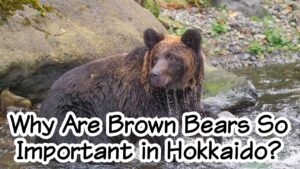
Why Are Brown Bears So Important in Hokkaido?
Hokkaido is home to a wide variety of wildlife, from red foxes and deer to majestic brown bears.
As Japan’s largest land animal, the brown bear is one of the most iconic symbols of Hokkaido’s untamed wilderness. Discover why this remarkable animal plays such an important role in Hokkaido’s nature, culture, and identity.
Read next: Why Are Brown Bears So Important in Hokkaido? The Powerful Symbol of Hokkaido’s Wild Nature
Why Do Foxes Sometimes Appear Near People?
Many visitors are surprised to see foxes along roads or near parking areas.
This doesn’t necessarily mean there are more foxes than elsewhere.
Wild foxes often travel long distances while searching for food.
Unfortunately, some have also become accustomed to people because visitors have fed them in the past.
This behavior can be dangerous for both foxes and humans.
Please Don’t Feed the Foxes
Feeding wild foxes may seem kind, but it creates serious problems.
Foxes that depend on people may lose their natural hunting behavior and become more likely to approach roads, increasing the risk of traffic accidents.
Human food can also be harmful to their health.
The best way to help is simply to admire them from a distance.
Foxes in Hokkaido’s Culture
Foxes have long appeared in Japanese folklore, often as mysterious or intelligent animals.
In Hokkaido, however, the Ezo fox is appreciated mainly as an important part of the island’s natural environment.
For the Ainu people, who have lived in Hokkaido for centuries, animals were respected as beings connected to the natural world.
This tradition encourages people to value wildlife rather than control it.
A Symbol of Wild Hokkaido
Today, the Ezo fox has become one of Hokkaido’s most recognizable wildlife symbols.
You’ll find foxes featured in local artwork, souvenirs, and photography.
Yet their true beauty is best experienced in the wild, where they continue to live as they always have.
Where Can You See Foxes in Hokkaido?
One of the exciting things about traveling in Hokkaido is that you might spot an Ezo fox almost anywhere.
Unlike animals that live only in remote mountains, foxes are active across much of the island. If you’re lucky, you may see one while driving through the countryside, hiking in a national park, or even early in the morning near farmland.
However, remember that wildlife sightings are never guaranteed. Seeing a fox in its natural habitat is a privilege, not an attraction.
Great Places to Look for Ezo Foxes
Some of the best areas for wildlife watching include:
- 🦊 Shiretoko National Park – One of the best places to see foxes living in a truly wild environment.
- 🌾 Eastern Hokkaido – Wide open fields around Abashiri, Koshimizu, and Teshikaga are home to many foxes.
- 🌲 Daisetsuzan National Park – Foxes are sometimes seen near trails and forest roads.
- 🚗 Rural Roads – Early morning and evening are often the best times to spot wildlife while driving.
Always observe animals from a safe distance and never stop your vehicle in a dangerous location.
Why Is Shiretoko a World Heritage Site?
Wild foxes can still be found in places like Shiretoko, one of Hokkaido’s most untouched natural areas.
This remarkable peninsula is home to an incredible diversity of wildlife, forests, and marine ecosystems. Discover why Shiretoko was recognized as a UNESCO World Heritage Site and what makes it one of Japan’s last great wildernesses.
Read next: Why Is Shiretoko a World Heritage Site? The Untamed Story of Hokkaido’s Wild Peninsula

Spring Is the Best Time to See Fox Cubs
If you visit Hokkaido in spring, you may be lucky enough to spot adorable Ezo fox cubs.
From around April to early summer, young foxes begin to appear near their dens under the watchful eyes of their parents. Watching the playful cubs explore the world is one of the most heartwarming wildlife experiences in Hokkaido.
Remember to admire them from a distance. Wild foxes should never be fed or approached, as this helps keep both the animals and visitors safe.
Living Together with Wildlife
One reason Hokkaido feels different from many other destinations is that wildlife is still part of everyday life.
Foxes, deer, cranes, and even brown bears share the landscape with local communities.
This balance exists because people have learned that nature deserves respect.
Visitors can help protect this balance by following a few simple rules:
- Never feed wild foxes.
- Stay a safe distance away.
- Do not try to touch or follow them.
- Drive carefully, especially at dawn and dusk.
- Leave nature exactly as you found it.
These small actions help ensure that future travelers can enjoy the same unforgettable encounters.
An Important Health Reminder
Although Ezo foxes are beautiful, they are still wild animals.
In some parts of Hokkaido, foxes can carry Echinococcus, a parasite that can infect humans through accidental contact with contaminated environments.
The risk to travelers is low if basic precautions are followed, but it is one of the reasons local authorities strongly advise people not to touch or feed wild foxes.
Enjoy watching them with your eyes—and keep a respectful distance.
Why Is Echinococcus Taken So Seriously?
Although Hokkaido’s foxes are beautiful wild animals, some can carry a tiny parasite called Echinococcus multilocularis. Humans can become infected by accidentally swallowing parasite eggs that may be present in environments contaminated by infected fox feces.
Once inside the body, the parasite usually settles in the liver, where it grows very slowly over many years.
Most people have no symptoms at first, which makes the infection difficult to detect. If left untreated, it can gradually damage the liver and cause symptoms such as abdominal pain, jaundice, and reduced liver function.
In rare cases, the parasite can spread to other organs, including the lungs or brain, becoming a life-threatening condition.
The good news is that the risk of infection is very low if you follow a few simple precautions. Never touch or feed wild foxes, wash your hands after outdoor activities, drink safe water, and wash wild berries or vegetables before eating them.
By following these simple precautions, you can safely enjoy Hokkaido’s incredible wildlife while helping to protect both yourself and the animals.
How to Stay Safe
- Never feed or touch wild foxes.
- Observe wildlife from a safe distance.
- Wash your hands after hiking or outdoor activities.
- Drink treated or bottled water.
- Wash wild berries and vegetables before eating them.
Did You Know?
- 🦊 The Ezo fox is a subspecies of the red fox found only in Hokkaido.
- ❄️ Its thick winter coat helps it survive Hokkaido’s snowy climate.
- 👂 An Ezo fox can hear small animals moving beneath the snow.
- 🌍 Foxes play an important role in controlling rodent populations and maintaining healthy ecosystems.
- 📷 Many of Hokkaido’s most famous wildlife photographs feature Ezo foxes in snowy landscapes.
FAQ
Why are there so many foxes in Hokkaido?
Because Hokkaido has large forests, grasslands, abundant prey, and relatively undisturbed natural habitats that provide excellent living conditions.
Are Ezo foxes dangerous?
They usually avoid people and are not aggressive. However, they are wild animals and should never be approached or fed.
Is it safe to touch a fox?
No. Wild foxes may carry parasites such as Echinococcus. It is safest to admire them from a distance.
What is the best season to see foxes?
Foxes can be seen throughout the year. Winter makes them easier to spot against the snow, while spring and summer offer more opportunities to see them in green landscapes.
Can I feed wild foxes?
No. Feeding wild foxes is strongly discouraged because it harms their natural behavior and increases the risk of disease and traffic accidents.
Visit It Yourself
Location
Ezo foxes live throughout Hokkaido, especially in Shiretoko, eastern Hokkaido, Daisetsuzan National Park, and rural farming areas.
Best Season
Year-round. Winter offers excellent visibility against snowy landscapes, while spring through autumn provides comfortable conditions for wildlife watching.
How to Get There
The best way to explore fox habitats is by rental car or guided wildlife tour, particularly in eastern Hokkaido.
Estimated Visit Time
Wildlife watching is often part of a half-day or full-day sightseeing trip.
Admission Fee
No admission fee is required to see foxes in the wild. Guided wildlife tours may charge separate fees.
Official Website
Please check the official website for the latest information on national parks, wildlife safety, and seasonal conditions.
Final Thoughts
The Ezo fox is more than just a cute animal.
It is a symbol of Hokkaido’s wild spirit.
Its ability to thrive in forests, grasslands, and snowy landscapes reminds us that nature still shapes life on this northern island.
If you’re lucky enough to see one during your journey, take a moment to simply watch.
Keep your distance.
Respect its home.
Sometimes the most meaningful travel memories come not from getting closer—but from quietly sharing a moment with nature.
Because the true beauty of Hokkaido’s foxes isn’t that they live near people. It’s that they still live free.









コメント