

My name is MAKO
Based in Sapporo, Hokkaido | Born and raised in Obihiro, Hokkaido | Lover of Sapporo Classic beer and fresh sashimi | Passionate about road trips and camping | Always chasing beautiful scenery
Why Does Drift Ice Reach Hokkaido?The Short Answer
Most of the drift ice seen along Hokkaido’s Okhotsk coast forms much farther north, where extremely cold winter air freezes the surface of the Sea of Okhotsk.
Fresh water from Russia’s Amur River helps lower the salinity of the surface layer, making it easier to freeze. Winds and ocean currents then carry the ice south along Sakhalin until it finally reaches Hokkaido.

Why You Should Care
Imagine standing on the coast of Hokkaido in February.
The sea that was dark blue a few weeks earlier has almost disappeared.
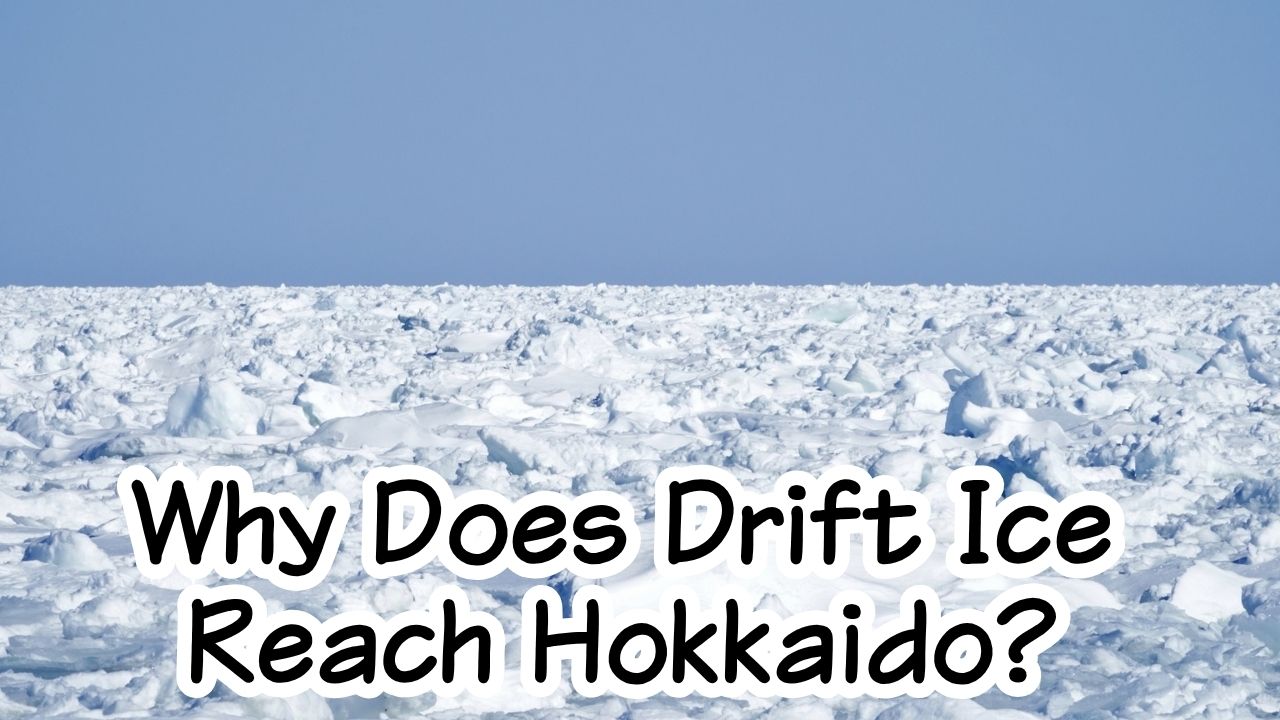
Instead, the horizon is white.
Pieces of ice stretch as far as you can see, pressing against one another with cracks, creaks, and deep sounds.
It may look as if the sea around Hokkaido simply froze overnight.
But that is not the full story.
Much of this ice began its journey far to the north and traveled hundreds of kilometers before reaching Japan.
Hokkaido’s drift ice is a visitor from the north.
And beneath that frozen landscape is another surprise:
the ice helps support one of Hokkaido’s richest marine ecosystems.
The Story Behind Hokkaido’s Drift Ice
Is Hokkaido Drift Ice Made in Hokkaido?
Not usually.
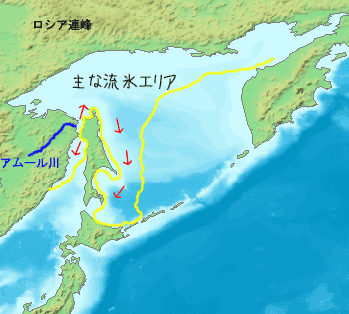
Sea ice begins forming in the northern and northwestern parts of the Sea of Okhotsk as winter arrives.
From there, the ice expands along the Siberian coast and down the eastern side of Sakhalin. By January, part of this enormous ice field begins approaching Hokkaido.
Some sea ice can also form close to the Hokkaido coast when the seawater becomes cold enough.
So the winter ice field seen from Hokkaido is a mixture of ice that traveled south and ice formed closer to shore.
Why Does the Sea of Okhotsk Freeze So Easily?
There is a surprising reason:
a giant river.
The Amur River flows into the northern Sea of Okhotsk and brings a huge amount of fresh water.
Fresh water contains less salt than seawater.
This creates a surface layer with relatively low salinity. During winter, extremely cold seasonal winds from Siberia cool this upper layer until seawater begins freezing at around −1.8°C.
The geography of the Sea of Okhotsk also matters.
It is surrounded by the Asian continent, Sakhalin, Hokkaido, and the Kuril Islands, so water exchange with warmer oceans is limited.
Together,
fresh water + extreme cold + geography
create perfect conditions for sea ice.
How Does Drift Ice Travel All the Way to Hokkaido?
Ice cannot swim.
So something has to move it.
Cold seasonal winds push newly formed ice away from the coast, while the East Sakhalin Current helps carry it south along Sakhalin.
Eventually, some of that ice reaches the northeastern coast of Hokkaido.
The journey can stretch for around 1,000 kilometers from the northern Sea of Okhotsk toward Shiretoko.
That means the white ice floating beside you in Hokkaido may have started its journey near the Russian Far East.
Suddenly, the Sea of Okhotsk feels much bigger.
Why Can Drift Ice Reach Such a Southern Latitude?
Hokkaido lies surprisingly far south for a place famous for seasonal sea ice.
The combination of the Amur River, cold continental air, the shape of the Sea of Okhotsk, winds, and currents allows sea ice to travel much farther south than many travelers expect. Hokkaido tourism authorities describe the region as an unusually low-latitude place to experience drift ice.
That is what makes winter on the Okhotsk coast special.
You do not need to travel to the Arctic Circle to see an ocean covered with moving sea ice.
You can see it in Japan.
Is Drift Ice Just Frozen Seawater?
Not quite.
When seawater freezes, much of its salt is pushed out of the forming ice.
Tiny spaces called brine pockets remain inside the ice.
These pockets can become home to microscopic algae known as ice algae.
When sunlight increases and the ice begins to melt, this microscopic life helps feed plankton and other organisms. Those organisms support fish and larger animals higher in the food chain.
So drift ice does more than create beautiful scenery.
It helps connect winter ice with the rich life of the Sea of Okhotsk.
What Animals Can You See Around the Drift Ice?
The frozen sea attracts more than photographers.
Depending on luck and location, travelers may see:
- Steller’s sea eagles
- white-tailed eagles
- seals
- seabirds
Drift-ice sightseeing cruises around eastern Hokkaido sometimes encounter wildlife resting on or moving around the ice.
The ice is part of a much larger winter ecosystem.
When Does Drift Ice Reach Hokkaido?
The timing changes every year.
Around Abashiri, drift ice usually appears from late January to around mid-March, although wind and temperature can move the ice offshore even during the peak season.
In the 2025–2026 season, drift ice reached parts of Hokkaido’s Okhotsk coast around late January. It repeatedly moved toward and away from shore as winds changed.
That unpredictability is important.
A drift-ice trip is not like visiting a building.
Nature decides whether the ice will be there.
Is Hokkaido’s Drift Ice Disappearing?
The amount of sea ice changes greatly from year to year.
But the long-term trend is downward.
The Japan Meteorological Agency reports that the maximum sea-ice area in the Sea of Okhotsk has been decreasing by about 59,000 square kilometers per decade, equivalent to around 3.7% of the sea’s total area every ten years.
The 2025–2026 season recorded the second-smallest maximum ice area since statistics began in 1970–1971.
JMA notes that global warming may be contributing to the long-term decline, while also stressing that sea ice varies greatly with temperature, winds, and ocean conditions from year to year.
That makes this landscape beautiful—but also worth paying attention to.
How Can You Experience Hokkaido Drift Ice?
There are several very different ways.
In Abashiri, the sightseeing icebreaker Aurora sails into the ice field. The large ship can break through ice while passengers watch from heated indoor spaces or outdoor decks.
In Monbetsu, the famous orange Garinko uses large screw-like drills at its bow to move through the ice. Its 2026 winter season operated through March 31.
In Shiretoko, guided drift-ice walks let visitors put on special dry suits and step onto the ice itself. This should only be done with trained guides—walking onto drift ice alone is extremely dangerous.
Meet the Tiny Sea Angels Beneath the Drift Ice!
Did you know that tiny creatures called clione, also known as “sea angels,” live in the cold waters beneath Hokkaido’s drift ice?
These fascinating little creatures have transparent bodies and wing-like structures that make them look like angels floating through the sea.
Clione are one of the most charming symbols of Hokkaido’s winter ocean!
Why Are Clione Called the Angels of Drift Ice?
Why are these tiny creatures called sea angels, and how do they survive in the freezing waters of the Sea of Okhotsk?
Discover the fascinating secrets of these adorable marine animals!
Read next: Why Are Clione Called the Angels of Drift Ice? The Story Behind Hokkaido’s Tiny Sea Angels

Did You Know?
- Sea water in the Okhotsk region begins freezing at roughly −1.8°C.
- Fresh water from the Amur River helps make the surface of the Sea of Okhotsk easier to freeze.
- Ice can travel around 1,000 km before reaching Hokkaido.
- Tiny ice algae living within sea ice help support the marine food web.
- The amount of Okhotsk sea ice has shown a clear long-term decline since records began.
FAQ
What Is the Best Month to See Drift Ice in Hokkaido?
February is generally the safest choice.
Abashiri tourism information describes early February through early March as the main sightseeing period, although conditions change every year.
Is Drift Ice Guaranteed?
No.
Wind can push the ice far offshore, sometimes even during the middle of winter.
Cruises may operate without reaching drift ice, and bad weather can cause cancellations.
Can I Walk on Drift Ice by Myself?
No.
Unsupervised drift-ice walking is extremely dangerous because the ice moves, cracks, and can separate from shore.
Only join an organized activity with appropriate dry suits and trained guides.
Where Is the Easiest Place to See Drift Ice?
Abashiri is one of the easiest bases for international travelers.
The sightseeing boat departs from Roadside Station Ryuhyo Kaido Abashiri, and direct buses connect the area with JR Abashiri Station and Memanbetsu Airport.
Can I See Drift Ice Outside Winter?
Not on the sea.
However, the Okhotsk Ryu-hyo Museum in Abashiri keeps real drift ice in a cold room throughout the year.
Visit It Yourself
Best Places to Experience Drift Ice
Abashiri
Best for a classic sightseeing icebreaker cruise aboard Aurora.
Monbetsu
Famous for the orange Garinko icebreaker.
Shiretoko / Utoro
Best for guided drift-ice walking and a more active experience.
Best Season
Late January–March
For the highest chance of seeing dense drift ice, February to early March is generally the best period around Abashiri.
How to Get There
For Abashiri, fly to Memanbetsu Airport.
Direct buses operate between the airport, JR Abashiri Station, and the Aurora boarding area.
Estimated Visit Time
Drift-ice cruise: about 1 hour, plus boarding time.
For a winter trip to eastern Hokkaido, staying at least one night is strongly recommended because weather and ice conditions can change.
Admission Fee
Cruise and activity prices vary by operator and season.
The Aurora official site currently lists winter operations from January 20 to March 31, but schedules and fares may change for future seasons.
Please check the official website for the latest information.
Official Websites
- Abashiri Drift Ice Sightseeing Icebreaker Aurora
- Garinko Official Website
- Shiretoko Shari Tourism Association
Final Thoughts
Why does drift ice reach Hokkaido?
Because many things have to happen together.
A huge river brings fresh water from the Asian continent.
Siberian winter air cools the sea.
Ice forms.
Wind pushes it offshore.
Ocean currents carry it south.
And eventually,
the ice reaches Hokkaido.
But its journey does not end there.
Tiny algae grow inside it.
Plankton feed beneath it.
Fish gather.
Birds and seals follow.
And for a few winter weeks, the blue Sea of Okhotsk becomes a white world.
When you stand on the Hokkaido coast and see drift ice for the first time, remember:
you are not simply looking at frozen seawater.
You are looking at the end of a thousand-kilometer winter journey—and the beginning of life beneath the ice.








コメント