
My name is MAKO
Based in Sapporo, Hokkaido | Born and raised in Obihiro, Hokkaido | Lover of Sapporo Classic beer and fresh sashimi | Passionate about road trips and camping | Always chasing beautiful scenery
Why Do People in Hokkaido Eat Octopus Heads?The Short Answer
Hokkaido is home to the enormous Giant Pacific octopus, or mizudako, and locals make good use of much more than just its arms.
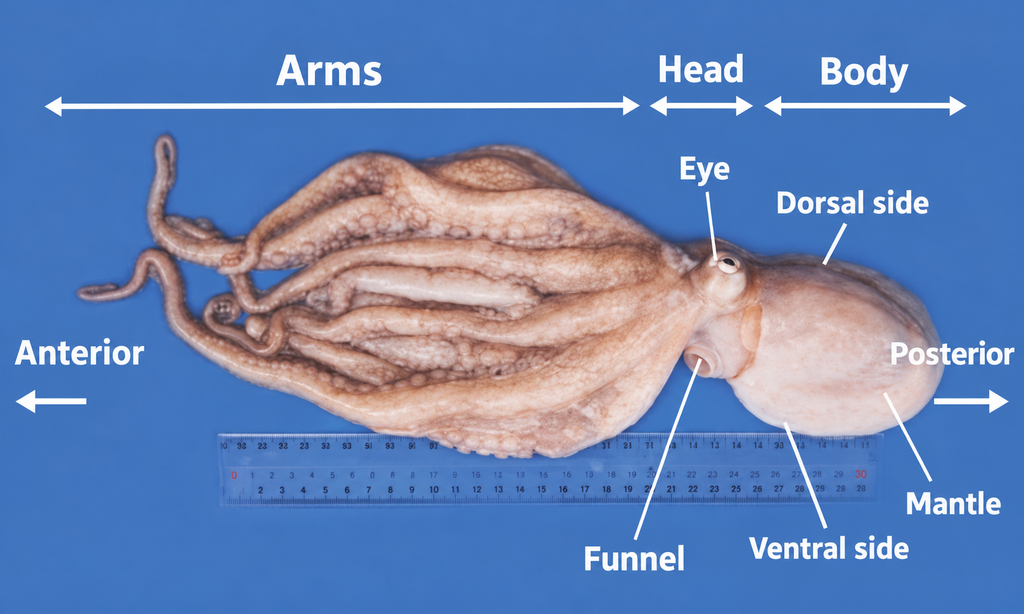
But here is the first surprise: the part sold as “octopus head” — tako atama — is not actually the anatomical head. It is mainly the large mantle, the bag-like body that surrounds the internal organs. In Hokkaido, this part is boiled, sliced, and enjoyed as sashimi and other dishes.

Why You Should Care
When travelers think of eating octopus in Japan, they usually imagine:
takoyaki,
octopus sushi,
or slices of octopus arm.
Then you walk into a Hokkaido fish market and see something labeled:
タコ頭 — “octopus head.”
Wait.
People eat the head?
Yes—but the story is not quite what it seems.
Understanding this local food teaches you something bigger about Hokkaido:
when seafood is large, fresh, and valuable, people learn how to enjoy much more than the familiar parts.
The Story Behind Hokkaido’s Octopus Head
Is the “Octopus Head” Really Its Head?
No.
This is probably the most surprising part of the story.
The large rounded section above an octopus’s eyes is called the mantle. It contains organs such as the gills, hearts, reproductive organs, and digestive organs. The actual head, including the brain and eyes, is located between the mantle and the arms.
In everyday Japanese seafood language, however, the mantle is commonly called the “head,” or atama.
Hokkaido’s official food information even describes it as:
“the octopus body that is called the head.”
So when someone in Hokkaido offers you octopus head sashimi, do not imagine that you are eating the face.
You are mainly eating the muscular mantle.
Why Is Octopus Head Such a Hokkaido Thing?
One important reason is size.
Hokkaido waters are home to mizudako, the Giant Pacific octopus.
The Hokkaido Government describes it as the world’s largest octopus, reaching around 3 meters in total length. Its eight long arms make up most of that length, but the mantle itself is also large and meaty.
Hokkaido also has a major octopus fishing industry. Mizudako is widely distributed around the island, particularly in waters such as the Sea of Japan and the Sea of Okhotsk.
With an animal this large, the mantle is far too substantial to ignore.
It is not a leftover. It is food.
What Does Octopus Head Taste Like?
Hokkaido’s Oshima Subprefectural Bureau describes the mantle—the part called the head—as having a noticeable sweetness and being particularly easy to enjoy as sashimi.
Its texture is different from the familiar thick octopus arm.
When boiled and sliced, it has a springy but relatively smooth bite.
Hokkaido Gyoren even has a cooking guide with the playful title:
“Do Hokkaido locals prefer the head to the legs?!”
The guide shows the boiled head being skinned and sliced directly into sashimi.
That tells you something important.
In Hokkaido, the head is not treated like an exotic dare.
It is simply another tasty part of the octopus.
How Is Hokkaido Octopus Head Usually Eaten?
One of the simplest ways is:
boiled and sliced as sashimi.
The outer skin can be removed, and the pale meat underneath is cut into slices and served much like octopus arm sashimi.
You may also find octopus head used in:
- carpaccio
- vinegared dishes
- salads
- seasoned seafood products
- grilled or lightly cooked dishes
Hokkaido’s official fisheries information also lists boiled octopus head as a product sold by fisheries cooperatives.
Simple preparation works well because the meat already has a mild sweetness.
What Does “Hama-yude” Mean?
If you shop for octopus in Hokkaido, you may also encounter the term:
hama-yude — “boiled at the fishing port.”
This means freshly landed seafood is boiled soon after it reaches shore.
The Hokkaido Government highlights this method in places such as Enbetsu, where freshly landed mizudako is processed into boiled arms and boiled octopus heads.
Timing matters with seafood.
Processing the octopus close to the place where it was caught helps preserve the texture and flavor that coastal communities value.
What Is “Bocchi” in Northern Hokkaido?
Travel north to the Soya region and you may hear another word:
bocchi.
Hokkaido Gyoren reports that fishermen around Soya use bocchi as another name for boiled octopus head.
The local fishing report describes it as springy, full of flavor, and a favorite part among fishermen.
This kind of regional vocabulary is one of the pleasures of traveling through Hokkaido.
The same seafood can have a different name depending on where you eat it.
Do Hokkaido People Really Use Almost the Whole Octopus?
In some fishing communities, yes.
The Oshima Government’s introduction to mizudako describes an impressive range of uses:
the arms can become sashimi, fried octopus, simmered dishes, curry, or shabu-shabu.
The mantle—the “head”—can become sashimi.
Even the internal organs can be eaten. Locally, they may be called dogu, meaning “tools,” and used in hearty hot-pot dishes.
In Soya, even the octopus mouth is eaten and known as tako tonbi, prized for its chewy texture.
That is perhaps the real story behind Hokkaido octopus cuisine.
It is not about eating a strange “head.”
It is about knowing how to use a huge local seafood resource with very little waste.
Why Is Hokkaido’s Giant Pacific Octopus So Important?
The size alone is impressive.
A mizudako can reach around 3 meters, and Hokkaido waters support the species around much of the island.
Different coastal regions have developed their own fishing and processing traditions.
In Hakodate’s Toi district, for example, fishermen use a traditional hook-like method called isari. Caught octopuses are kept in seawater and transported alive to holding tanks before processing.
Far to the north in Soya, fishermen also use isari fishing and transport the octopus alive to maintain freshness.
From southern Hakodate to northern Wakkanai, mizudako is part of Hokkaido’s coastal food culture.
Is Octopus Head Something Tourists Usually Know About?
Not necessarily.
That is what makes it fun.
Octopus legs are instantly recognizable.
The head can look like a large, smooth sheet of reddish-purple seafood once it has been boiled and opened.
If you do not read Japanese, you might walk straight past it without knowing what it is.
So remember this phrase:
Tako atama arimasu ka?
“Do you have octopus head?”
At a fish market, that one question could lead to a very Hokkaido food experience.
My Recommendation: Try Octopus Head Sashimi from a Local Supermarket!
As someone who lives in Sapporo, I often buy octopus head sashimi at local supermarkets.
One reason I recommend it is the price! Octopus head is often more affordable than many other types of sashimi, making it a great choice for seafood lovers on a budget.
It also has a pleasantly soft texture and a mild, slightly sweet flavor.
If you’re visiting Hokkaido, why not stop by a local supermarket and give this unique seafood a try?
Did You Know?
- The “octopus head” sold in Hokkaido is mainly the mantle, not the true anatomical head.
- Hokkaido’s mizudako can reach around 3 meters in length.
- Hokkaido Gyoren publishes an entire guide showing how to prepare octopus head sashimi.
- In the Soya region, boiled octopus head can be called bocchi.
- In southern Hokkaido, even octopus internal organs may be eaten in hot pot and are locally called dogu.
FAQ
Is Octopus Head Safe to Eat?
Yes, when it has been properly processed and prepared as food.
Boiled octopus head is a normal seafood product in Hokkaido and is sold by fisheries cooperatives.
Is Octopus Head Actually the Brain?
No.
The edible part usually called the “head” is the mantle.
The brain is located near the eyes, between the mantle and the arms.
Does Octopus Head Taste Different From the Arms?
Yes.
The mantle has its own texture and is described by Hokkaido officials as having sweetness that makes it good for sashimi.
What Is Octopus Head Called in Japanese?
Tako atama — タコ頭
In parts of northern Hokkaido, you may also hear bocchi for boiled octopus head.
Can I Find It in Any Hokkaido Restaurant?
Not necessarily.
Availability depends on the region, season, shop, and daily supply.
Fish markets and seafood stores are often better places to look than ordinary restaurants.
Try It Yourself
Location
One easy place for international travelers to look for unusual Hokkaido seafood is:
Hakodate Morning Market
9-19 Wakamatsu-cho, Hakodate, Hokkaido.
Hakodate’s nearby Toi district is one of Hokkaido’s important mizudako-producing areas, and the market has numerous seafood retailers. However, octopus head is not guaranteed to be available every day, so ask individual sellers.
Best Season
Mizudako is harvested around Hokkaido throughout the year, although fishing seasons and availability vary by region.
Boiled and frozen octopus head can also be available outside the main local fishing period.
How to Get There
Hakodate Morning Market is about a 1-minute walk from JR Hakodate Station.
Estimated Visit Time
30–90 minutes
Give yourself time to browse the seafood stalls and ask what is fresh that morning.
Admission Fee
Free
You only pay for what you eat or buy.
Opening Hours
The market currently lists general hours of approximately:
May–December: 5:00 a.m.–after 2:00 p.m.
January–April: 6:00 a.m.–after 2:00 p.m.
Individual store hours vary.
Please check the official website for the latest information.
Official Website
Hakodate Morning Market Official Website
Final Thoughts
Why do people in Hokkaido eat octopus heads?
First, because the “head” is not really the head.
It is a large, edible mantle.
And Hokkaido’s Giant Pacific octopus is enormous.
That gives coastal communities plenty of meat beyond the familiar eight arms.
So they learned to use it.
Boil the arms.
Slice the mantle.
Eat the mouth.
Cook the internal organs.
Different parts become different dishes.
Over generations, what might look unusual to a visitor became completely normal local food.
So if you see tako atama in a Hokkaido market, do not think:
“Why would anyone eat an octopus head?”
Think instead:
“How much of this enormous animal do Hokkaido fishermen know how to use?”
The answer is:
almost everything.
And that is the real story behind Hokkaido’s octopus head.




コメント