

My name is MAKO
Based in Sapporo, Hokkaido | Born and raised in Obihiro, Hokkaido | Lover of Sapporo Classic beer and fresh sashimi | Passionate about road trips and camping | Always chasing beautiful scenery
Why Is Hoheikyo Dam Famous for Autumn Leaves?The Short Answer
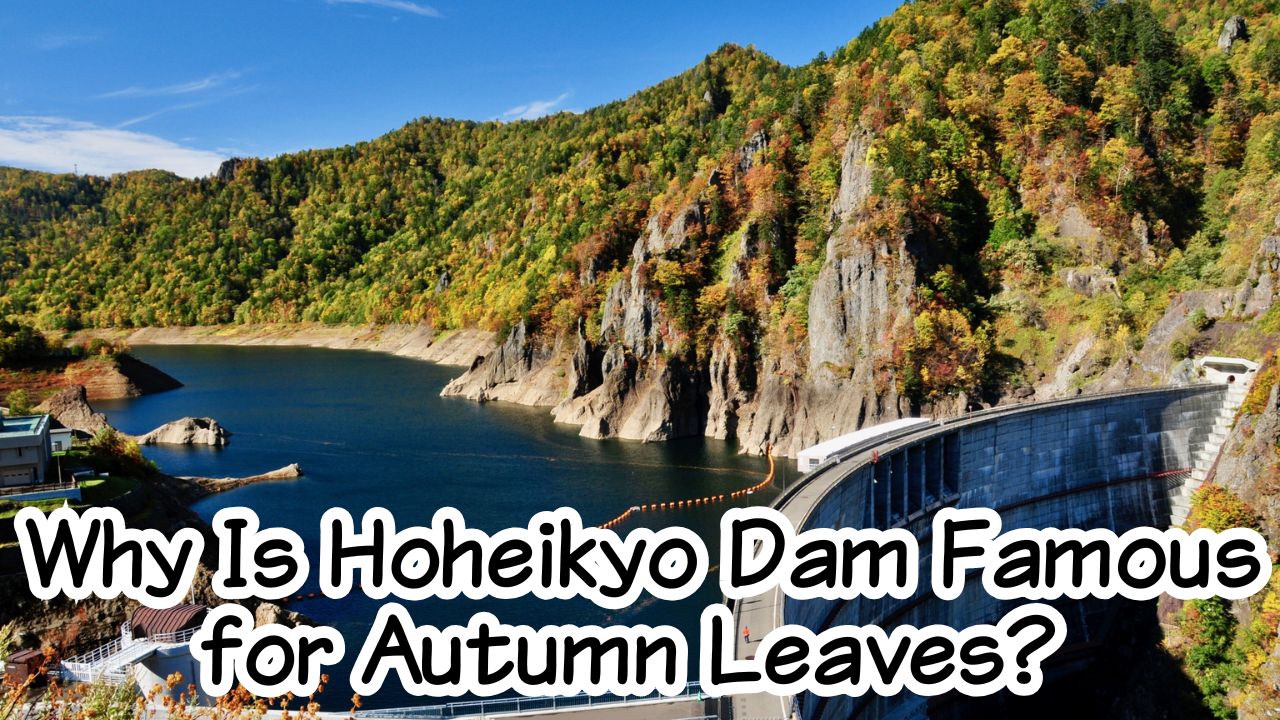
Hoheikyo Dam is famous because brilliant autumn forests, steep rock walls, a green-blue reservoir, and a huge curved dam all come together in one dramatic landscape.
But Hoheikyo Dam was not built as a tourist attraction. Completed in 1972, it was created to help protect Sapporo from floods, supply drinking water, and generate hydroelectric power.

Why You Should Care
Sapporo is known for city sights, ramen, beer, and snow.
But drive about an hour from downtown, and the scenery changes completely.
You enter the mountains of Shikotsu-Toya National Park, where Hoheikyo Dam sits inside a narrow gorge surrounded by steep forested slopes. In autumn, the combination of colorful mountains, bare rock, water, and the massive concrete arch creates one of Sapporo’s most striking seasonal views.
The best part is that this beautiful place also tells an important story about modern Sapporo.
The water behind the dam is not just scenery.
It is part of the system that has helped a growing northern city live safely below the mountains.
Why Was Hoheikyo Dam Built in the Mountains of Sapporo?
Hoheikyo Dam was not originally created for sightseeing.
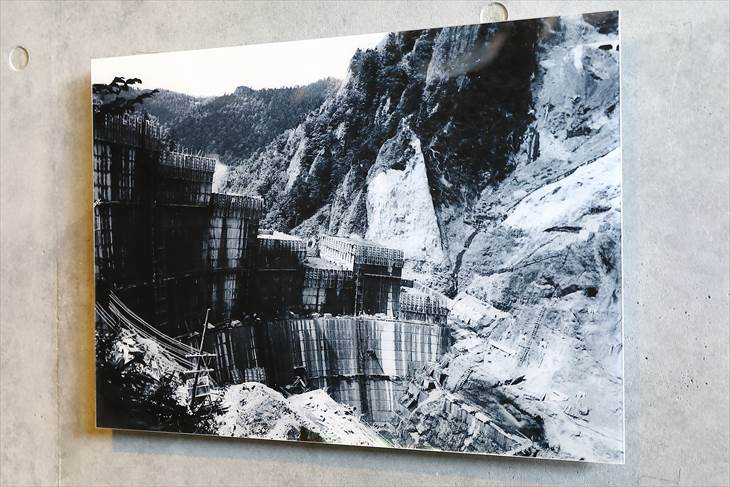
After World War II, Sapporo’s population grew rapidly. The city needed more drinking water and electricity, while floods along the Toyohira River also remained a serious concern. Major floods in 1961 and 1962 were part of the background behind the project.
Hoheikyo Dam was completed in 1972, the same year Sapporo hosted the Winter Olympics.
It has three main jobs:
- controlling floods
- supplying water
- providing water for hydroelectric power generation
The hydroelectric plant has a maximum output of 50,000 kW.
So while visitors come today for autumn colors, the dam was built first to support everyday life in Sapporo.
Why Does Hoheikyo Dam Have Such a Beautiful Curved Shape?
One of the first things you notice is the curve.
Hoheikyo Dam is an arch concrete dam, 102.5 meters high and 305 meters long. It was the first arch-type concrete dam built in Hokkaido.
Why Build an Arch Instead of a Straight Wall?
An arch dam sends the pressure of the stored water sideways into the surrounding rock.
That means the rock on both sides must be extremely strong.
Hoheikyo’s narrow valley and solid rock made this type of structure possible. Compared with a gravity dam, an arch design can also use less concrete.
This engineering decision accidentally created something beautiful.
The smooth curve of gray concrete looks almost sculpted into the sharp natural cliffs.
In autumn, that contrast becomes even stronger.
Red, orange, yellow, gray, and deep green all meet in one view.
Why Are the Autumn Leaves at Hoheikyo Dam So Impressive?
Hoheikyo is not just a forest beside a dam.
It is a gorge.
The valley becomes narrow as the Toyohira River moves deeper into the mountains. Steep cliffs rise close to the reservoir and dam, creating a compact landscape where the fall colors appear to surround you.
The reservoir is called Jozan Lake, or Jozanko.
When the mountains change color, the calm water, dark rock faces, and curved dam give the scenery several different layers.
That is why photographs from Hoheikyo often look more dramatic than an ordinary autumn forest.
You are seeing both nature and engineering in the same frame.
The Dam Lake Has a Name Older Than You Might Expect
Here is a small detail that is easy to miss.
The reservoir behind Hoheikyo Dam was named Jozan Lake after requests from the local community.
Interestingly, the nearby Jozankei Dam was built much later, completing in 1989. In other words, the name “Jozan Lake” already existed before Jozankei Dam appeared.
It is one of those tiny facts that makes the area easier to understand when looking at a map.
Why Is It Called “Hoheikyo”?
The scenic area itself has a history older than the dam.
According to the Jozankei Tourism Association, the name Hoheikyo was given in 1926 by Kokubu Seigai, a noted scholar and poet known for Chinese-style poetry.
So the gorge was already recognized for its scenery decades before the dam was completed.
The dam did not create the beautiful valley.
Instead, a major piece of modern infrastructure was carefully placed inside a landscape that people already admired.
Why Can’t You Drive All the Way to Hoheikyo Dam?
This is one of the most unusual parts of visiting.
You can drive to the parking area, but not all the way to the dam.
The final 2 kilometers are closed to ordinary cars, motorcycles, and bicycles to help protect the natural environment inside the national park. Visitors must continue on foot or use the electric bus.
Electric Buses Have Been Used Here Since 1976
Hoheikyo began using electric vehicles in 1976, only a few years after the dam was completed.
Today, electric buses carry visitors through the tunnels and mountain scenery between the parking area and the dam. The operator has also received recognition from Japan’s environment ministry for its environmental protection efforts.
This creates an interesting contrast.
You are visiting a giant man-made structure, but access to it is deliberately limited to protect the surrounding nature.
Don’t Miss Kudan Falls and Senjo-iwa on the Bus Ride
The ride to the dam is part of the experience.
Along the route you can see Kudan Falls and the huge rock formation known as Senjo-iwa.
The official bus operator even recommends sitting on the left side in both directions: you can see Kudan Falls on the way toward the dam and Senjo-iwa on the return trip.
It is a small travel tip, but a useful one.
Do not spend the entire ride looking at your phone.
Why Is the Sightseeing Water Release So Popular?
Hoheikyo Dam does something else that makes a visit more dramatic.
It carries out sightseeing water releases, sending a powerful stream of water from the dam into the valley below.
In 2026, the official site announced daily sightseeing releases beginning June 1.
Seeing the water explode from a 102.5-meter-high structure changes the feeling of the place.
The dam stops looking like a silent wall.
Suddenly, you understand how much energy and water it controls.
When Is the Best Time to See Autumn Leaves at Hoheikyo Dam?
October is the main season to aim for.
The exact peak changes every year depending on temperature and weather, so it is better not to choose your travel date based only on an old photograph.
For 2026, special autumn transportation to Hoheikyo Dam is scheduled from October 3 to October 25, showing the main period when visitors are expected to enjoy the fall scenery.
The leaves do not change all at once.
Different slopes and elevations can change color at different times, which can actually make the mountains more interesting.
Please check the official website for the latest autumn foliage information.
What Is the Best View at Hoheikyo Dam?
Do not stop as soon as you reach the dam.
Look for the viewing areas where you can see the curved dam, Jozan Lake, and the surrounding mountains together.
That wider perspective is what makes Hoheikyo special.
A close photo shows the size of the dam.
A wide photo explains why Hoheikyo Dam is famous for autumn leaves.
Combine Hoheikyo Dam With Jozankei Onsen
Hoheikyo is close to Jozankei Onsen, making the two places an easy combination for an autumn day trip.
You can spend the morning walking through the mountain colors at the dam, then return to Jozankei for a hot spring bath.
From Jozankei’s central area, the electric-bus parking area is about a 15-minute drive.
Few autumn combinations feel more Hokkaido-like than:
cold mountain air + colorful leaves + a hot onsen afterward.
Get a Free Hoheikyo Dam Card
Before you leave Hoheikyo Dam, don’t forget to pick up a free Hoheikyo Dam Card.
Dam cards are official collectible cards distributed at selected dams across Japan. Each card features information about the dam, including its history, engineering, and specifications, making it a fun souvenir for travelers and collectors alike.
You can receive one free of charge at the designated distribution point during your visit. It’s a unique keepsake that you can only get by visiting the dam.
Did You Know?
- Hoheikyo Dam was completed in 1972, the year of the Sapporo Winter Olympics.
- At 102.5 meters high, the dam is roughly comparable to a 34-story building.
- It was Hokkaido’s first arch concrete dam.
- Ordinary cars, motorcycles, and bicycles cannot use the final 2-kilometer road to the dam because of environmental protection measures.
- Electric vehicles have carried visitors through the protected area since 1976.
FAQ
When Is the Best Month for Autumn Leaves at Hoheikyo Dam?
October is the best month to plan for.
The exact peak changes with the weather, so check current foliage updates shortly before your visit.
Can I Drive Directly to Hoheikyo Dam?
No.
You can drive to the parking lot, but the final 2 kilometers must be traveled by electric bus or on foot. Walking takes about 20–30 minutes one way, while the electric bus takes around 7–8 minutes.
Is Hoheikyo Dam Worth Visiting Without a Car?
Yes, although it takes more planning.
Public buses connect Sapporo with the Hoheikyo Onsen area, and special autumn buses also operate from Jozankei during the foliage season. In 2026, the Hoheikyo Dam Liner is scheduled from October 3 to October 25.
How Much Is the Electric Bus?
For 2026, the regular round-trip fare is ¥1,000 for adults and ¥500 for elementary school children through September 30.
During the peak period from October 1 to November 3, the round-trip fare is ¥1,200 for adults and ¥600 for elementary school children. Preschool children ride free.
Please check the official website for the latest information.
How Long Should I Spend at Hoheikyo Dam?
Allow around 1.5–2.5 hours for the electric bus, viewpoints, photos, and a relaxed look around.
If you walk the full 2-kilometer route instead of taking the bus, give yourself more time.
Visit It Yourself
Location
Hoheikyo Dam
840 Jozankei, Minami-ku, Sapporo, Hokkaido.
Best Season
October for autumn leaves
Late spring and summer are also beautiful for fresh green scenery.
How to Get There
By car:
- About 60 minutes from JR Sapporo Station
- About 15 minutes from Jozankei Onsen
- About 70 minutes from Lake Toya
The parking lot has space for around 250 vehicles and is free.
From the parking area, continue approximately 2 kilometers by electric bus or on foot.
By public transportation, buses from Sapporo run toward Hoheikyo Onsen. From the Hoheikyo Onsen stop, it is roughly a 3-kilometer walk to the electric-bus terminal. Seasonal transport from Jozankei can make access easier during autumn.
Estimated Visit Time
1.5–2.5 hours
Admission Fee
The official site does not list a separate general admission fee for the dam area.
If you use the electric bus during the 2026 autumn peak season, the round-trip fare is:
- Adult: ¥1,200
- Elementary school child: ¥600
- Preschool child: Free
2026 Electric Bus Season
The electric bus is scheduled to operate from May 2 to November 3, 2026. In May, service is limited to Saturdays, Sundays, and public holidays. Current operating hours are listed as 8:45 a.m.–4:00 p.m., with the last uphill departure at 3:30 p.m.
Please check the official website for the latest information.
Official Websites
Sapporo Official Tourism Site – Hoheikyo Dam
Final Thoughts
Hoheikyo Dam is famous for autumn leaves because several things come together in one place.
A narrow mountain gorge.
A quiet reservoir.
Steep rock walls.
Forests turning red and gold.
And a giant curved dam standing between them.
But the most interesting part is what you cannot see in a photograph.
This beautiful autumn destination exists because Sapporo needed protection from floods, more drinking water, and more energy as the city grew.
Today, the same structure that quietly supports city life has also become one of Sapporo’s most memorable autumn landscapes.
When you look down at the dam surrounded by fall colors, remember:
You are not simply looking at a beautiful mountain view.
You are looking at the meeting point between Hokkaido’s wild landscape and the story of modern Sapporo.
That is what makes Hoheikyo worth the trip.








コメント