

My name is MAKO
Based in Sapporo, Hokkaido | Born and raised in Obihiro, Hokkaido | Lover of Sapporo Classic beer and fresh sashimi | Passionate about road trips and camping | Always chasing beautiful scenery
Why Is Tokachi Famous for Agriculture?The Short Answer
Tokachi is famous for agriculture because its vast plains, long hours of sunshine, cool climate, and large-scale farming make it one of Hokkaido’s most important food-producing regions.
Today, Tokachi has about 254,500 hectares of farmland and produces around 24% of Hokkaido’s total agricultural output. But this success did not come from perfect soil alone. Generations of farmers transformed difficult land through drainage, soil improvement, mechanization, and crop rotation.

Why You Should Care
Drive outside Obihiro, and you may notice something unusual.
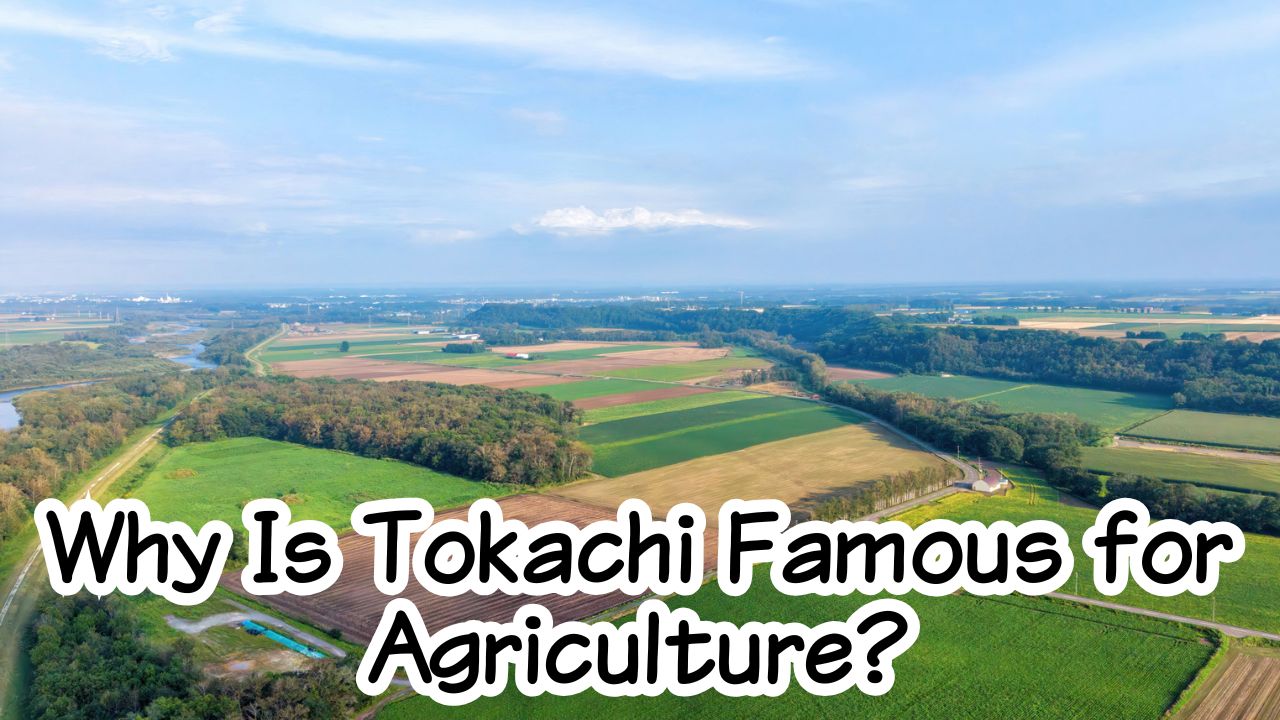
The road seems to continue forever. On both sides are enormous fields of wheat, potatoes, beans, and sugar beets. In the distance, the Hidaka Mountains rise behind the farmland.
At first, it looks like beautiful Hokkaido countryside.
But those fields explain much of what you eat during a trip to Tokachi.
The flour in your bread, the azuki beans in a Japanese sweet, the potatoes beside your steak, the milk in your ice cream, and even some of the sugar in your dessert can all begin in this landscape.
Once you understand Tokachi agriculture, a simple drive through the countryside becomes part of the food story of Hokkaido.
Why Is Tokachi One of Hokkaido’s Most Important Agricultural Regions?
Tokachi is huge.
The region covers about 10,832 square kilometers, around 13% of Hokkaido. It contains Obihiro City and 18 other municipalities spread across southeastern Hokkaido.
Agriculture occupies an equally impressive scale.
In 2023, Tokachi had about 254,500 hectares of cultivated land, representing 22.3% of all farmland in Hokkaido. By 2025, the average agricultural operation managed around 49.4 hectares.
That scale is one reason the scenery feels so different from many other parts of Japan.
Fields here are not just background scenery.
They dominate the landscape.
Why Does Tokachi’s Climate Work So Well for Farming?
One of the secrets is something locals call “Tokachi-bare”—the clear, sunny weather associated with the region.
Tokachi has a mainly continental climate away from the Pacific coast. The Hidaka Mountains block many snow clouds in winter, so the plains often receive less snow and enjoy many clear days. The region also has relatively low annual rainfall and is known for long sunshine hours.
Sunshine Helps Crops Grow
Long sunny days are valuable for crops.
During summer, the inland Tokachi Plain can become quite warm during the day, while Hokkaido’s northern location still gives the region a relatively cool growing environment compared with much of Japan.
These conditions suit crops such as wheat, potatoes, beans, and sugar beets particularly well.
But the weather is not always gentle.
Tokachi has faced frost, cold summers, drought, strong winds, and other difficult conditions throughout its agricultural history. Even today, officials report that increasingly hot and dry summers can affect crop yield and quality.
So Tokachi’s success is not simply a gift from the climate.
Farmers have learned how to work with it.
Tokachi’s Soil Was Not Always Easy to Farm
This is one of the most interesting parts of the story.
You might imagine that Japan’s great farming region must have naturally perfect soil.
It did not.
Much of Tokachi’s farmland developed on soil containing volcanic ash. The soil can hold water for a long time after rain, while becoming dry and easily blown by wind under other conditions. Heavy farm machinery can also struggle in poorly drained fields.
Farmers Had to Improve the Land
Beginning especially in the postwar period, large drainage projects, soil improvement, field development, and mechanization changed the landscape.
Better drainage allowed tractors and other machines to work more efficiently. Improved fields also made it easier to grow several different crops rather than depending heavily on only one.
This is an important reason Tokachi became an agricultural powerhouse.
Nature provided the space, but people made the land productive.
Why Do Tokachi’s Fields Look Like a Giant Patchwork?
Look across the Tokachi Plain in summer or early autumn, and the fields often appear in different shades of green, yellow, and brown.
That beautiful patchwork is not created for tourists.
It is partly the result of crop rotation.
Tokachi’s Four Major Field Crops
Tokachi farmers traditionally rotate four major groups of crops:
- wheat
- beans
- potatoes
- sugar beets
Growing the same crop in the same field every year can increase disease, pests, and other problems.
By changing crops in a planned cycle, farmers can reduce those risks and maintain more stable production. Tokachi’s official agricultural materials describe this rotation system as a foundation of the region’s field farming.
This also explains something travelers often misunderstand.
That beautiful potato field you photographed this year may contain wheat or beans when you return several years later.
The scenery itself moves.
Why Are Potatoes, Wheat, Beans, and Sugar Beets So Important?
Each crop plays a different role in Hokkaido food culture.
Potatoes: More Than Just a Hokkaido Souvenir
Potatoes are one of Tokachi’s signature crops.
They become fresh vegetables, potato starch, french fries, potato chips, and many processed foods.
In July, potato plants also produce small white, purple, pink, or bluish flowers, briefly turning working farmland into one of Tokachi’s prettiest summer landscapes.
Wheat: The Beginning of Bread and Noodles
Large wheat fields turn golden as harvest approaches.
Tokachi wheat is connected to bread, noodles, pastries, and the region’s growing food culture.
When you eat a bakery breakfast in Obihiro, the farmland outside the city suddenly feels much closer.
Beans: The Secret Behind Japanese Sweets
Tokachi is particularly famous for beans, including azuki red beans.
These are essential for anko, the sweet red bean paste used in many Japanese desserts.
Tokachi’s bean-growing history became especially dramatic during World War I. Rising international demand and prices created wealthy farmers known as “mame narikin,” or bean millionaires.
That boom did not last forever, but beans remained a major part of Tokachi agriculture.
Sugar Beets: Yes, Sugar Grows in Hokkaido
This crop surprises many overseas visitors.
Sugar beets look a little like large roots, but they contain sugar.
They are well suited to cooler climates and became an important part of Hokkaido agriculture. By 1919, agricultural trials in Tokachi had demonstrated their suitability, and sugar factories were established in the region in the early 1920s.
So a Hokkaido dessert can bring together several local products at once:
Tokachi wheat + Tokachi milk + Tokachi azuki beans + Hokkaido beet sugar.
That is one reason the region’s food culture feels so closely connected to its farms.
Tokachi Agriculture Is Also About Cows
Fields are only half of the story.
Tokachi is also one of Hokkaido’s most important dairy and livestock regions.
In fiscal 2024, milk handled through Hokuren in Tokachi totaled about 1.28 million tonnes, roughly 32% of Hokkaido’s total. Tokachi also had about 242,000 beef cattle, around 45% of Hokkaido’s total herd.
The scale of individual dairy operations has grown too.
The average dairy farm in Tokachi had about 225 dairy cattle in 2024.
From Grass to Milk, Cheese, and Ice Cream
Drive around Tokachi and you will see pasture, corn grown for livestock feed, barns, silos, and dairy farms.
That agricultural base supports another side of Tokachi’s identity:
milk, butter, yogurt, cheese, ice cream, and sweets.
This is why food tourism here works so well.
The distance between “farm” and “dessert” can be surprisingly short.
Why Is Hokkaido Ice Cream So Good?
The fresh milk produced on farms like those in Tokachi is one of the reasons Hokkaido’s ice cream is so rich and creamy. Discover why Hokkaido has become Japan’s most famous destination for delicious ice cream and where to find some of the best flavors.
Read next: Why Is Hokkaido Ice Cream So Good? The Sweet Story Behind Japan’s Creamiest Treat

Modern Tokachi Agriculture Began With a Difficult History
Today’s huge fields may look peaceful, but their history is complicated.
Ainu communities lived throughout Hokkaido, including Tokachi, long before modern Japanese agricultural settlement. During the Meiji period, government settlement and development policies transformed land use across Hokkaido and placed severe restrictions on traditional Ainu ways of life.
That history should not disappear when we talk about the “development” of Hokkaido.
Banseisha Arrived in Obihiro in 1883
A major chapter in modern settler agriculture began in 1883, when a group led by Benzo Yoda of the Banseisha settlement company arrived in what is now Obihiro.
They attempted to cultivate the land under extremely difficult conditions. Early settlers worked with limited equipment, human labor, and horses, while dealing with poor soils and harsh weather.
Rail connections to central Hokkaido opened in 1907, making it much easier to transport agricultural products and accelerating agricultural expansion.
Over the following decades, roads, drainage systems, farm machinery, research stations, improved crop varieties, and modern agricultural technology gradually transformed Tokachi.
The giant fields you see today were built over generations.
Why Did Tokachi Farms Become So Large?
After World War II, Japanese agriculture changed rapidly.
In Hokkaido, policy increasingly focused on improving farmland, mechanizing work, and expanding farm size so that cold-region agriculture could remain competitive. Large drainage and land-improvement projects were introduced from the late 1950s onward.
Tokachi had something especially valuable for this transformation:
space.
Large, relatively flat areas made big tractors, harvesters, and other agricultural machines practical.
As farms became larger and machinery improved, one farmer could manage far more land than before.
Today, that history is visible from the road.
Huge machines do not look oversized in Tokachi.
The fields are big enough to make them look small.
The Beautiful Tokachi Landscape Is a Working Landscape
This is important for travelers.
Those beautiful fields are not public flower gardens.
They are workplaces and private property.
Tokachi’s official tourism organization specifically asks visitors not to enter fields, farm roads, or pasture without permission. Soil on shoes or camera tripods can carry pathogens or pests that may damage crops.
Want to Enter a Real Farm? Take a Guided Tour
If you want a closer look, join an authorized farm experience instead.
Tokachi offers guided programs where travelers can visit working farms, learn how crops are grown, and sometimes harvest seasonal vegetables. Official tourism information recommends these experiences as a safe way to understand the region’s agricultural landscape.
That is far more interesting than simply taking a photograph from the roadside.
You meet the people behind the landscape.
When Is the Best Time to Experience Tokachi Agriculture?
There is no single perfect month.
The fields constantly change.
June to July: Green Fields and Potato Flowers
Early summer is beautiful.
Fields become intensely green, and potato flowers usually add white and pale purple colors in July.
Late July to August: Golden Wheat and Harvest Season Begins
Wheat changes from green to gold.
Large harvesting machines begin appearing across the plains.
September: One of the Best Months for Food Lovers
September brings the main autumn harvest season, including potatoes and many other crops. The weather also becomes cooler and more comfortable for driving around the countryside.
October: Sugar Beets and Late-Autumn Fields
By October, the landscape becomes more brown and gold.
Sugar beet harvest continues late into the season, offering a completely different view from midsummer.
For travelers interested in Tokachi agriculture, I would choose July through September.
Did You Know?
- Tokachi contains about 254,500 hectares of farmland, more than one-fifth of Hokkaido’s total cultivated area.
- The region produces around 24% of Hokkaido’s agricultural output.
- Tokachi’s average agricultural operation manages about 49.4 hectares of land.
- Wheat, beans, potatoes, and sugar beets form the traditional core of Tokachi’s crop-rotation system.
- During World War I, high bean prices created wealthy Tokachi farmers nicknamed “bean millionaires.”
FAQ
What Is Tokachi Most Famous for Growing?
Tokachi is especially known for wheat, potatoes, beans, and sugar beets.
It also grows vegetables such as nagaimo yams, carrots, sweet corn, broccoli, onions, garlic, and many other crops.
Why Are Farms in Tokachi So Large?
The broad Tokachi Plain, decades of land improvement, and the adoption of large agricultural machinery encouraged larger-scale farming.
The average agricultural operation now manages around 49 hectares.
Can Tourists Walk Into Tokachi’s Fields?
No, unless you have permission.
Most fields are private working farms. Entering them can damage crops or introduce pests and diseases.
Use designated viewpoints or join an authorized farm tour instead.
When Can I See Potato Flowers in Tokachi?
July is generally a good time.
The flowers can be white, purple, pink, or blue depending on the potato variety.
Do I Need a Car to Explore Tokachi?
A car is highly recommended if you want to see the agricultural landscape.
Obihiro is convenient by train or plane, but farms and scenic rural areas are spread across a very large region.
Visit It Yourself
Location
Tokachi Region, southeastern Hokkaido
Obihiro is the main city and makes the easiest base for exploring the surrounding agricultural towns.
Best Season
July–September
Choose July for green fields and potato flowers.
Choose August and September if you want to see more harvesting activity.
How to Get There
From Sapporo to Obihiro:
- Train: approximately 2.5 hours
- Car: approximately 3 hours
- Bus: approximately 3.5 hours
From New Chitose Airport to Obihiro by bus or car takes roughly 2.5 hours.
Rental cars are especially useful once you arrive in Tokachi.
Estimated Visit Time
At least 1 full day
I recommend 2–3 days if you want to combine agricultural scenery, local food, farm experiences, and nearby sightseeing.
Admission Fee
There is no admission fee to visit the Tokachi region or view agricultural landscapes from public roads and designated viewpoints.
Guided farm tours and harvesting experiences have separate fees.
Please check the official website for the latest information.
Official Website
Tokachi Tourism Federation – Tokachibare
The official tourism site includes agricultural experiences, seasonal travel information, scenic viewpoints, and important visitor rules.
Final Thoughts
Tokachi is famous for agriculture because everything here works together.
The wide plain.
The sunshine.
The cold winters.
The huge fields.
The farmers.
The machines.
The crop rotation.
And generations of experience learning how to grow food in a place that was not always easy to farm.
Today, Tokachi produces an extraordinary amount of Hokkaido’s food.
But numbers alone do not explain what makes the region special.
Drive through Tokachi in summer and look across the patchwork fields toward the Hidaka Mountains.
Then eat fresh bread, potatoes, cheese, ice cream, or a sweet filled with azuki beans.
Suddenly, the landscape and your plate become part of the same story.
That is the real reason to understand Tokachi agriculture before you visit.
You are not simply looking at beautiful fields.
You are looking at one of the places that feeds Hokkaido—and Japan.




コメント