

My name is MAKO
Based in Sapporo, Hokkaido | Born and raised in Obihiro, Hokkaido | Lover of Sapporo Classic beer and fresh sashimi | Passionate about road trips and camping | Always chasing beautiful scenery
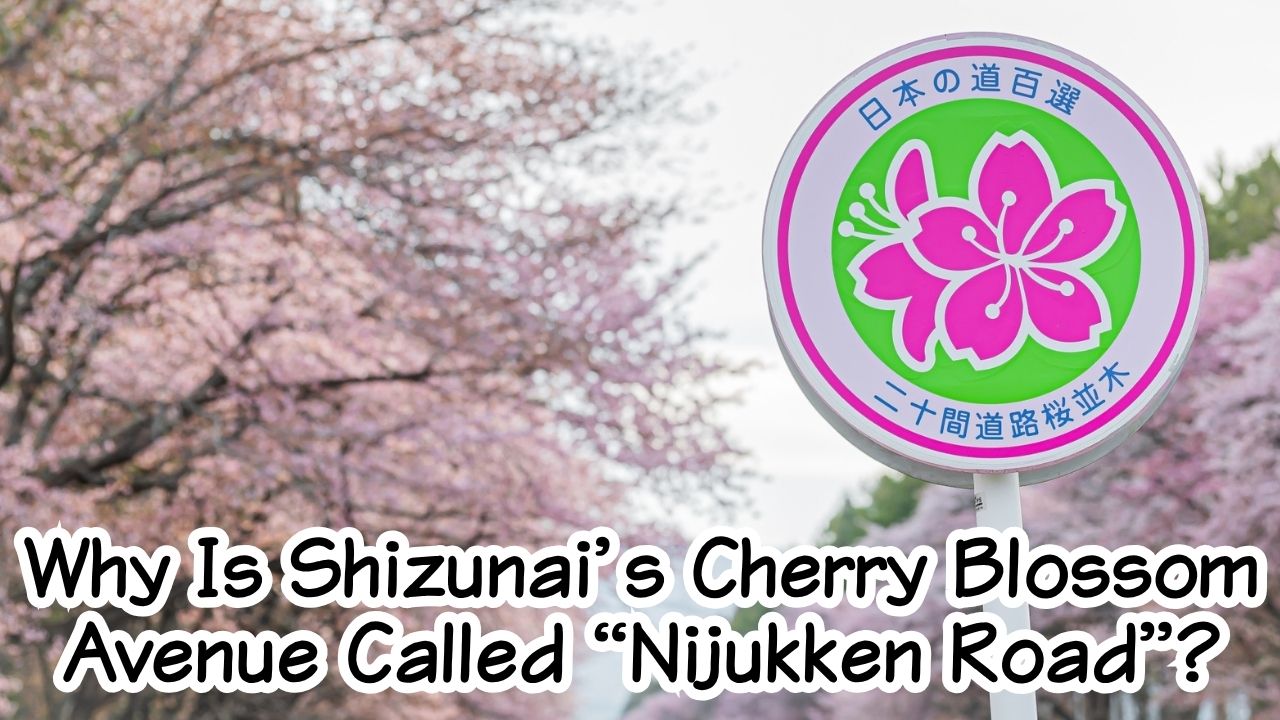
Why Is Shizunai’s Cherry Blossom Avenue Called “Nijukken Road”?The Short Answer
“Nijukken” means 20 ken, an old Japanese unit of length. The road was about 20 ken—or roughly 36 meters—wide, which gave it its name.
The road was built inside an imperial stock farm and used for visits by members of Japan’s Imperial Family. Beginning in 1916, cherry trees were transplanted from nearby mountains over about three years, eventually creating the spectacular avenue travelers see today.

Why You Should Care
Japan has many famous cherry blossom spots.
But Nijukken Road feels very different from a city park or castle garden.
There is no dense skyline behind the flowers.
Instead, you see a straight road, wide open fields, horse country, distant mountains, and cherry trees stretching for kilometers.
The best part is that this scenery was never planned as a modern tourist attraction.
It began with horses, an imperial farm, and a road for official visits.
Once you know that story, the pink avenue becomes much more than a beautiful place for photos.
Why Is Shizunai’s Cherry Blossom Avenue Called “Nijukken Road”?
The Japanese name is:
二十間道路 — Nijukken Doro
It sounds mysterious if you do not know old Japanese measurements.
What Does “Nijukken” Mean?
A ken is an old Japanese unit of length equal to roughly 1.8 meters.
So:
20 ken ≈ 36 meters.
The road was approximately that wide, so people began calling it Nijukken Road—“20-Ken Road.”
The name is surprisingly practical.
It is not a poetic reference to the cherry trees.
It is basically a measurement.
That makes the road’s transformation even more interesting.
Why Was This Road Here Before the Cherry Trees?
Nijukken Road was created inside what became the Niikappu Imperial Stock Farm.
Hokkaido Heritage records that a large stock farm was established in this region in 1872, following a proposal by Kiyotaka Kuroda as part of efforts to improve Japanese horse breeds. The road itself was created in 1903 within the farm.
It later served as a route used when members of the Imperial Family inspected the farm.
So before it was famous for flowers,
Nijukken Road was connected to horses.
How Did an Imperial Farm Become a 7-Kilometer Sakura Avenue?
The road already existed.
The cherry trees came later.
And they changed everything.
Why Were Cherry Trees Planted in 1916?
Beginning in 1916, Ezo-yamazakura and other cherry trees were moved from nearby mountains and planted along the road.
The work took about three years.
Over time, those trees grew into a remarkable avenue.
Today, more than 2,000 cherry trees extend along a straight stretch of roughly 7 kilometers.
Think about that distance for a moment.
Seven kilometers is not a short park path.
It is a landscape.
What Does Nijukken Road Have to Do with Hokkaido’s Horse Culture?
Quite a lot.
The old imperial stock farm was created partly for horse improvement, and this part of Hidaka remains closely associated with horse breeding today. Nijukken Road still passes through an area of working horse farms.
That combination creates a landscape you rarely see at other cherry blossom spots:
sakura + open pasture + horses + Hokkaido sky.
But there is an important rule for travelers.
The farms around the road are working farms, not ordinary tourist attractions. Current Shinhidaka Town guidance requires visitors to follow farm-viewing rules, and entry into pastures or stables without permission is prohibited.
Admire the landscape.
But respect the horses and the people who work there.
What Is Ryuunkaku?
At the far end of the road stands Ryuunkaku, a historic guest house built in 1909 for distinguished visitors to the imperial farm.
Historical town materials record visits by the future Emperor Taisho in 1911 and the future Emperor Showa in 1922. The building also preserves historical objects connected to important visitors.
Today, Ryuunkaku is generally opened to the public only during the Shizunai Cherry Blossom Festival.
That makes spring a rare chance to experience both the cherry trees and the history behind them.
Why Is Nijukken Road One of Hokkaido’s Most Famous Cherry Blossom Spots?
The obvious answer is its size.
But scale is only part of the story.
Why Does a 7-Kilometer Cherry Avenue Feel So Different?
Most cherry blossom spots have a clear center.
A castle.
A pond.
A park.
Nijukken Road is different.
The road itself is the view.
Cherry trees continue ahead of you until they seem to merge at the horizon.
The 36-meter-wide space between the rows makes the landscape feel even larger, while open fields and the Hidaka scenery create a sense of space that feels unmistakably Hokkaido.
What Kind of Cherry Trees Grow Along Nijukken Road?
The avenue is known especially for Ezo-yamazakura, along with other cherry varieties transplanted from the surrounding mountains.
Many of the trees are now more than a century old.
That age gives the avenue character, but it also creates a serious challenge.
These are not decorative trees that can simply be ignored after planting.
They need care.
A lot of it.
Why Does Sakura Season Come So Late in Shizunai?
Travelers who visit Tokyo or Kyoto may see cherry blossoms in March.
Shizunai is much farther north.
Its cool spring means the famous bloom usually arrives later. Hokkaido’s official tourism site lists the typical viewing season around early to mid-May, although the exact timing changes every year.
And that variation is important.
In 2026, the Shizunai Cherry Blossom Festival was held from April 25 to 30, and town reporting says the avenue reached full bloom on April 25—earlier than many visitors might expect.
So do not plan this trip by the calendar alone.
Check the blossom forecast shortly before you travel.
How Is This Century-Old Cherry Avenue Being Protected?
Beautiful landscapes do not always survive by themselves.
Nijukken Road is a good example.
Why Are the Old Cherry Trees a Challenge?
Many of the trees planted along Nijukken Road are now over 100 years old.
Shinhidaka Town has reported problems including aging trees, disease, insect damage, broken branches, and trees falling during strong winds.
The town therefore employs specialist staff and works with tree experts on pruning, pest control, fertilization, treatment, and long-term restoration.
That means the famous view is not simply something inherited from the past.
It is something people are actively trying to save.
Are New Cherry Trees Being Planted?
Yes.
Shinhidaka has been planting successor trees and growing young trees to replace aging ones. Municipal records describe a long-term conservation plan that includes pruning, pest management, new planting, and nursery work.
Planting work was still continuing in 2026, with Hokkaido Heritage reporting another cherry-tree planting activity that April.
This may be one of the most important parts of the Nijukken Road story.
The people who planted the original trees never saw the avenue as we see it today.
And some of the trees being planted now may be at their best for travelers who have not even been born yet.
How Did Nijukken Road Become a Symbol of Spring in Hokkaido?
The road slowly changed from an official route into a place loved by ordinary visitors.
When Did the Shizunai Cherry Blossom Festival Begin?
Shinhidaka Town records that the first cherry blossom festival was held in 1964.
Today, the Shizunai Cherry Blossom Festival attracts huge crowds.
Hokkaido’s official tourism site says around 100,000 visitors may come during the blossom period, while Shinhidaka Town reported about 95,000 visitors in 2026.
During the festival, visitors can enjoy local products and seasonal foods, and Ryuunkaku is normally opened for viewing.
Why Is Nijukken Road Considered More Than Just a Tourist Spot?
The avenue has received several major recognitions.
It has been selected as one of:
- Japan’s 100 Best Roads
- Japan’s 100 Best Cherry Blossom Spots
- Hokkaido Heritage.
Those titles reflect something important.
Nijukken Road is valued not only because it is pretty in spring.
It represents history, landscape, local identity, and more than a century of care.
My Recommendation: Enjoy Tomakomai’s Famous Hokki Clams on Your Sakura Road Trip!
If you’re driving from Sapporo or New Chitose Airport to see the beautiful cherry blossoms along Nijukken Road, I highly recommend stopping in Tomakomai for some delicious local seafood!
Tomakomai is famous for its hokki clams (surf clams), a local specialty known for their sweet flavor and pleasantly chewy texture.
You can enjoy them in various dishes, including sushi, sashimi, and the popular local specialty hokki curry.
Combining the spectacular cherry blossoms of Nijukken Road with Tomakomai’s delicious seafood is one of my favorite ways to enjoy a spring road trip in Hokkaido!
Why Is Tomakomai Famous for Hokki Clams?
Why has Tomakomai become one of Japan’s best-known destinations for hokki clams?Discover the fascinating story behind this delicious local seafood and its connection to Hokkaido’s coastal culture.
Read next: Why Is Tomakomai Famous for Hokki Clams? The Story Behind Hokkaido’s Surf Clam Capital

Did You Know?
- “Nijukken” means 20 ken, or roughly 36 meters, referring to the road’s width.
- The road itself dates to 1903, while cherry planting began in 1916.
- More than 2,000 cherry trees line roughly 7 kilometers of road.
- Ryuunkaku was built in 1909 as a guest house connected with the imperial stock farm.
- The first Shizunai Cherry Blossom Festival was held in 1964.
FAQ
Is Nijukken Road Actually 20 Ken Long?
No.
The “20 ken” refers to the width, not the length.
The avenue itself stretches for roughly 7 kilometers.
How Many Cherry Trees Are There?
Current official sources describe more than 2,000 trees along the avenue.
Older publications may show different numbers because the trees change over time through aging, removal, and replacement planting.
When Is the Best Time to See the Cherry Blossoms?
Typically late April to early or mid-May, but the timing varies significantly each year.
The official Hokkaido tourism site gives early to mid-May as a general guide, but full bloom came as early as April 25 in 2026.
Can I Visit the Horse Farms Along Nijukken Road?
Do not enter pastures or farm property freely.
These are working horse farms. Shinhidaka Town provides designated procedures and viewing rules for farms that accept visitors.
Can I Fly a Drone During the Cherry Blossom Festival?
No.
Shinhidaka Town states that ordinary visitors may not use drones or other unmanned aircraft during the festival period.
Visit It Yourself
Location
Shizunai Nijukken Road Cherry Blossom Avenue
Shizunai Tahara to Shizunai Misono, Shinhidaka, Hokkaido.
Shizunai is now part of Shinhidaka Town in the Hidaka region.
Best Season
Late April–early/mid-May
The exact peak changes from year to year.
For reference, the 2026 festival ran April 25–30, and full bloom was reported on April 25.
Check the official blossom updates shortly before your trip.
How to Get There
A car is the easiest option.
Current Shinhidaka Town access information gives approximately 1 hour 45 minutes from Sapporo-Minami IC to central Shizunai via the expressway and Hidaka route. Nijukken Road is farther inland from the town center.
During the cherry blossom season, temporary transportation may operate. Hokkaido’s official tourism site currently lists a seasonal bus from Shizunai Bus Terminal to the avenue in about 25 minutes.
Estimated Visit Time
Quick visit: 1 hour
Walking, photography, festival, and Ryuunkaku: 2–3 hours
Allow extra time during peak bloom because traffic can become busy.
Admission Fee
Free
The avenue itself has no admission charge.
There is no standard large visitor parking lot listed on the official Hokkaido page; visitors are directed to designated parking areas or festival arrangements.
Shizunai Cherry Blossom Festival
The dates change every year according to blossom conditions.
The 2026 festival was held April 25–30.
Future dates should not be assumed from previous years.
Please check the official website for the latest information.
Official Website
Final Thoughts
Why is this beautiful cherry blossom road called Nijukken Road?
The answer begins with a number.
Twenty ken.
About 36 meters.
Long before travelers came here with cameras,
this was a road inside an imperial stock farm.
Horses were part of the landscape.
Members of the Imperial Family traveled through the area.
Then, beginning in 1916,
people moved cherry trees from nearby mountains and planted them along the road.
The trees grew.
The road changed.
A practical route became a spring landscape.
Decades passed.
A cherry blossom festival began.
The avenue became nationally famous.
And more than a century after the first trees were planted, local people are still pruning old trees and planting young ones so the view can continue.
That may be the most beautiful part of the story.
Nijukken Road was not originally built to become a cherry blossom attraction.
A road made for an imperial farm slowly became one of Hokkaido’s greatest symbols of spring.




コメント